

- Through a territorial and differential approach, the National Strategy for Rural Youth seeks to create opportunities that facilitate their generational integration within rural territories.
- In Inzá, caring for native plantain and planting ancestral trees are only the surface of a much deeper sowing: that of a generation which, equipped with tools, knowledge, and conviction, chooses to become rooted in its own territory.
Inzá, Cauca. January 14, 2026. In the sacred mountains of Tierradentro, in the municipality of Inzá, Cauca—where the pre-Hispanic past speaks through hypogea and stone statues—an agroecological future is sprouting from the hands of young people. In the heart of this ancestral Nasa territory, at the symbolic Rural Educational Institution Santa Rosa “Nasa Yat” (the “Great House” of knowledge and worldview), Corporación colombiana de investigación agropecuaria – AGROSAVIA, in partnership with the Ministry of Agriculture and Rural Development, is weaving a bridge between traditional knowledge and innovation. Its mission: to support new rural generations in recovering their food sovereignty and reforesting their territory, sowing a sense of belonging and hope.
AGROSAVIA’s work here consists of giving comprehensive support that is sensitive to the context of an Indigenous reserve and goes far beyond technology transfer. It focuses on strengthening traditional knowledge systems to promote community autonomy.
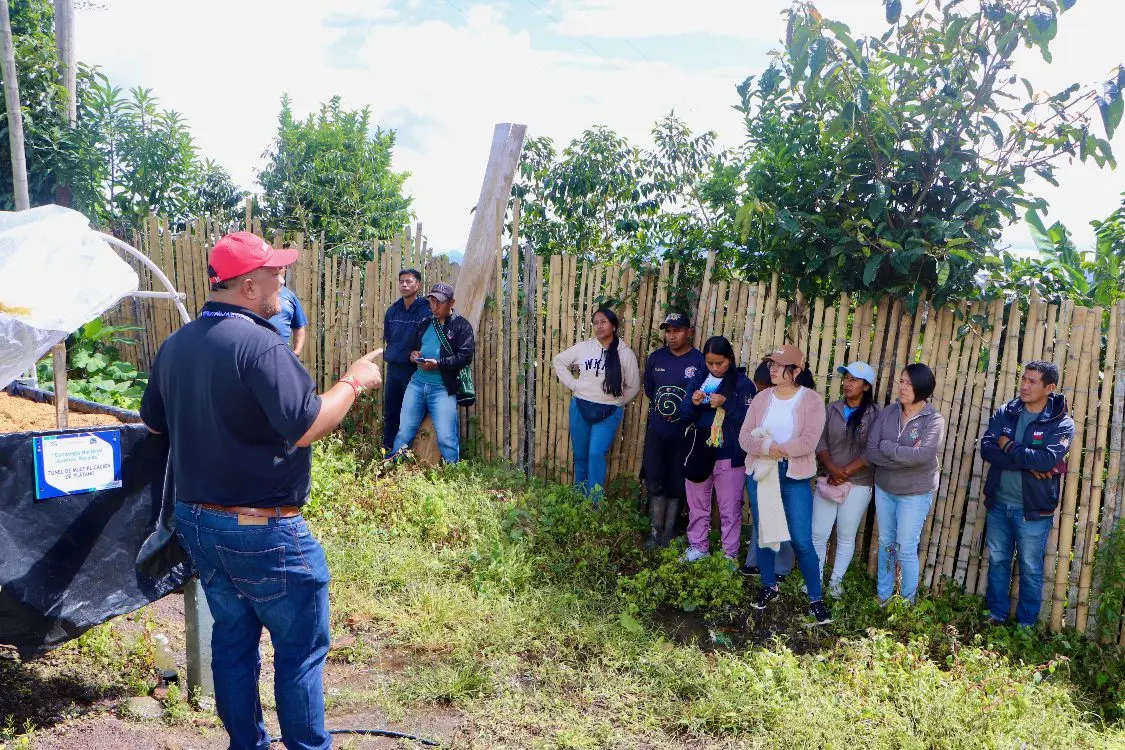
On the one hand, efforts are directed toward rescuing and multiplying the plantain identity. Faced with the loss of native plantain varieties, AGROSAVIA has partnered with the educational institution to implement rapid and efficient techniques for propagating high-quality planting material through an innovative rapid seed production system known as the “Rapid Seed Multiplication Tunnel.” This system is a controlled structure made of plastic and inert substrate (such as rice husks) that accelerates the sprouting of lateral buds from the corm (the base of the plant) to obtain many healthy, high-quality suckers (plantlets) in a short period of time, addressing the lack of selected planting material. This is not only about recovering a crop; it is about rescuing a genetic and cultural heritage, returning seeds (planting material) to families that are part of their history and diet, and strengthening food security based on their own traditions. In this process, AGROSAVIA’s Seed Department, together with experts from the Nataima Research Center and the Popayán office, supported the training and implementation of the multiplication tunnel, which has become an important learning environment for the youth of I.E. Santa Rosa in Inzá, Cauca.
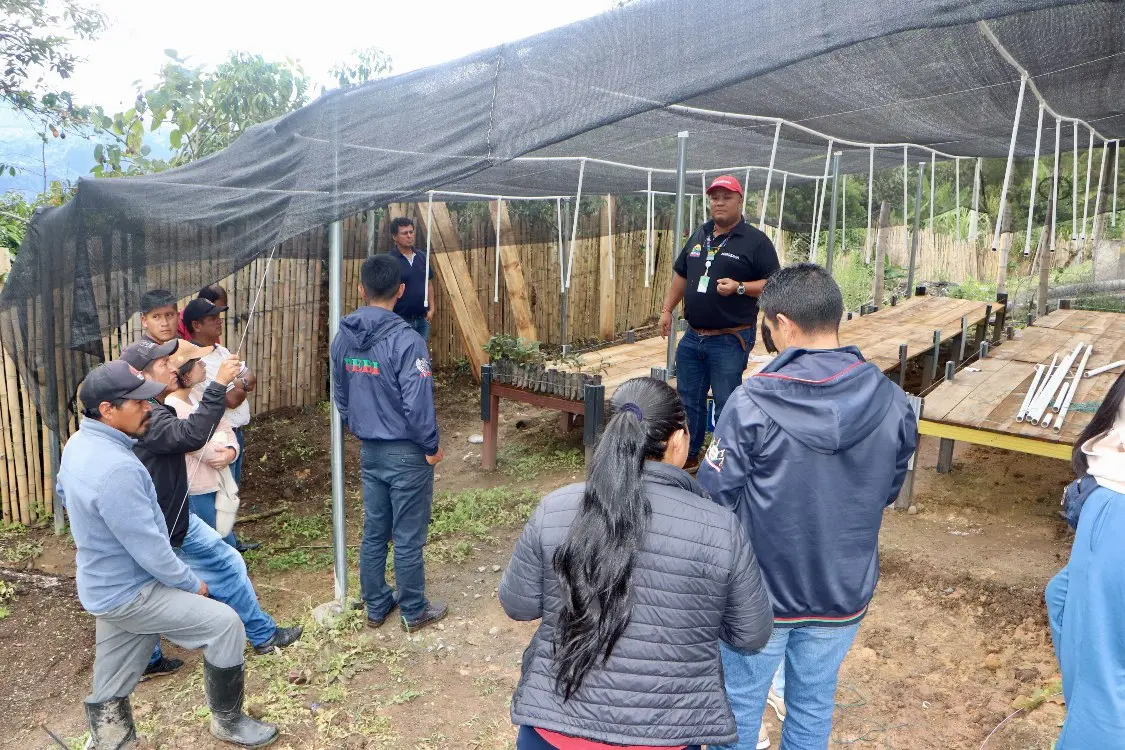
Likewise, support was provided for the establishment of a school and community nursery to reforest the micro-watersheds that supply water to the region’s aqueduct systems. This support included strengthening infrastructure with galvanized structures and shade netting, propagation beds, and automated irrigation systems. These spaces are living classrooms where young people learn to reproduce native forest species—not just any tree. The objective is clear: to reforest the watersheds with native forest species that are part of the ecosystem and the Nasa worldview, restoring the forest and, with it, the spiritual and material connection to “Mother Earth.”
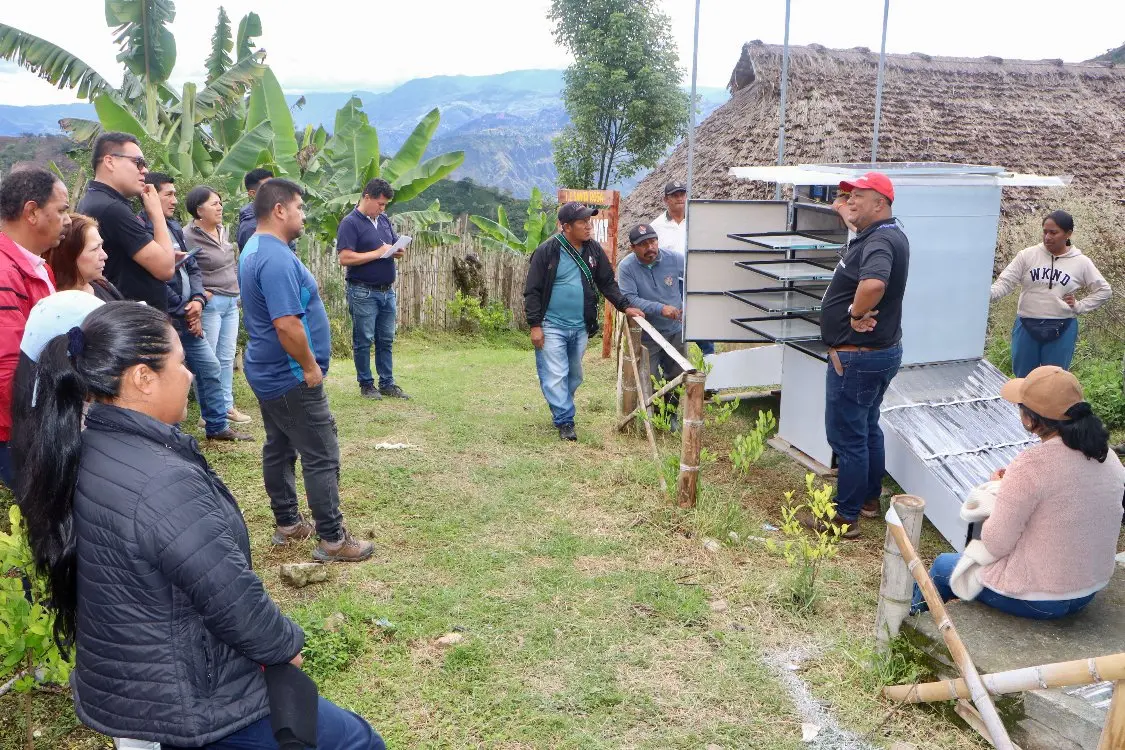
Solar Technology to Empower Local Knowledge: Support for strengthening the productive pedagogical project focused on the production and commercialization of chili powder, through a solar dryer for dehydrating chili peppers—“one of the region’s productive emblems”—is a perfect example. This equipment enables students to process and add value to their harvests sustainably, combining entrepreneurial learning with the respectful use of resources. It is innovation that does not replace traditional practices, but rather enhances them.
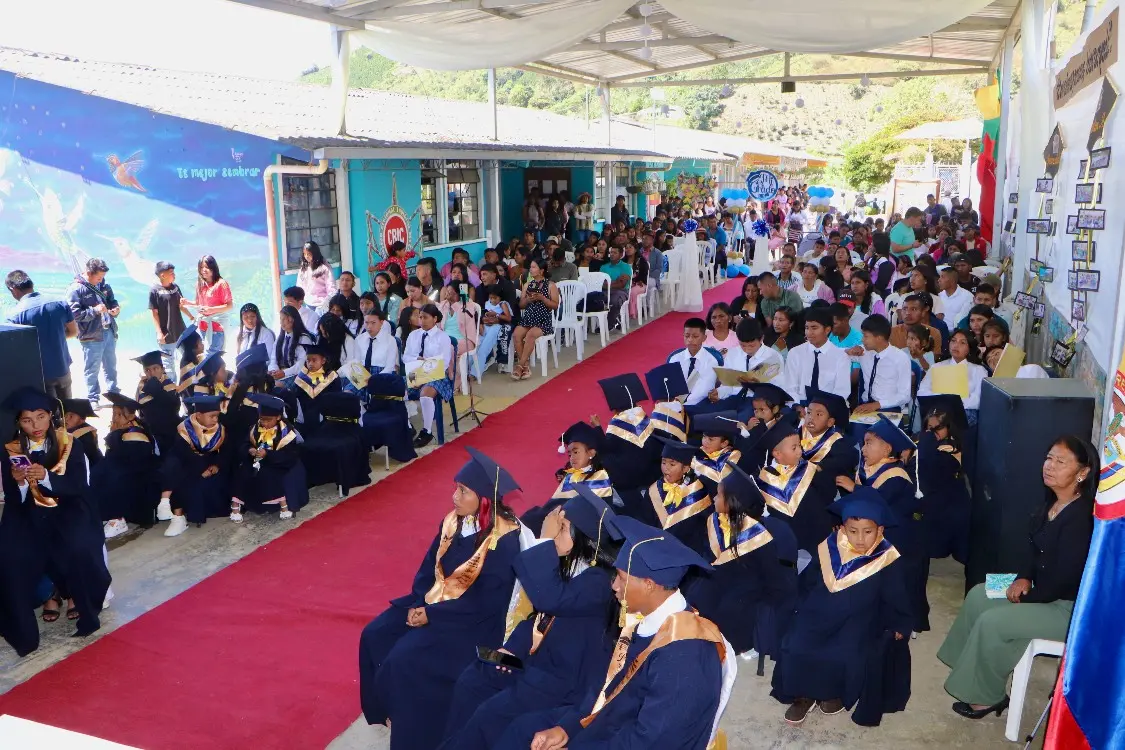
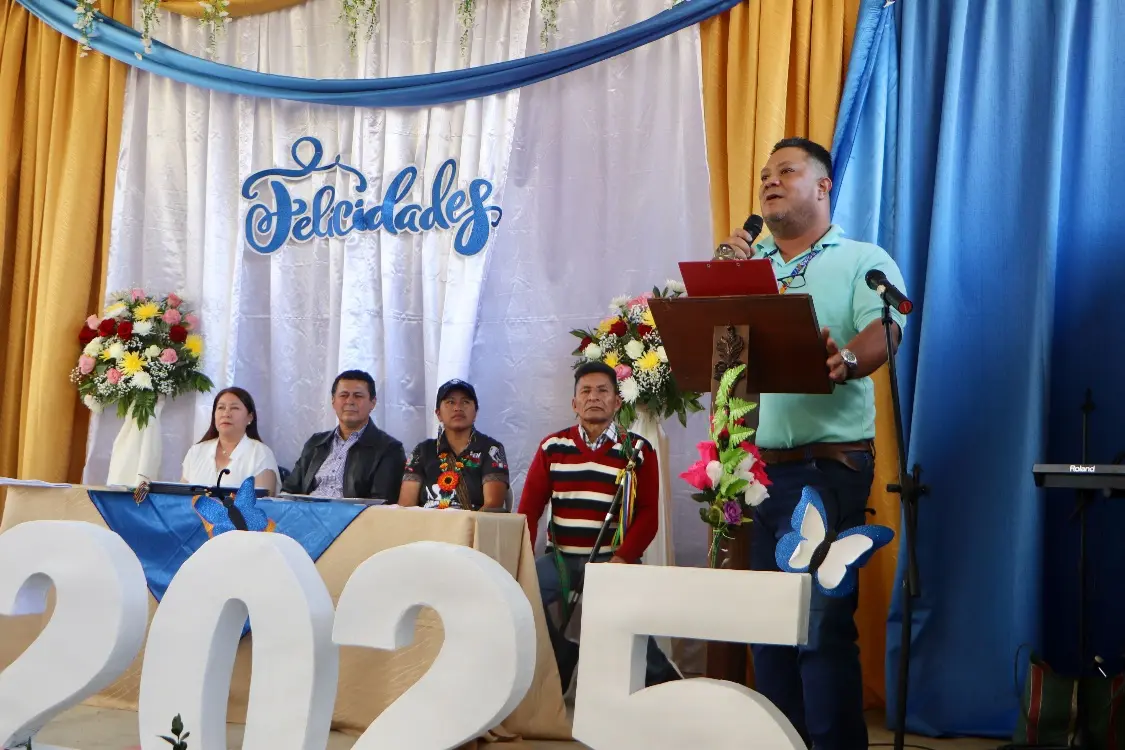
“AGROSAVIA has provided us with valuable support in participating in various regional and national events, where we have been able to present our project to rescue and conserve native seeds and those of Andean peoples. On behalf of the entire educational community of Santa Rosa, I would like to express our gratitude for the huge support we have received from the Ministry of Agriculture through AGROSAVIA. One of the fundamental objectives of this project is to inspire rural youth to become entrepreneurs by training themselves and then returning to their community to contribute to regional development. This generational renewal is crucial for the future of our country,” added Juan Gabriel Chasqui, Principal of IER Santa Rosa.
This initiative demonstrates that true rural development in Indigenous territories is built from and with the community, especially with its youth. AGROSAVIA acts as a facilitator, providing technical tools so that students themselves—guided by their elders and teachers—lead the recovery of their native species and the meaningful reforestation of their lands.
In Tierradentro, not only are archaeological remains protected, but, hand in hand with I.E. Santa Rosa “Nasa Yat,” native seeds such as chili peppers and plantain are rescued and protected, and ancestral trees are planted. Most importantly, something deeper is cultivated: a generation of rural youth with the tools, knowledge, and motivation to become rooted in their territory, honoring their ancestors and sowing a sustainable and sovereign future.
- More information here:
- José Dario Ule Rodriguez
- Communications, Identity and Corporate Relations Professional
- Office Florencia
- Communications, Identity and Corporate Relations Advisory Office
- jule@agrosavia.co
- AGROSAVIA