


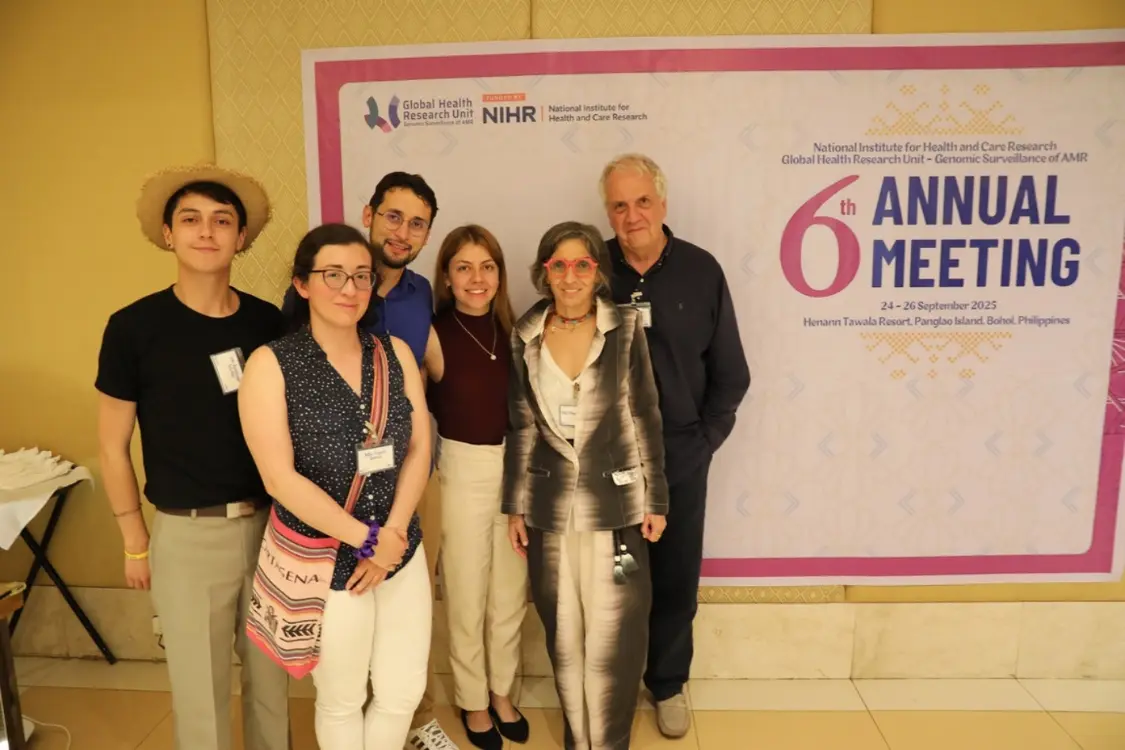
- From the Tibaitatá Research Center, the GHRU–Colombia of AGROSAVIA joins the international awareness campaign on the proper use of antimicrobials and on strengthening prevention from a One Health approach, within the framework of the 2025 World Antimicrobial Resistance Awareness Week (WAAW).
Mosquera, Cundinamarca. November 28, 2025. As part of the 2025 World Antimicrobial Resistance Awareness Week, AGROSAVIA, through the Global Health Research Unit on Genomic Surveillance of Antimicrobial Resistance (GHRU)–Colombia, led by PhD Pilar Donado and based at the Tibaitatá Research Center, calls on citizens and the agricultural sector to promote the proper use of antimicrobials.
Since 2006, AGROSAVIA has promoted the One Health approach, which recognizes the close interdependence between human, animal, and environmental health. The GHRU–Colombia team works to disseminate responsible practices, strengthen infection prevention and control, and raise awareness of the consequences of the indiscriminate use of antimicrobials, the main factors driving Antimicrobial Resistance (AMR).
Likewise, AGROSAVIA encourages the adoption of key recommendations aimed at producers, health professionals, veterinarians, and the community at large. These include using antibiotics only under professional prescription, keeping vaccination programs for people and animals up to date, and applying biosecurity measures in animal production systems to prevent the emergence and spread of resistant bacteria.
A Growing Threat to Human, Animal, and Environmental Health
Antimicrobials, such as antibiotics, antivirals, antifungals, and antiparasitics, are essential for combating infections in people, animals, and plants. However, their improper and excessive use, along with factors such as lack of access to clean water, poor sanitation practices, and failures in disease prevention in healthcare facilities and agricultural operations, have accelerated the emergence of AMR.
The World Health Organization (WHO) identifies AMR as one of the top 10 global public health threats. Its consequences affect multiple sectors:
- Greater risk for people who face infections that are increasingly difficult to treat.
- Fewer therapeutic alternatives for animals, with impacts on production and welfare.
- Contaminated environments, which facilitate the spread of resistant bacteria.
In this context, the coordinated work of institutions such as AGROSAVIA through the GHRU is essential to raise awareness, promote responsible practices, and provide scientific evidence that helps contain this global threat.
The GHRU is coordinated by the University of Oxford and the Center for Genomic Pathogen Surveillance (CGPS), funded by the United Kingdom’s National Institute of Health and Care Research (NIHR), in consortium with the Philippines, India, Nigeria, and Colombia. On November 21, during AMR week, two open-access articles were published in The Lancet Infectious Diseases and PLOS Global Public Health, in which AGROSAVIA is listed as a co-author.
- More information here:
- María Elena Londoño Rubio
- Communications, Identity and Corporate Relations Professional
- Research Center Tibaitatá
- Communications, Identity and Corporate Relations Advisory Office
- melondono@agrosavia.co
- AGROSAVIA