


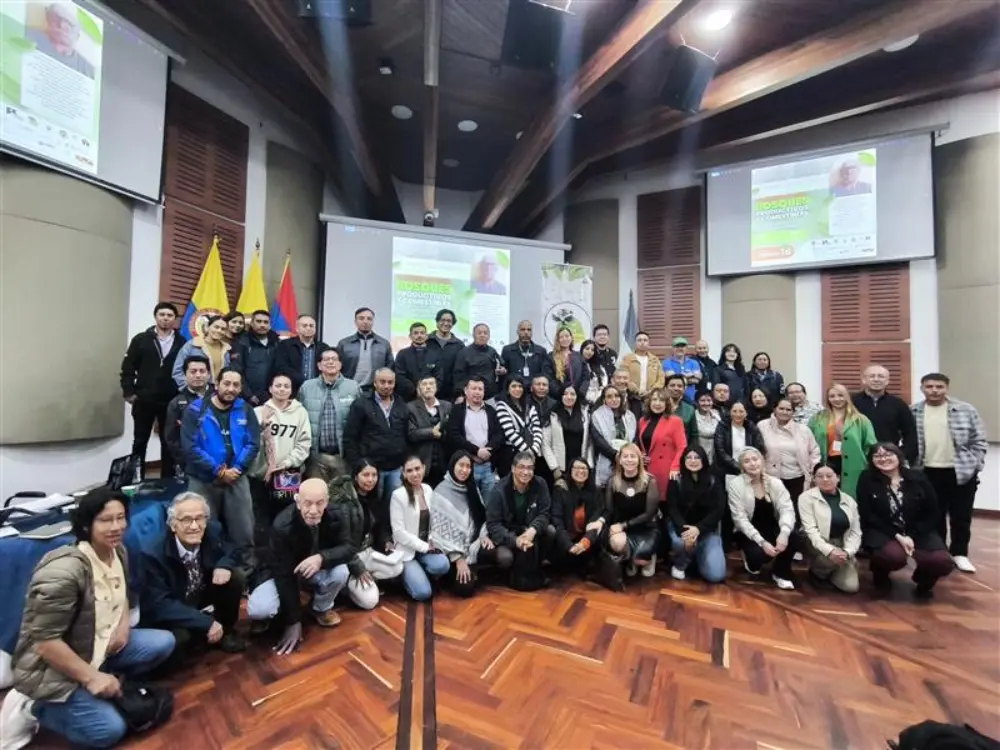
Pasto, Nariño. March 17, 2026. AGROSAVIA’s Obonuco Research Center, in its capacity as an active member of the Board of Directors of the Nariño Departmental Climate Change Roundtable, coordinated—together with the Government of Nariño (Secretariat of Agriculture and Rural Development and Secretariat of Environment and Sustainable Development), SENA, Corponariño, the Mayor’s Office of Pasto (Secretariats of Agriculture and Environmental Management), Empopasto, the Pasto Chamber of Commerce, the Local Development Agency, FAO, and community organizations—territorial capacity-building sessions for the design, implementation, and use of edible forests, held in February 2026.
The sessions included a roundtable discussion in the city of Pasto, which brought together more than 75 participants, including community and institutional representatives, as well as a hands-on workshop (minga-style) in the vereda La Paz (Cabrera district, municipality of Pasto), aimed at social organizations, territorial entities, producer associations, and academic stakeholders. Activities carried out included soil diagnostics, land preparation, stratified design, planting, and the application of organo-mineral amendments (compost tea, bocashi, Muvuca, among others), as well as water retention practices and ground cover management for erosion prevention.
Edible forests are an agroecological technology that integrates tree and shrub species with food, spice, medicinal, and ornamental crops, applying principles of permaculture and sustainable management. This approach contributes to food security and sovereignty in the territories, supports adaptation and mitigation in the face of climate change, and enhances the provision of ecosystem services in high Andean agroecosystems.
Through this initiative, AGROSAVIA and the participating entities strengthen territorial capacities for replicating sustainable and resilient production systems. The actions carried out are part of the departmental agroecology strategy and interinstitutional coordination processes aimed at soil restoration, food security, and sustainable landscape management.
As next steps, the institutions participating in the Departmental Climate Change Roundtable will continue providing technical support and interinstitutional coordination to scale up the implementation of edible forests in Nariño.
- More information here:
- Mónica Milena Burbano
- Communications, Identity and Corporate Relations Professional
- Research Center Obonuco
- Communications, Identity and Corporate Relations Advisory Office
- mmburbano@agrosavia.co
- AGROSAVIA