


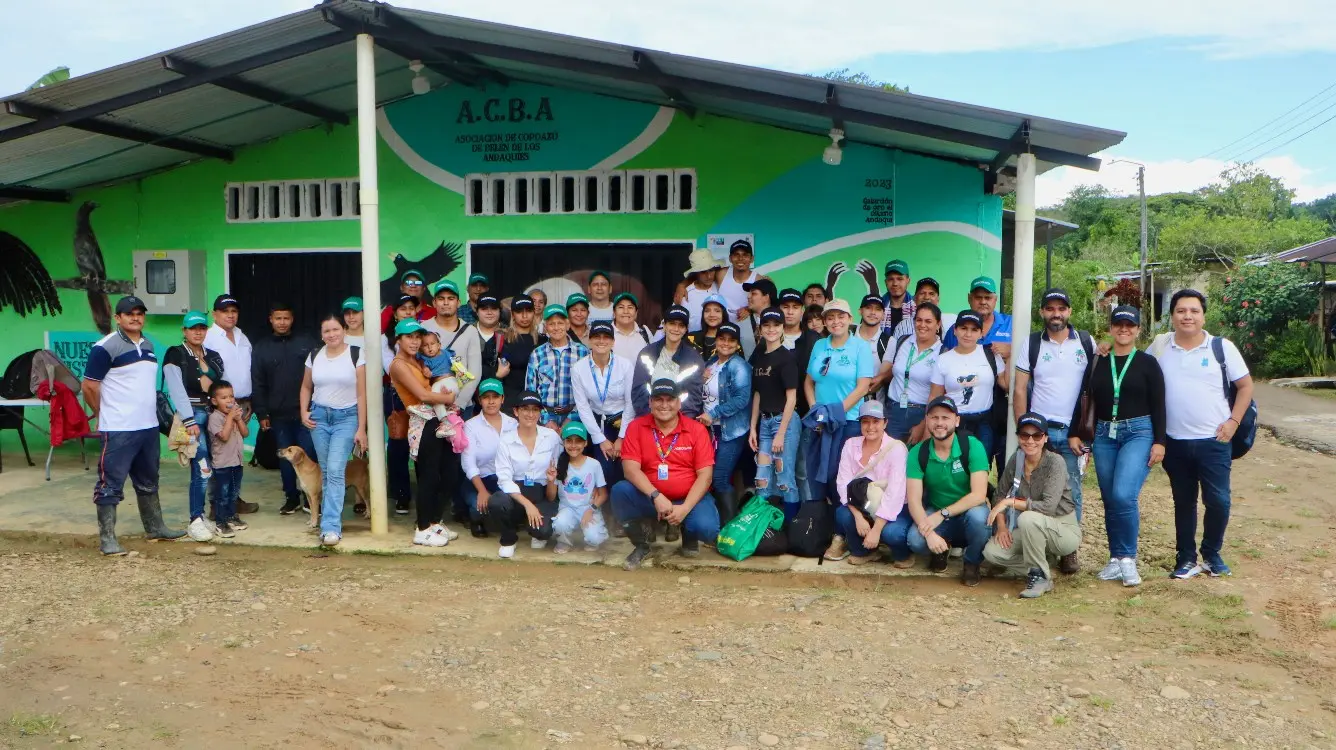
Florencia, Caquetá. July 7, 2026. At the heart of Caquetá, where the breeze carries the scent of fresh grass, and the capital city stands as the Gateway to the Colombian Amazon, lies the rural district of Portal La Mono in the municipality of Belén de los Andaquíes. This territory, deeply marked by the legacy of an armed conflict, has transformed hardship into strength and is now officially recognized as a subject of collective reparation, serving as a living testament to its people's resilience. Amid its fertile soils, native Amazonian fruit species such as arazá, copoazú, açaí, camu-camu, and sacha inchi do more than take root—they are transformed into vibrant fruit pulps, skin-nourishing cosmetics, Amazon-origin chocolates, and traditional fruit beverages. Each product represents a link in a new economic model—the bioeconomy—demonstrating that forest conservation and sustainable wealth creation can advance together.
Against this backdrop, Corporación colombiana de investigación agropecuaria (AGROSAVIA) and the Ministry of Agriculture and Rural Development have embraced the challenge of building bridges between research laboratories and chagras (traditional Amazonian farming systems), and between scientists and holders of traditional knowledge. Their dialogue platforms are far more than training workshops; they are collaborative spaces where ancestral wisdom, farmers' experience, and scientific research converge to shape, from the southern Colombian Amazon, a new story of transformation driven by innovation and sustainability.
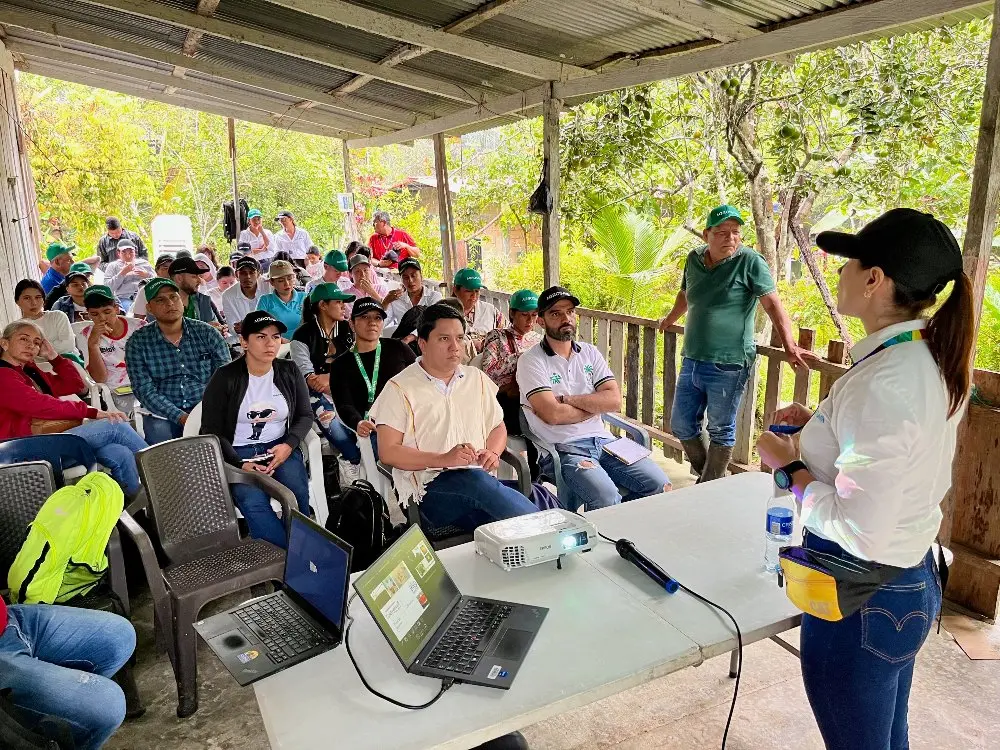
Within this framework, a technological updating workshop on Amazonian fruit crops was held at La Amazonia Farm (Vereda Agua Dulce, Belén de los Andaquíes), bringing together more than 50 participants, including producers, agricultural extension agents, entrepreneurs, SENA trainees, academics from Universidad de la Amazonía, and women from the Ayakuná Association. During the event, AGROSAVIA facilitated a horizontal knowledge exchange that highlighted two exemplary experiences: that of Mr. Ever Castro, whose agroforestry systems demonstrate that cultivating copoazú, arazá, and borojó can become a sustainable way of life; and that of Mr. Ferney Vaquero, leader of the Belén Copoazú Association, whose perseverance and resilience have positioned him as a strategic commercial partner of Selva Nevada, a company with nationwide market reach.
This gathering was not an isolated event but rather a concrete action under the project "Consolidation of a Hub for Agricultural Bioeconomy in Caquetá," through which AGROSAVIA is strengthening a science-to-territory innovation platform. Its objective is for the Agricultural Bioeconomy Hub to operate by 2026 as an institutional seed capital initiative that promotes integrated, agroecological, and agroforestry production systems under the Globally Important Agricultural Heritage Systems (GIAHS) approach, while providing a scalable model for expansion throughout the Amazon region.
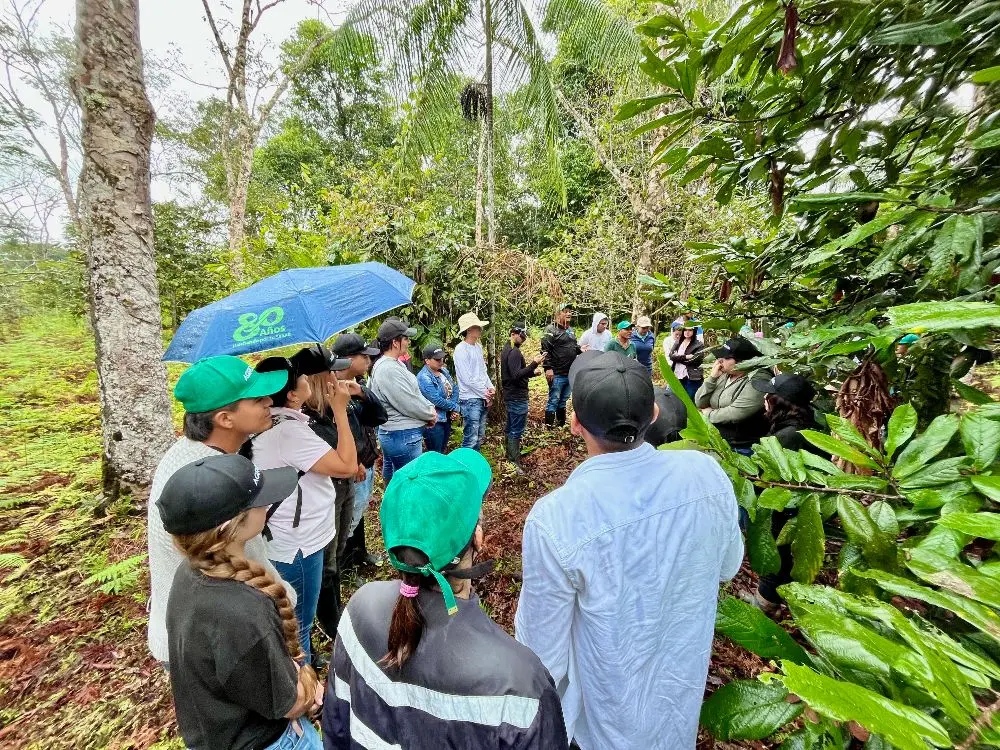
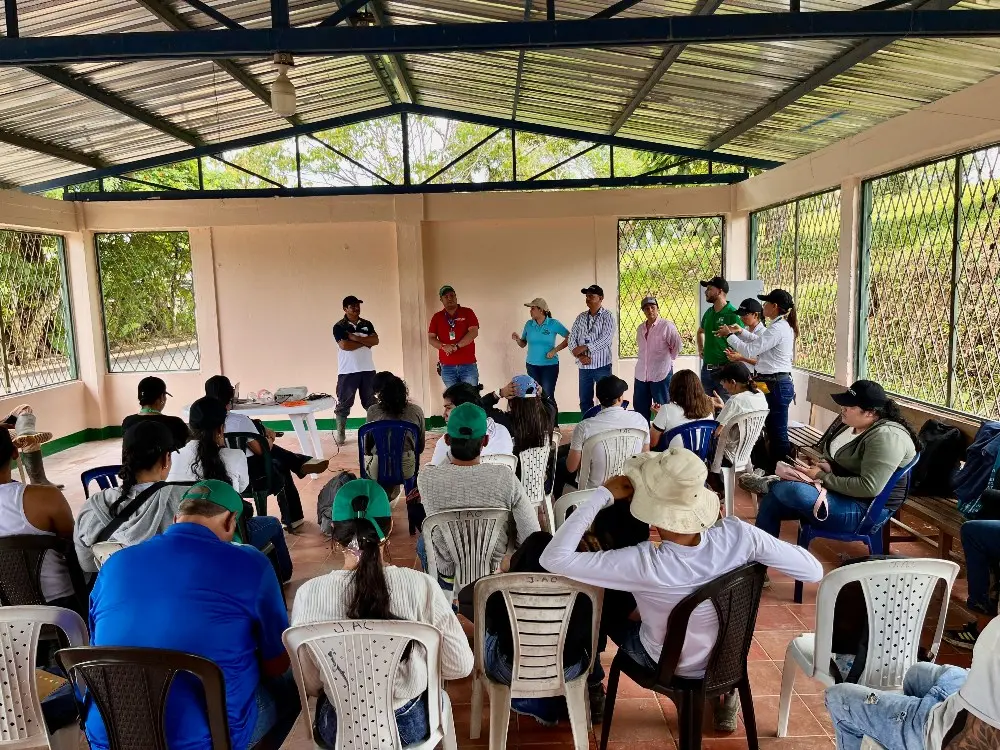
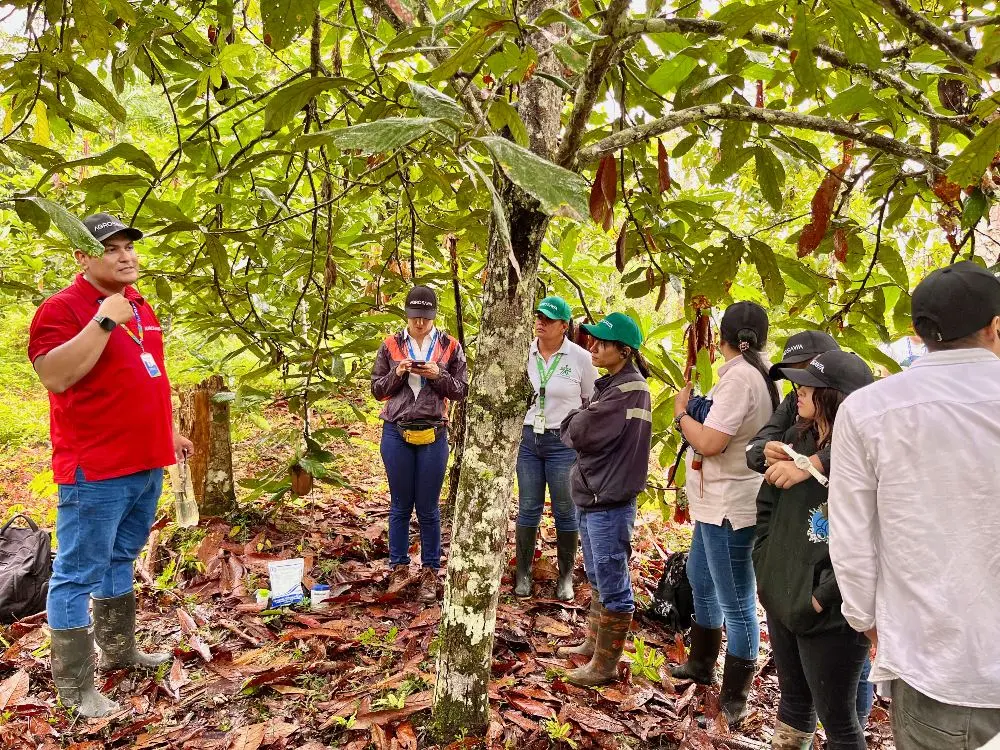
The guiding framework behind this initiative is the Amazonian Territorial Bioeconomy, promoted as a development model based on the sustainable use of biodiversity and ecosystem services. Its purpose extends beyond agricultural production to include adding value to forest-based products, shortening value chains while reinforcing territorial identity, recirculating nutrients and biomass, and, above all, fostering co-innovation by integrating local knowledge with applied technological advances developed by AGROSAVIA and its strategic partners to benefit rural communities.
From a methodological perspective, AGROSAVIA has adopted a participatory co-creation model in which researchers, extension professionals, and rural producers jointly validate technologies while learning from one another. Integrated Production Systems (IPS), which combine agricultural, livestock, and forestry components, represent the core strategy for optimizing nutrient cycling, strengthening functional biodiversity, and reducing pressure on natural forests, thereby contributing indirectly to deforestation mitigation.
The expected outcomes of this initiative are well defined: strengthened territorial technical capacities in bioeconomy, broader adoption of agroecological technologies, enhanced institutional coordination, and the development of a strategic roadmap to expand the Bioeconomy Hub to other Amazonian departments. Through a progressive resource-leveraging strategy based on national and international funding opportunities, AGROSAVIA reaffirms its commitment to a future in which science, gender equity, and climate resilience advance together at the heart of the Amazon rainforest.
- More information here:
- José Dario Ule Rodriguez
- Communications, Identity and Corporate Relations Professional
- Office Florencia
- Communications, Identity and Corporate Relations Advisory Office
- jule@agrosavia.co
- AGROSAVIA