


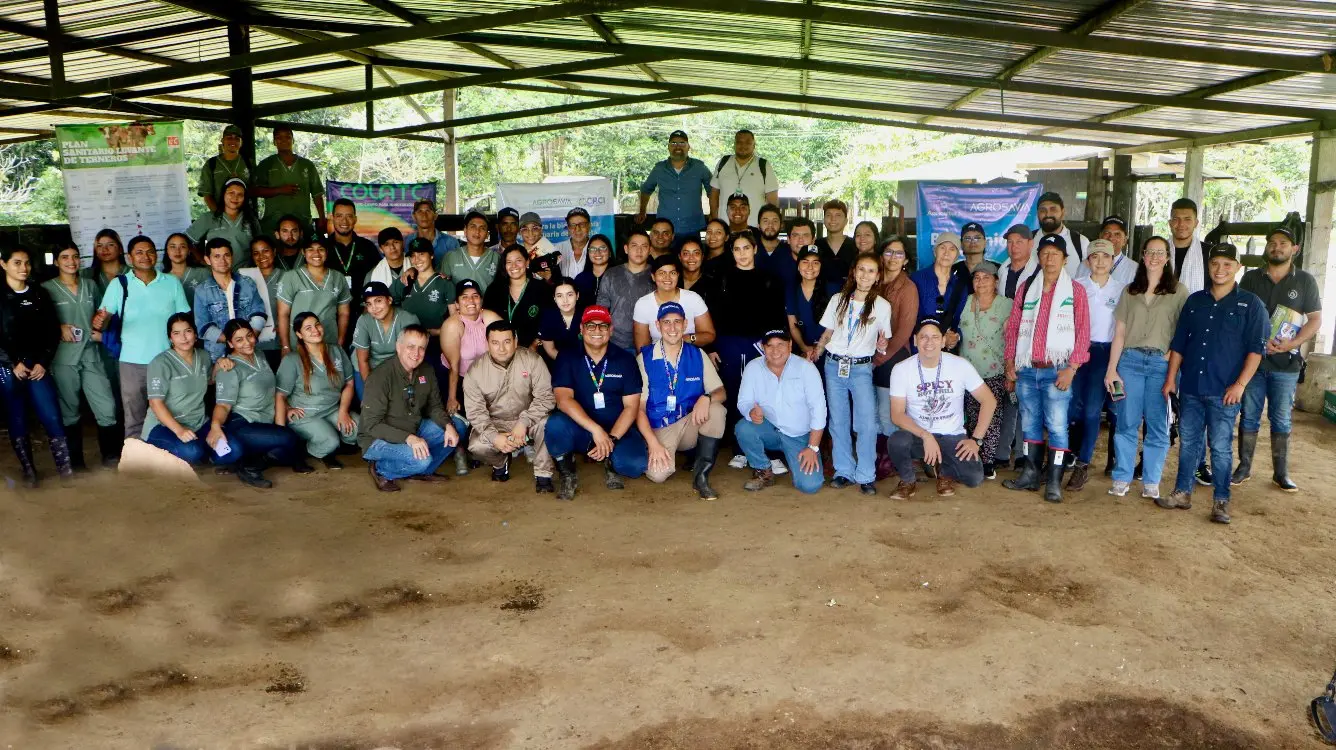
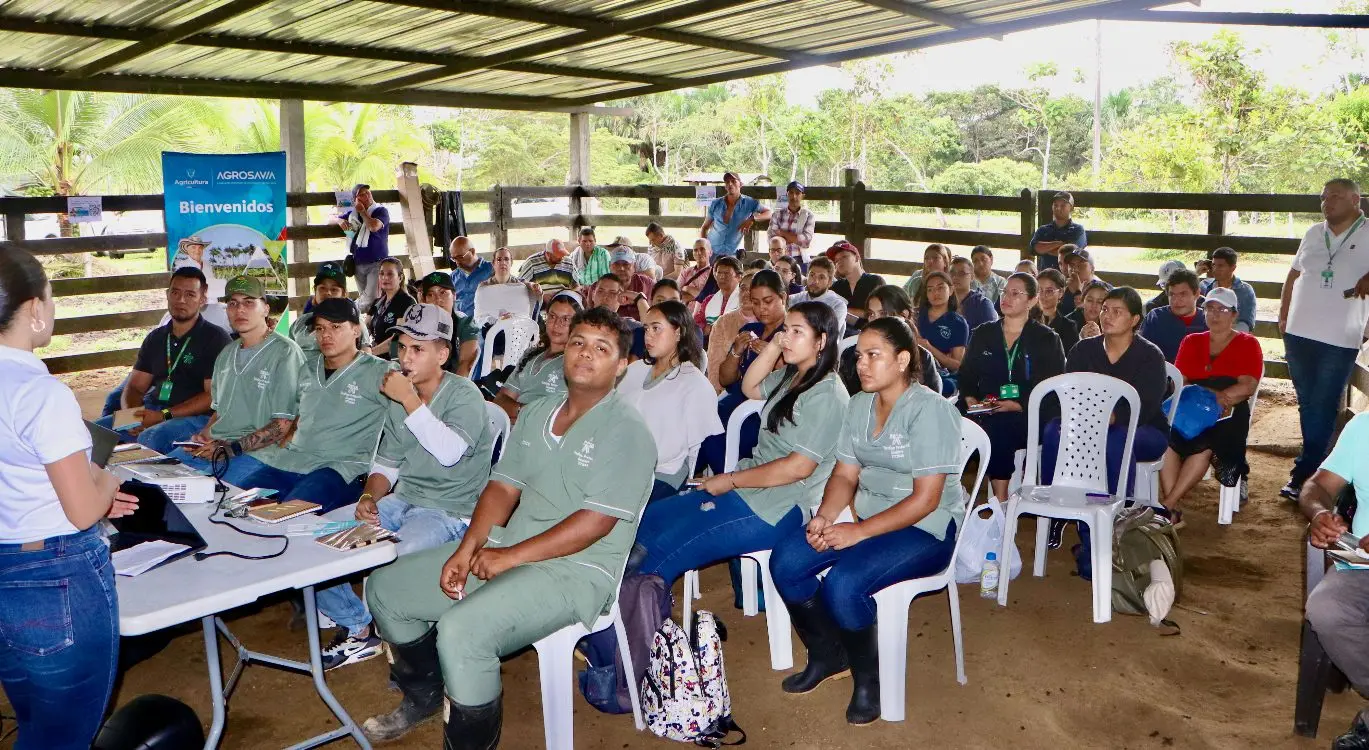
- The field day brought together more than 50 participants, including livestock producers affiliated with COMOGAN, students from Universidad de la Amazonía, agricultural extension agents, SENA trainees, and representatives from institutions such as the Colombian Agricultural Institute (Instituto Colombiano Agropecuario - ICA), Finagro, and Banco Agrario.
Florencia, Caquetá. July 27, 2026. On the slopes of the Caquetá foothills, where the landscape unfolds into savannas and upland plains between the municipalities of Milán and La Montañita, lies the rural community of La Pradera. There, emerging like a beacon amid lush vegetation, El Jordán Farm is far more than a rural property—it is a threshold where the legacy of traditional cattle ranching meets the living wisdom of the land. In this place, pasture does more than nourish livestock—it becomes part of a dialogue; the soil does more than provide support—it offers solutions; and every animal becomes a link in a silent covenant with the future. Visitors are welcomed by Fabián Eduardo Vargas Marín and Sandra Milena García Penna, whose hospitality reflects their deep understanding that rural life is built on relationships. Their warm smiles, firm handshakes, and genuine words convey a shared conviction: cultivating the land begins with cultivating human connections.
It was in this corner of Caquetá that Corporación colombiana de investigación agropecuaria (AGROSAVIA), in partnership with the Ministry of Agriculture, chose to sow a seed of knowledge. Under the initiative entitled “Integration of Technologies that Contribute to the Bioeconomic Development of Sustainable Livestock Production Systems,” the event was much more than a technical workshop; it became a meeting point where scientific research and farmers’ practical knowledge converged. Researchers from AGROSAVIA’s Florencia–Costayaco Research Center transformed the farm into an open-air classroom, where learning emerged not from lectures, but through observation, hands-on practice, and the exchange of experience.
The purpose was far-reaching. It was not simply about transferring technologies but about strengthening local capacities. The objective was to demonstrate that livestock production in Caquetá can become a driver of sustainable development when aligned with the principles of the bioeconomy, agroforestry, and agroecology. To achieve this, the field day was organized around two practical learning stations that embodied this vision of transformation.
At the first station, dedicated to integrated calf management, participants explored the use of bio-inputs—nature-based solutions such as probiotics—that enhance animal development from the earliest stages of life. Beyond the technical aspects, the session encouraged reflection on how innovation can improve productivity while preserving ecological balance, demonstrating that the most effective solutions often arise from nature itself.
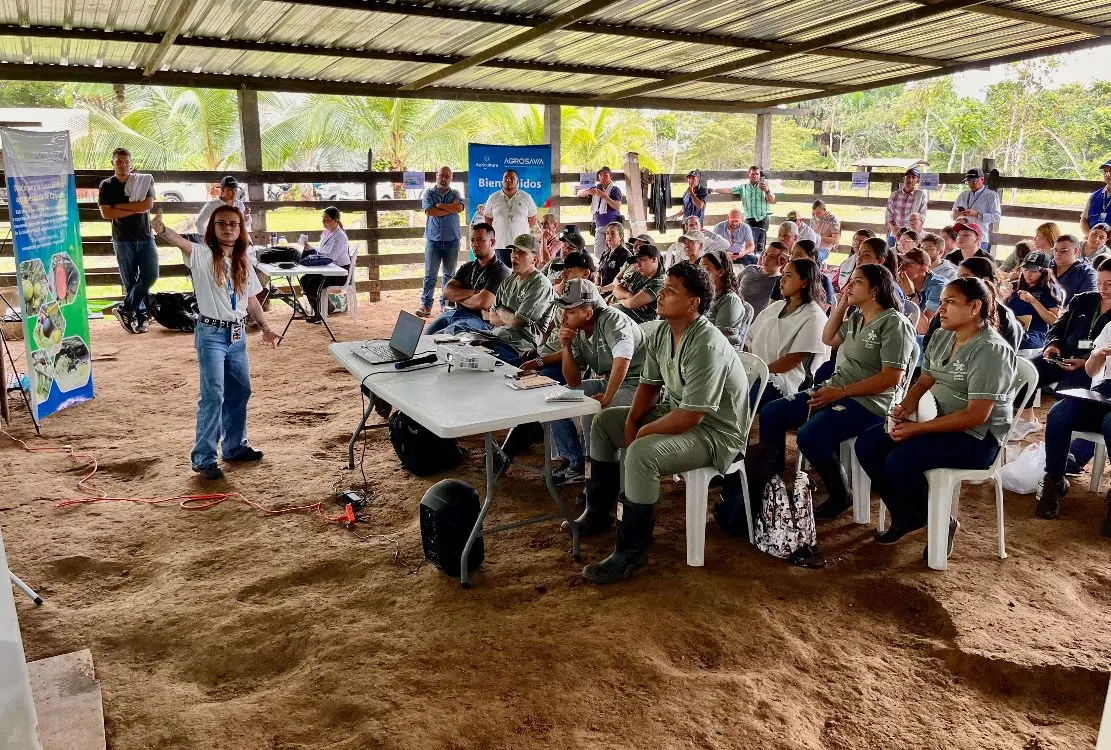
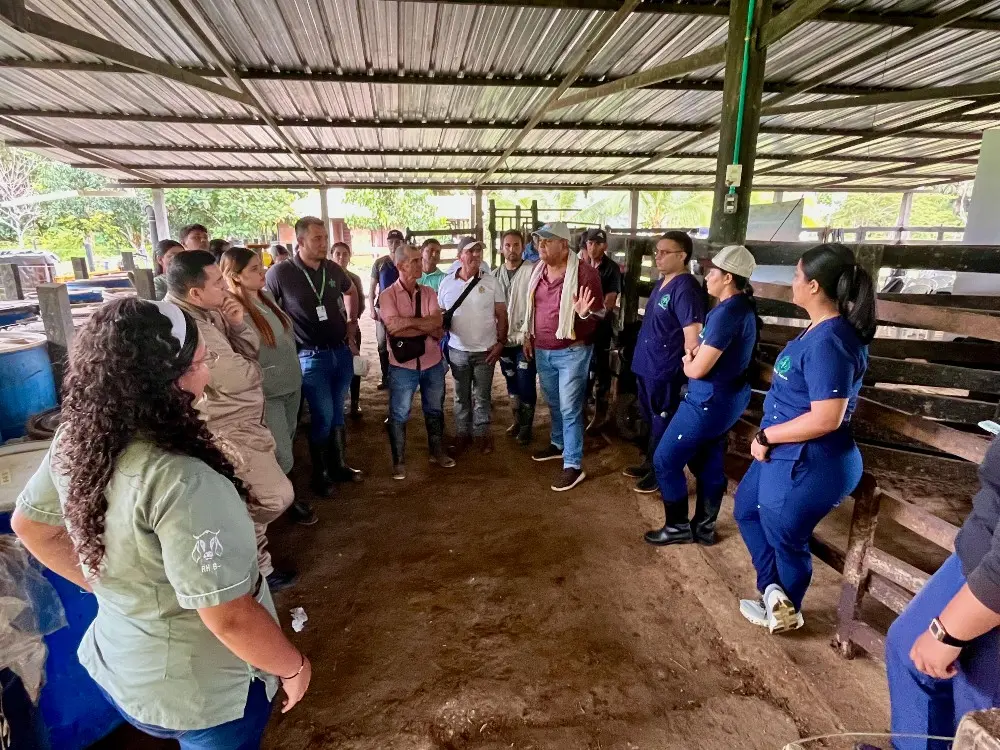
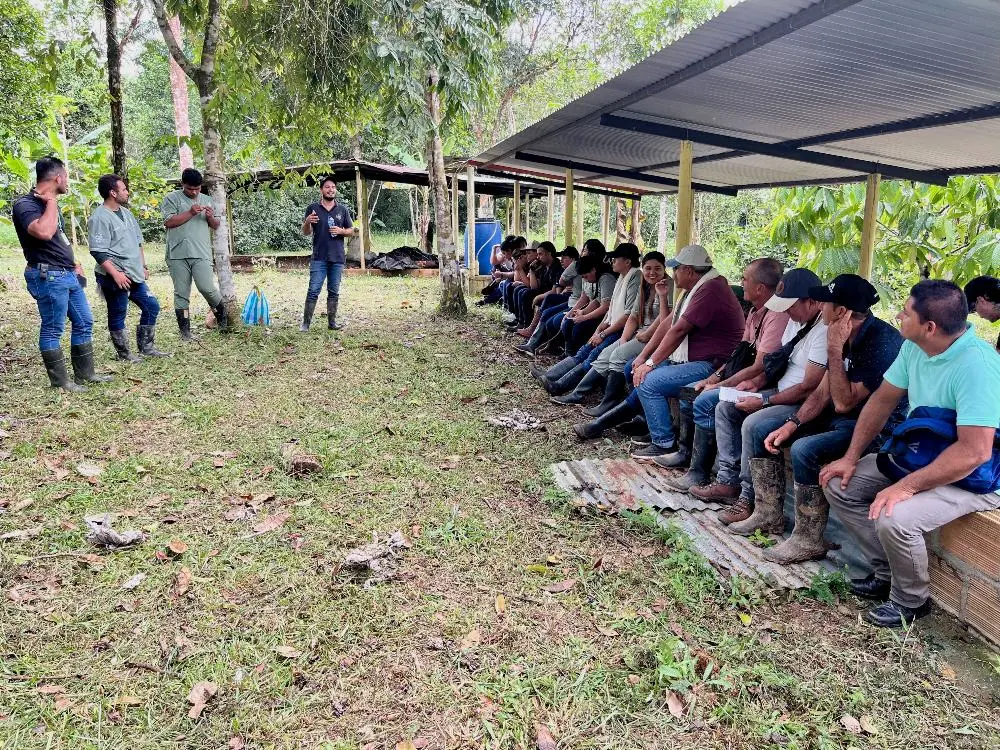
In this learning space, Rumitec was introduced as a valuable ally for animal health—a probiotic formulated with beneficial bacteria that enhances calf nutrition from the first days of life. In addition to improving nutrient absorption and promoting rumen development, it naturally balances the intestinal microbiota, facilitating a smoother, more efficient transition to the ruminant stage while improving vitality and overall performance. It represents a nature-inspired technology, in which productive efficiency is achieved as a natural outcome of animal well-being rather than as an imposed objective.
The second station focused on the sustainable management of livestock production systems and showcased a broad range of practical tools, from integrated production systems to methodologies for establishing Private Natural Heritage Reserves. Each presentation encouraged participants to rethink the landscape, recognizing every tree and every patch of forest as an opportunity to promote conservation while strengthening household livelihoods.
Yet AGROSAVIA’s greatest achievement extended beyond technology—it was fundamentally human. By joining efforts with the Regional Sustainable Livestock Roundtable, Universidad de la Amazonía, Vecol, and Coomogan, AGROSAVIA created an environment where livestock producers, technical professionals, rural facilitators, and students did more than listen. They engaged in discussion, questioned ideas, shared experiences, and contributed solutions. Innovation ceased to be an abstract concept and became a collaborative process of knowledge co-creation.
At El Jordán farm, one message became unmistakably clear: the bioeconomy is not a distant or theoretical concept. It is a practical commitment to generating value from biodiversity, creating local employment opportunities, and strengthening productive value chains that coexist harmoniously with the forest. It represents a new way of understanding the Amazon—not as a limitation, but as a strategic partner. Above all, it demonstrates that the livestock systems of the future will not compete with the rainforest; they will integrate with it.
As the afternoon drew to a close and participants walked through the pastures with a renewed perspective, a shared conviction emerged: sustainability is not a destination but a collective journey. Thanks to the coordinated efforts of AGROSAVIA and the institutions and stakeholders across the region, that journey already bears a clear footprint—one deeply etched into the fertile soils of Caquetá.
- More information here:
- José Dario Ule Rodriguez
- Communications, Identity and Corporate Relations Professional
- Office Florencia
- Communications, Identity and Corporate Relations Advisory Office
- jule@agrosavia.co
- AGROSAVIA