


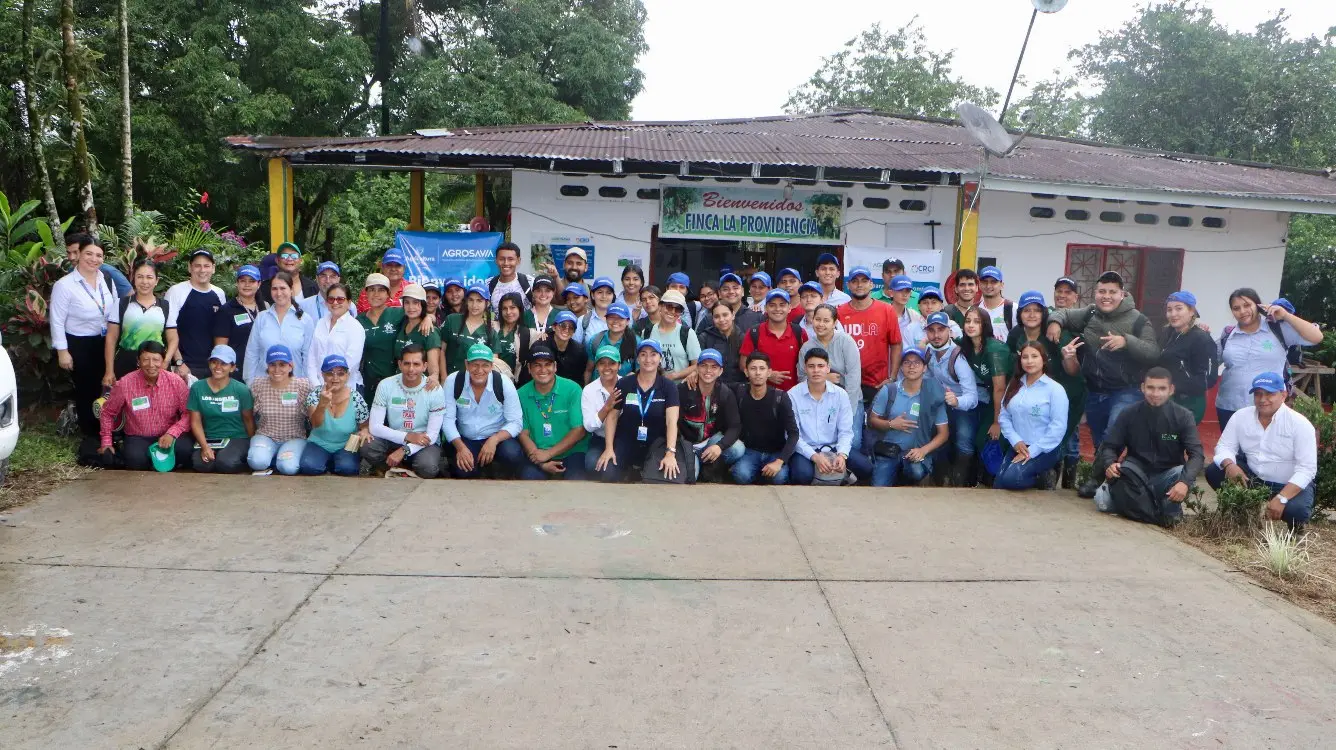
- This field day is part of the project “Consolidation of an Agricultural Node for Bioeconomy in Caquetá to Facilitate Institutional Coordination and Engagement with Territorial Stakeholders.”
- The initiative addresses the structural gap between the generation of scientific knowledge and its effective adoption within Amazonian rural production systems.
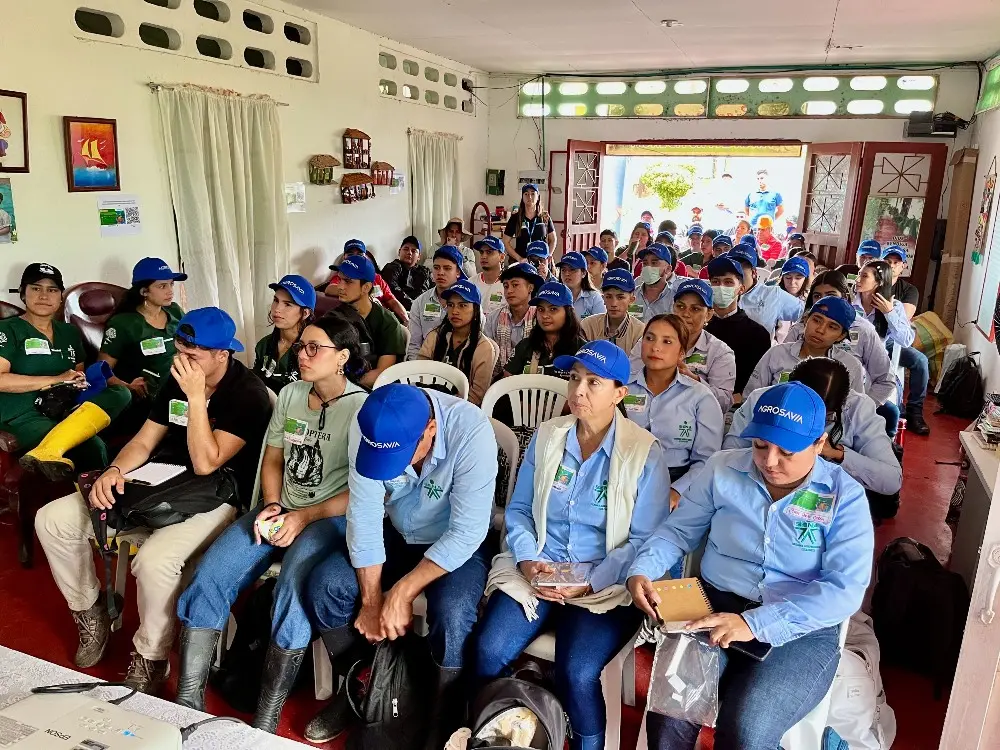
Florencia, Caquetá. June 1, 2026. In the heart of the Caquetá foothills, where the rainforest still whispers stories of life and the land holds the promise of renewal, a field day brought theory to life. Under the skies of Florencia—the golden gateway to the Colombian Amazon—producers, technicians, and academics gathered in the village of Colombia, specifically at La Providencia Farm. There, Corporación colombiana de investigación agropecuaria (AGROSAVIA), in collaboration with the Ministry of Agriculture and Rural Development and its Florencia Costayaco Office, and together with the research team from the Nataima Research Center, led an event entitled “Technology Transfer for the Bioeconomic Development of the Amazonian Cocoa Production System.”
This event was far more than a conventional workshop; it was a direct response to the gap between scientific knowledge generated in research laboratories and its practical application in the Amazonian countryside. More than 60 participants—including cocoa producers, extension agents and technical advisors, SENA apprentices, representatives from Universidad de la Amazonía, the Colombian Agricultural Institute (ICA), and the Departmental Cocoa Growers Committee—took part in three hands-on learning stations. Each station addressed critical topics, including the management of frosty pod rot and brown rot diseases, bioeconomy and agroforestry systems in Amazonian cocoa production, innovation, quality, sustainability, and the use of mineral-based formulations.
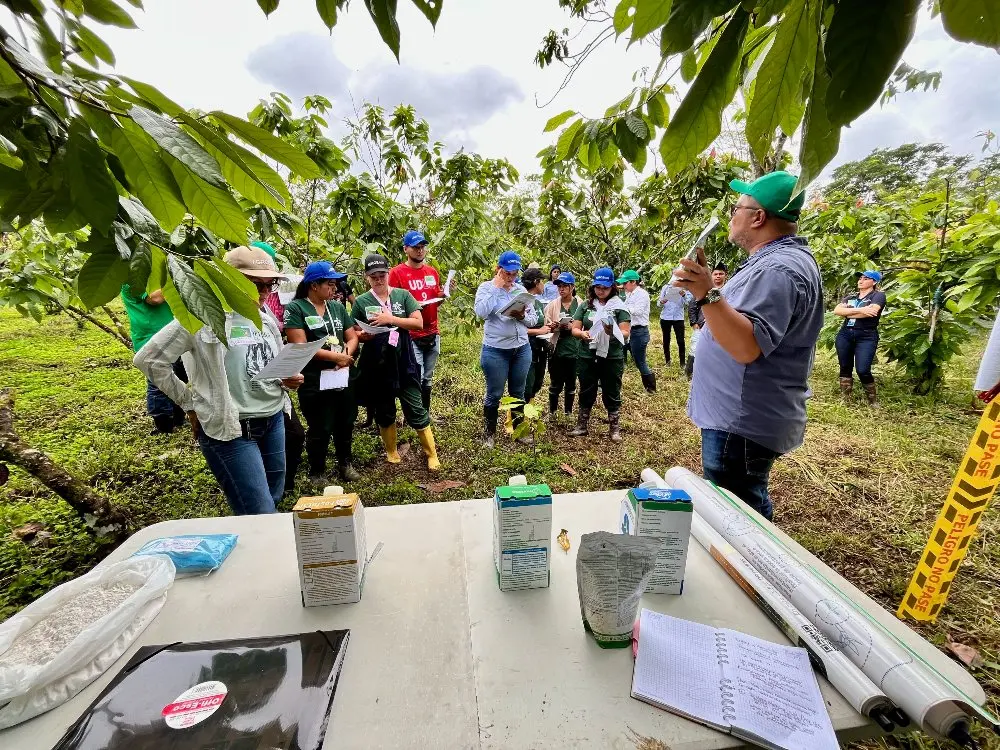
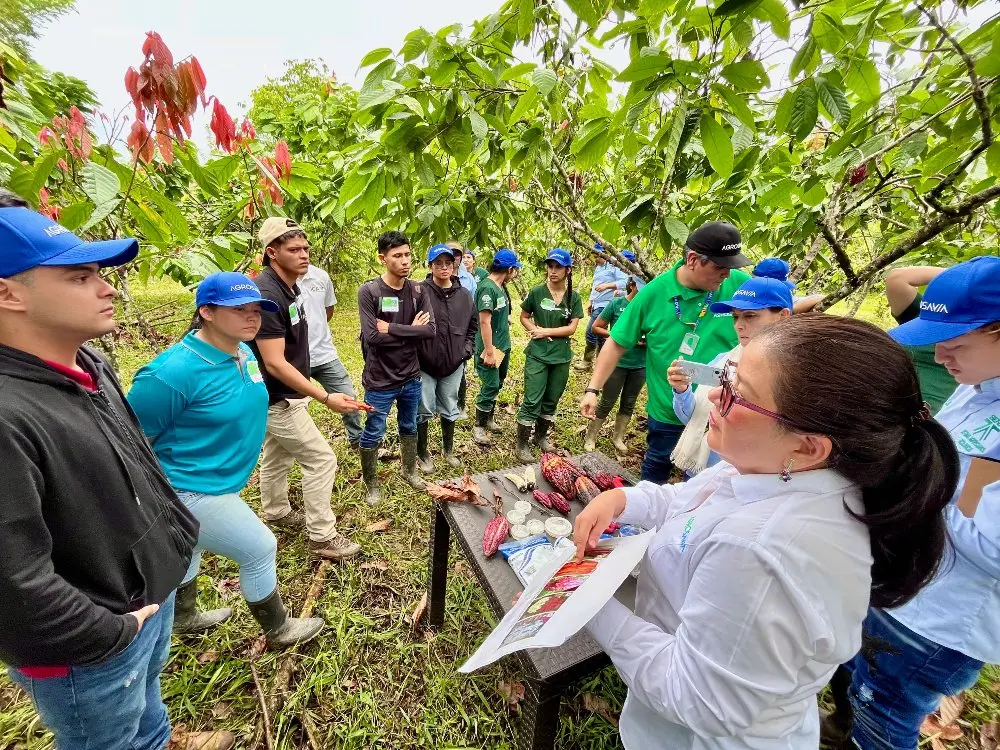
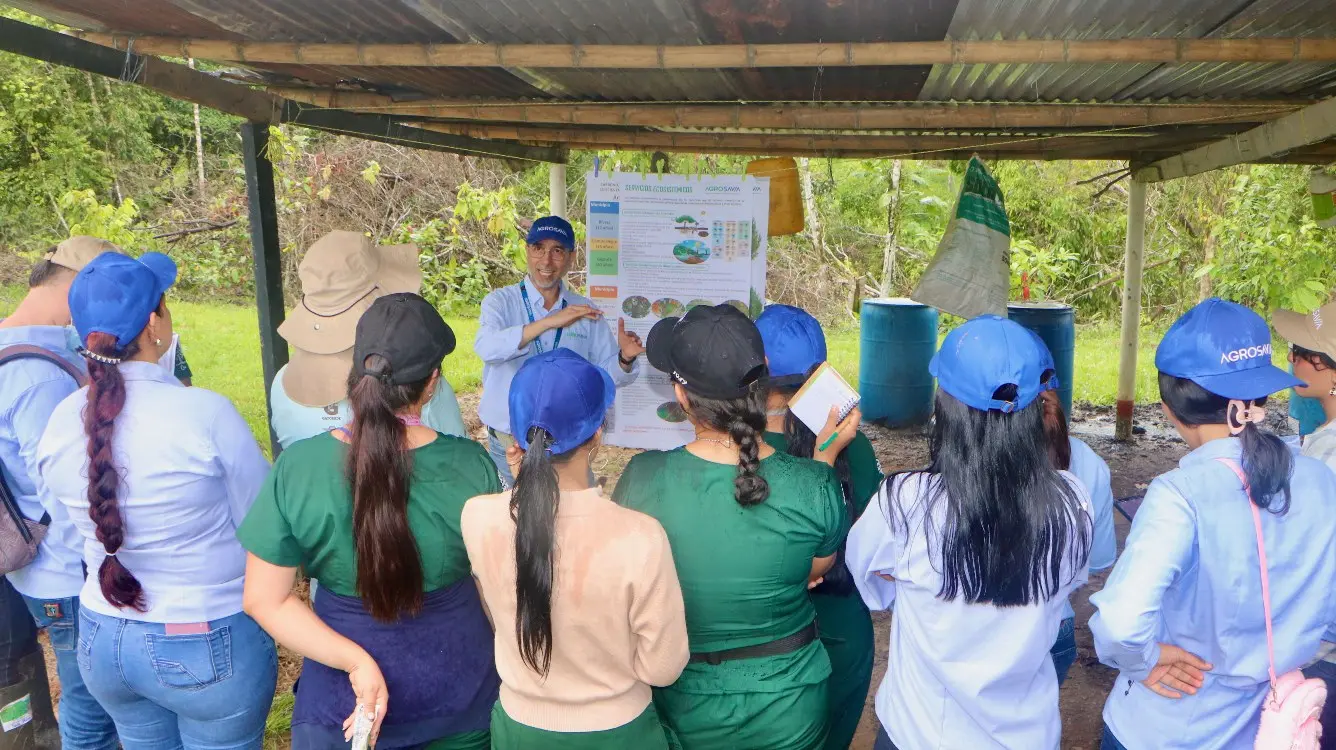
All these activities are part of the project “Consolidation of an Agricultural Node for Bioeconomy in Caquetá to Facilitate Institutional Coordination and Engagement with Territorial Stakeholders,” an initiative that, throughout 2026, will seek to establish an operational platform for direct dialogue between science and local territories. This node is designed not only to strengthen agroecological and agroforestry production systems under a GIAHS (Globally Important Agricultural Heritage Systems)-oriented approach, but also to scale the experience to other departments across the Amazon region.
The ultimate goal is to build a territorial Amazonian bioeconomy that goes beyond rhetoric and is embodied in concrete actions. This involves learning to value everything the forest provides—both timber and non-timber resources—developing short value chains with local identity and origin, closing resource loops through the recirculation of nutrients and biomass, and integrating ancestral knowledge with technological innovation.
For AGROSAVIA, the challenge is not simply to increase production, but to rethink rural production systems through a regenerative, resilient, and deeply territory-based approach. Under this vision, the agricultural node becomes a living instrument for implementing Colombia’s National Bioeconomy Policy and the National Agricultural Innovation System (SNIA) within an Amazon region that continues to pulse with immense vitality, spreading its generous lifeblood across this portion of Colombian territory.
- More information here:
- José Dario Ule Rodriguez
- Communications, Identity and Corporate Relations Professional
- Office Florencia
- Communications, Identity and Corporate Relations Advisory Office
- jule@agrosavia.co
- AGROSAVIA