


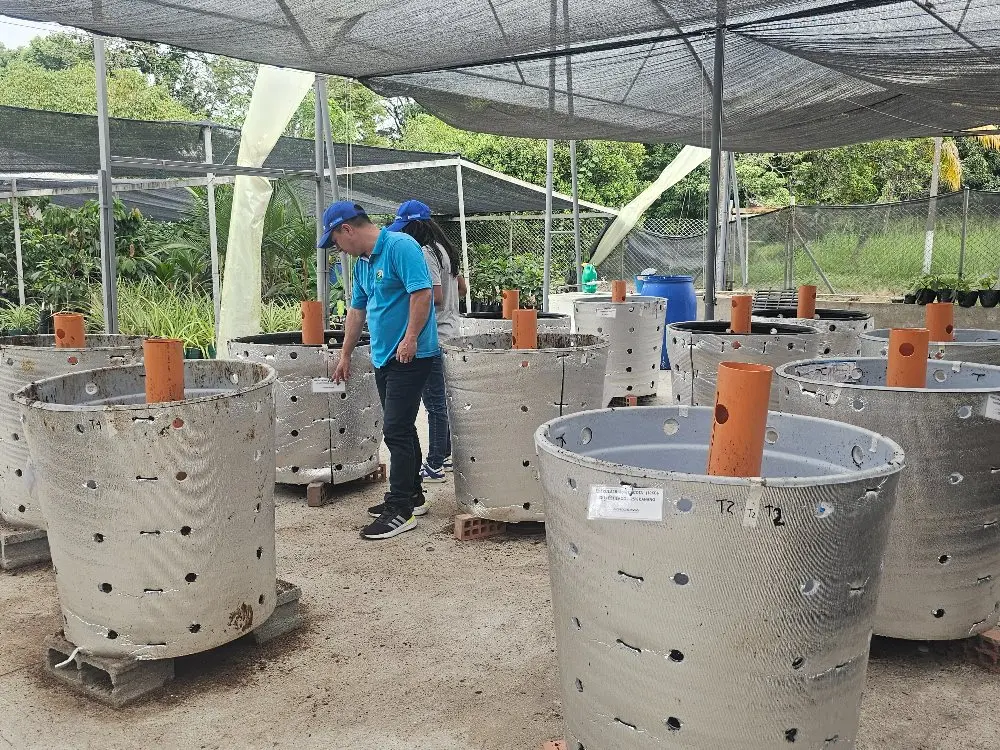
- AGROSAVIA implements a biofactory that uses organic residues from the Germplasm Banks for Food and Agriculture to produce organic fertilizers.
- It also works on a model for the integrated use of cacao pods in the PDET area of Buenaventura, Valle del Cauca.
- This practice contributes to reducing dependence on synthetic chemical fertilizers and external energy sources, optimizing the use of resources within conservation systems under an agroecological approach.
Palmira, Valle del Cauca. February 2, 2026. What some may consider waste can be useful to others, as the popular saying goes, “one person’s trash is another person’s treasure.” This is the perspective of a team of researchers from the Palmira Research Center of Corporación colombiana de investigación agropecuaria (AGROSAVIA), which has embraced the circular economy’s principles in agronomic practices to help reduce the environmental impacts of residual plant and animal biomass, generating agricultural and environmental sustainability.
For this reason, they implemented a biofactory where residues, such as discarded fruits, plant material resulting from pruning and routine crop management, and livestock manure, are used to develop biotechnological alternatives such as dry-based composting, biopreparations, and leachates from by-products, and vermicomposting. In this way, organic residues are transformed into value-added inputs, such as low-cost organic fertilizers that improve seed germination, strengthen root systems, and enhance flowering, promoting nutrient cycle closure and improving soil and plant health.
Organic residues are utilized and serve as nutrient sources
These practices have been developed and incorporated into the Germplasm Banks for Food and Agriculture project conserved by AGROSAVIA’s Palmira Research Center, which includes the Hartón del Valle creole cattle breed and 11 plant collections of avocado, cacao, citrus, peach palm (chontaduro), coconut, tropical fruits, soursop, guava, mango, musaceae, and pineapple. This approach enables a reduction in dependence on synthetic chemical fertilizers and external energy sources, while optimizing resource use within conservation systems under an agroecological framework, as a pathway that supports the local sustainability of genetic, environmental, and agricultural resources.
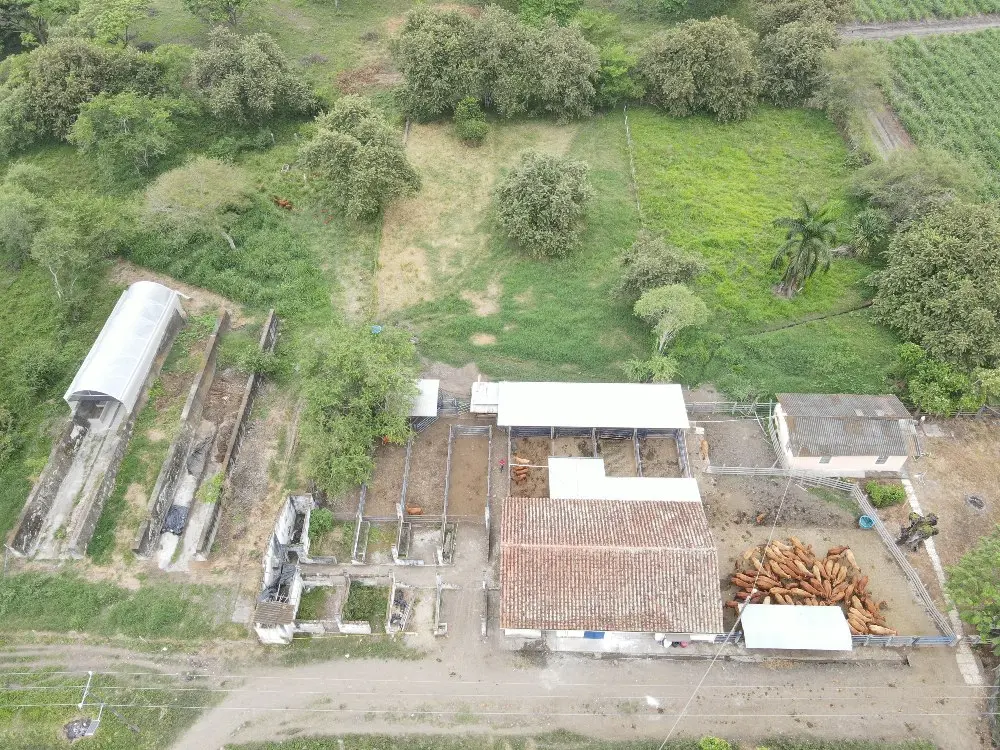
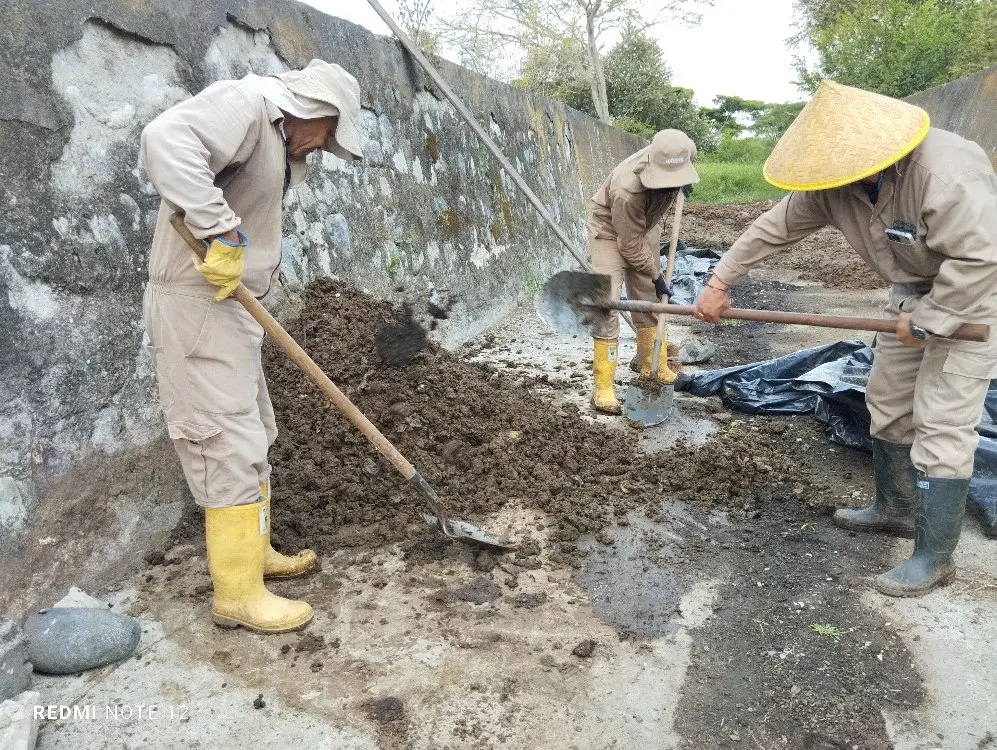
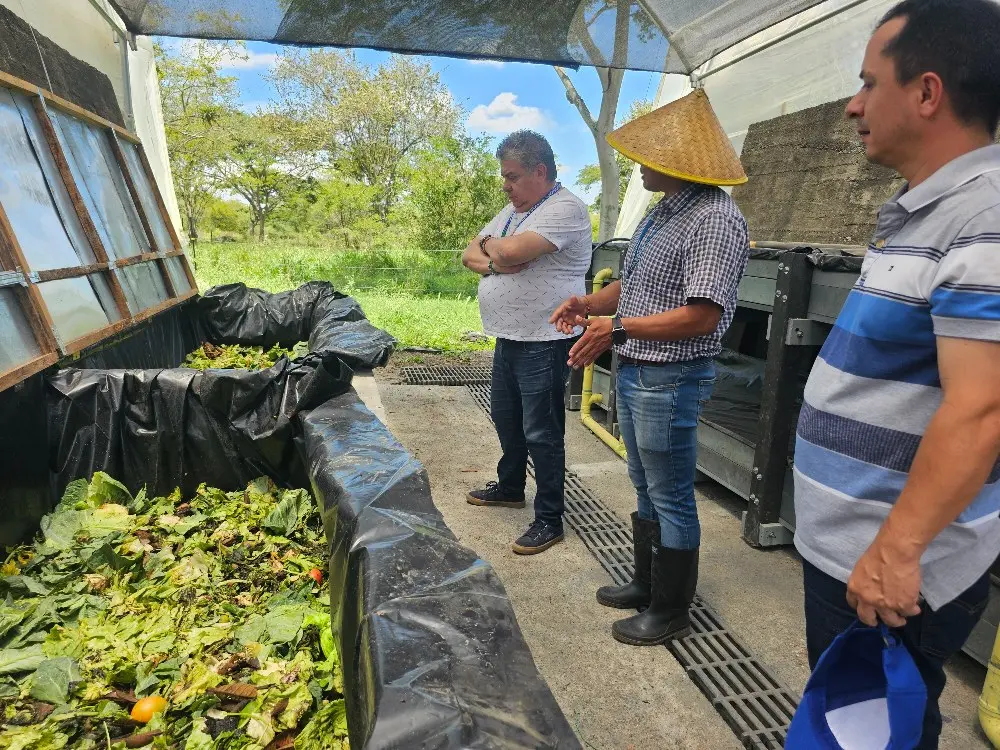
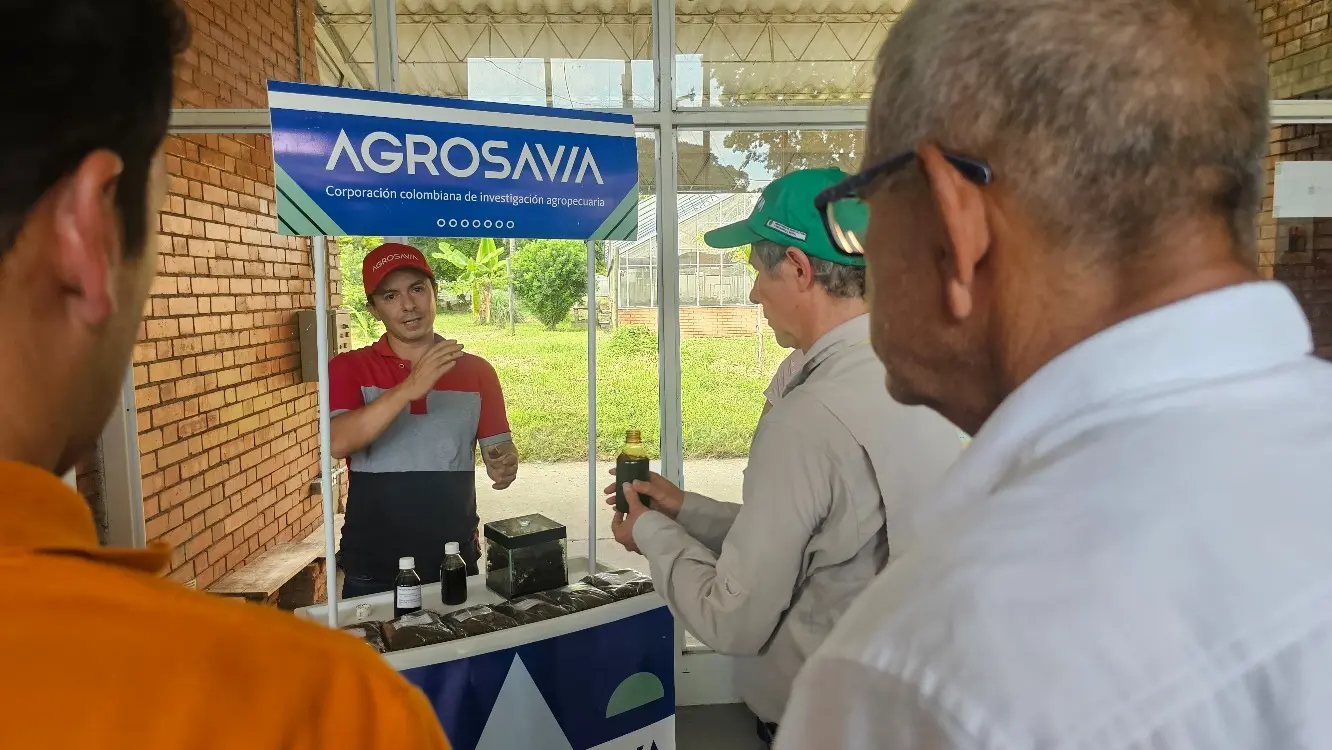
The products generated through this initiative are reincorporated into the conserved plant collections and animal grazing areas, creating alternatives to traditional agricultural and livestock collection management systems, oriented toward more efficient, resilient, and environmentally sustainable schemes.
Circular economy in PDET territories
Additionally, thanks to funding from Call 934 of the Ministry of Science, Technology, and Innovation, AGROSAVIA is also working on a model for the integrated use of cacao pods in Buenaventura, Valle del Cauca, a territory affected by the country’s armed conflict and recognized under the Development Program with a Territorial Approach (PDET).
Researchers are implementing alternatives, such as composting, anaerobic digestion (methane production – combustion gas), and pyrolysis (a process to obtain biochar using high temperatures) for the utilization and valorization of cacao-derived residues to obtain value-added products.
This initiative seeks to showcase sustainable and promising technologies as alternatives to fossil fuels and chemical fertilizers, using residual biomass in a territorial and participatory approach to produce biogas and organic fertilizers.
For this reason, the biofactory responds to the global trend toward sustainability and efficient resource use, contributing to Colombia’s Sustainable Development Goals, particularly those related to clean water and sanitation, affordable and clean energy, and climate action.
This technology, implemented by AGROSAVIA’s Palmira Research Center, is available for producers, technical assistants, extension agents, associations, entrepreneurs, and other interested parties interested in learn about these. For more information and to schedule visits, please contact the Communications Office at cnarvaez@agrosavia.co
- More information here:
- Claudia Narváez Marmolejo
- Communications, Identity and Corporate Relations Professional
- Research Center Palmira - Popayán
- Communications, Identity and Corporate Relations Advisory Office
- cnarvaez@agrosavia.co
- AGROSAVIA