


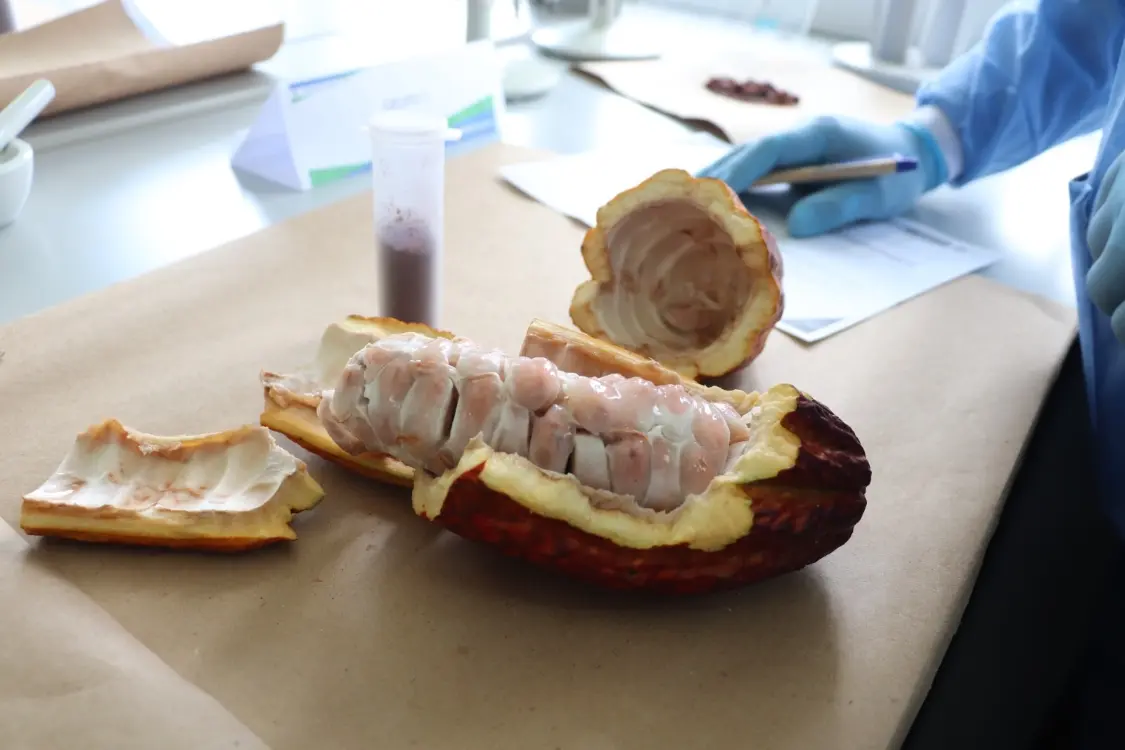
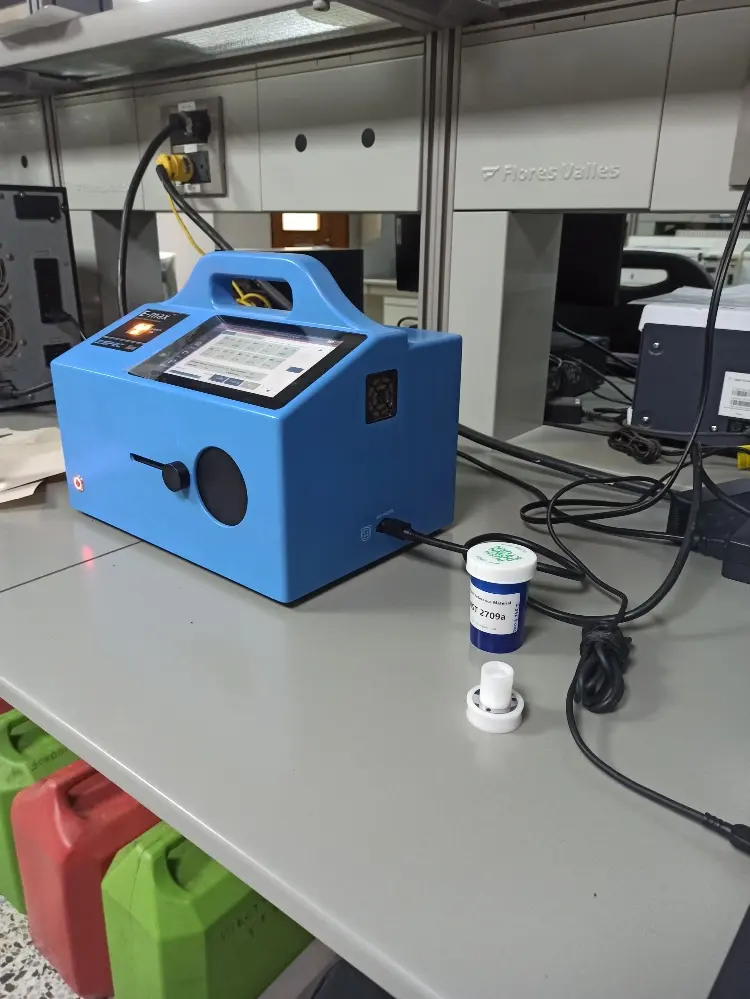
Mosquera, Cundinamarca. December 9, 2025. Under the direction of Daniel Bravo, Ph.D. Researcher associated with the Tibaitatá Research Center of AGROSAVIA in Mosquera, an article was published validating the new monochromatic X-ray fluorescence (HXRF) technology as a powerful, non-destructive, non-invasive, and highly sensitive technique for quantifying cadmium, other heavy metals, and other chemical elements in cacao cultivation.
The new publication covers all metrological and quality aspects pertaining to analytical chemistry seeking to determine the validity of this new technique. Compared with the conventional (or traditional) technique of inductively coupled plasma spectrometry — ICP (OES/MS) — it is more cost-effective (or economical) and environmentally friendly, as it reduces its chemical greenness index compared to the traditional technique. This new scientific article incorporates a representative sample of cocoa samples from different cocoa-producing departments of Colombia, with a very particular emphasis on the department of Arauca, where the exploration was carried out in four municipalities: Arauquita, Fortul, Saravena, and Tame.
The new article also explores new possibilities for measuring cadmium not only in the cocoa system (understood as an open thermodynamic system where many effectors influence cadmium content in beans), but also in a liquid bacterial culture medium (Luria Bertani), widely used to study cadmium-tolerant bacteria from cacao cultivation (Bravo et al., 2018).
This study involved chemist Edwin Cifuentes, professional from the analytical chemistry laboratory of the Tibaitatá Research Center; together with its coordinator, M.Sc. Researcher Yeni Rodríguez; Edwin’s master’s thesis co-advisor, Manuela Avellaneda, from the Chemistry Department of Universidad Nacional de Colombia in Bogotá; Support Professional Ruth Quiroga from the Tibaitatá Research Center; and as corresponding author and master’s thesis director, Daniel Bravo.
For the co-authors, it was a very important work, as it opens the door for initiating other standard procedures with this novel technology, which facilitates quantification and accelerates measurement times of cadmium and other heavy metals of interest, without losing sensitivity or precision. It also opens doors not only for cacao cultivation — so important in Colombia — but also for other relevant crops facing the presence of cadmium, with even lower internationally established permissible limits, such as avocado, rice, and passion fruit (gulupa), to mention the most important ones.
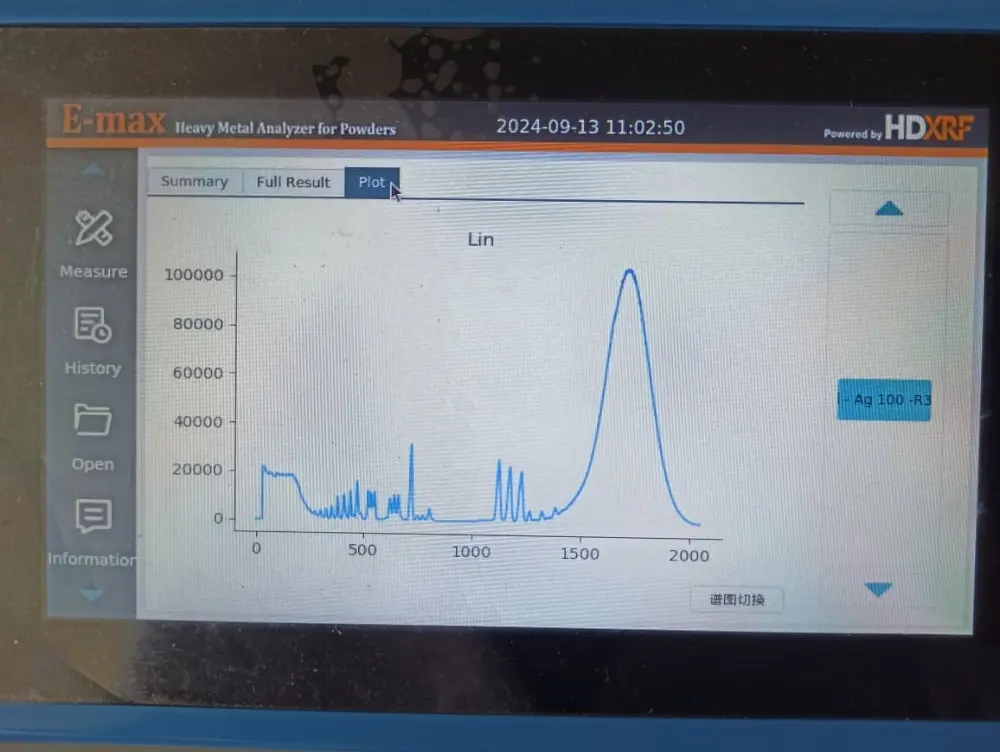
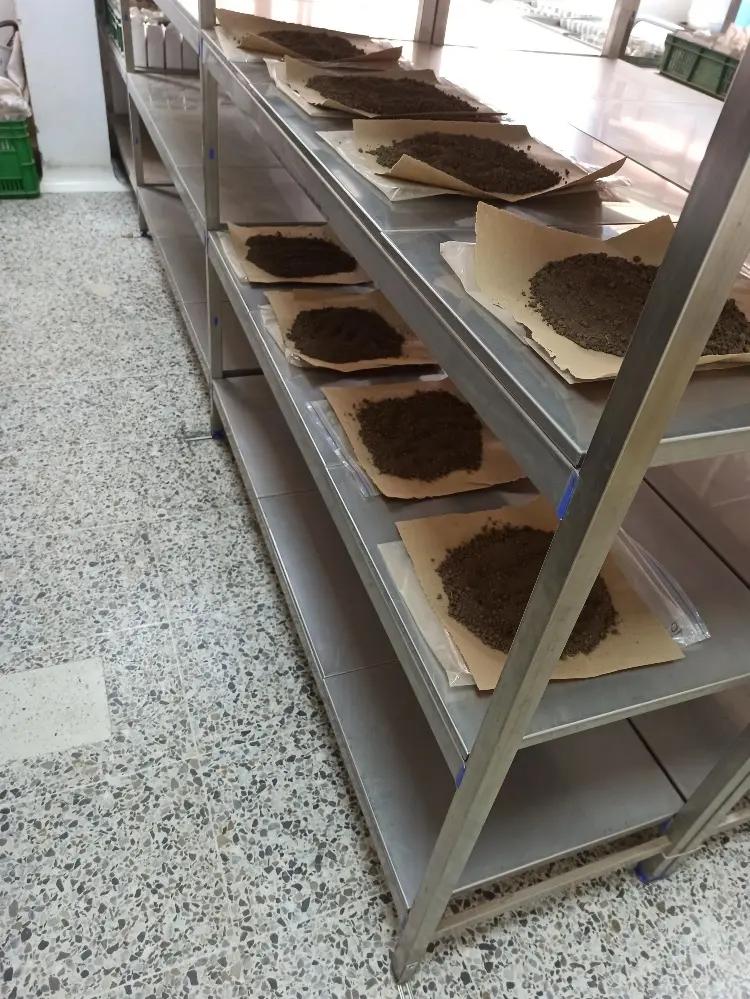
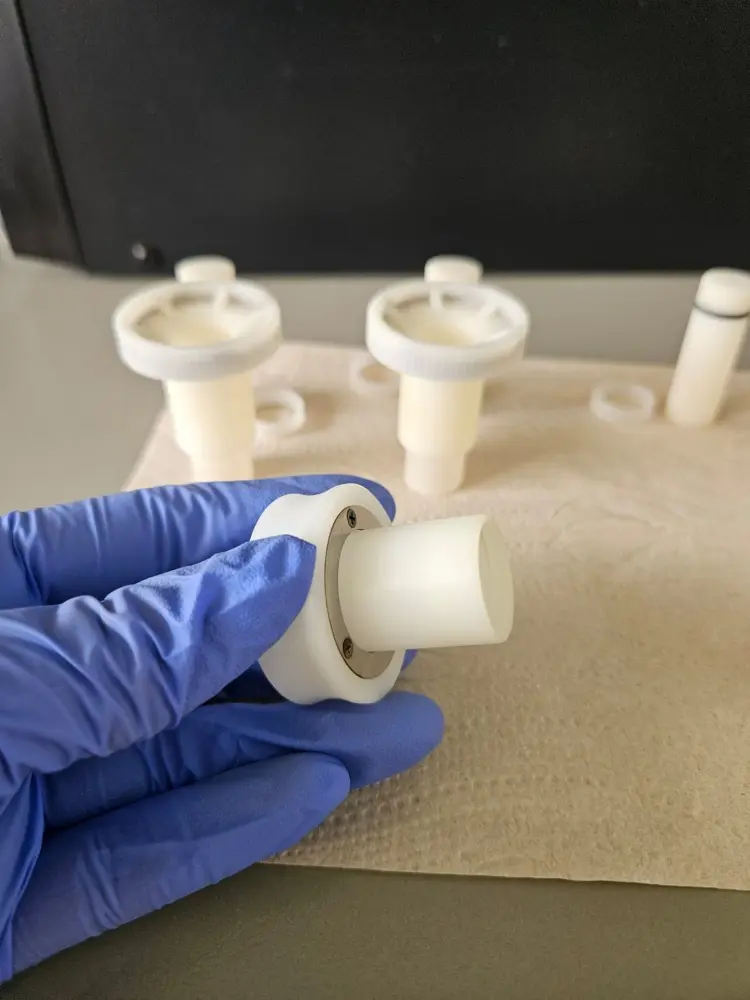
From the research team appointed by Bravo for this study, the researcher who participated as first author, Edwin Cifuentes, highlighted: “This initiative represented a valuable opportunity to strengthen collaboration between research networks and laboratories, highlighting the benefits of integrating laboratories as key actors in scientific projects. With this work, AGROSAVIA positions itself as one of the pioneers in Colombia for the implementation of more affordable analytical techniques for the quantification of cadmium in plant-based matrices.”
Additionally, Coordinator Yeni Rodríguez emphasized: “The results are highly relevant for promoting the adoption of monochromatic X-ray fluorescence spectrometry (MXRF) as a viable alternative for Cd analysis in samples from the cocoa system. The implementation of this technology, in parallel with the widely used ICP technique, will significantly reduce the costs associated with the analytical service.”
For her part, Research Support Professional Ruth Quiroga noted: “Being part of this work is very gratifying not only because of the scientific contribution of the publication but also because of the direct impact this work will have on cacao producers.”
AGROSAVIA, under the direction of Researcher Bravo, has been leading this and other studies with the new E-max monochromatic X-ray fluorescence technology for the past three years (which will also be published in the coming months). As Bravo mentions: “This is a milestone in technological advancement and innovation toward mass diagnosis of cadmium within the cocoa system. The article opens the door to explore this type of precise diagnosis, with all required metrological and analytical properties, for new challenges involving both other metals in cocoa cultivation and cadmium itself in other crops of economic and social importance in Colombia.”
This scientific research was carried out thanks to funding from the General Royalty System project Cacao Arauca, titled: Implementation of agroforestry strategies and incorporation of advances in agronomic and postharvest management of new clones to improve productivity and quality of cocoa in the department of Arauca, approved by Minciencias in 2019. It also received funding from the international project STDF – Enhancing capacity development and knowledge exchange to support the management of cadmium levels in cocoa from Latin America and the Caribbean destined for export to the European Union. And within AGROSAVIA, through the subproject Contributing to mitigating Cd levels in Arauca.
The publication is available online in the scientific journal Spectrochimica Acta Part B: Atomic Spectroscopy from Elsevier, and is freely accessible to the public at this link: https://www.sciencedirect.com/science/article/pii/S058485472500237X
- More information here:
- María Elena Londoño Rubio
- Communications, Identity and Corporate Relations Professional
- Research Center Tibaitatá
- Communications, Identity and Corporate Relations Advisory Office
- melondono@agrosavia.co
- AGROSAVIA