


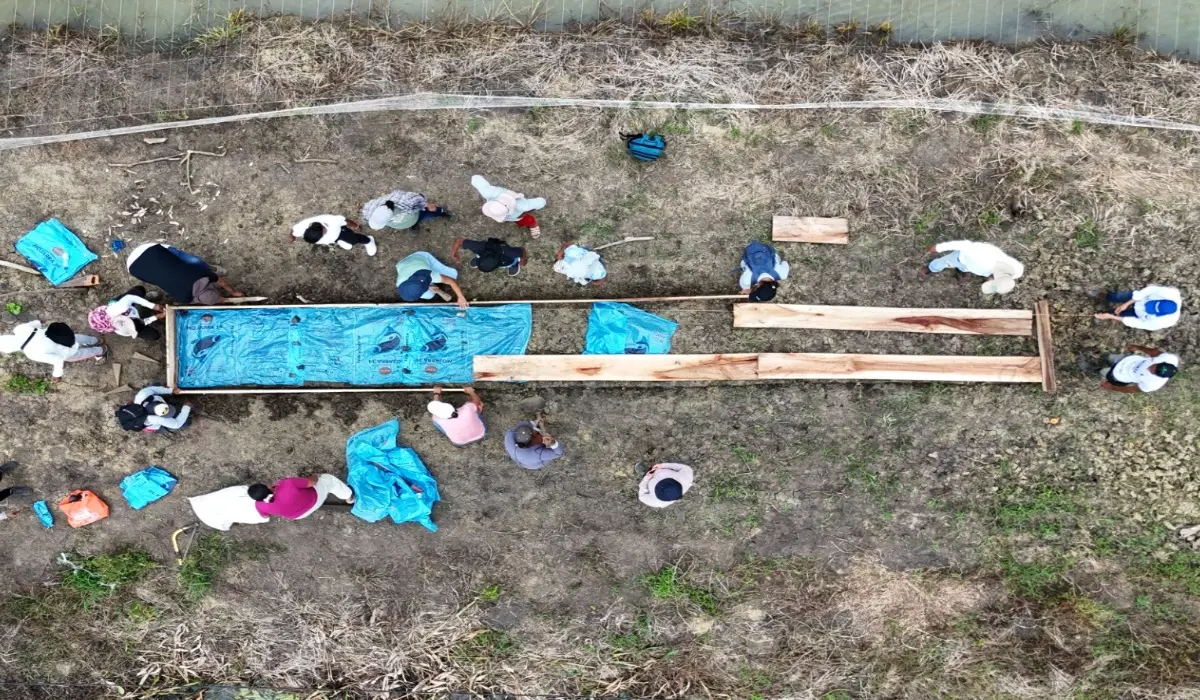
- 768 people were directly trained through the Sweet Potato Linkage Plan (PV Batata).
- A sweet potato prototype harvester was designed, assembled, and built to reduce labor costs.
- Production hubs were established in six departments, using high-quality AGROSAVIA Aurora sweet potato seed.
- The target population for this year's project focused on small producers, organized and entrepreneurial women, and indigenous and Raizal communities.
Montería, Córdoba. December 29, 2025. The linkage plans of Corporación colombiana de invetigación agropecuaria (AGROSAVIA) aim to disseminate, supply, and promote the adoption of technological offerings generated through research processes. For this reason, in 2025, the continuation of the Sweet Potato Linkage Plan III further encouraged the planting and incorporation of the sweet potato variety AGROSAVIA Aurora, along with other technological offerings associated with this crop.
“The target population of this project for this year focused on small producers, organized and entrepreneurial women, indigenous communities of the Wayúu ethnic group, and Raizal communities from the island of San Andrés,” reported Rocío Gámez Carrillo, Ph.D. Researcher at the Turipaná Research Center. The project’s area of influence included the following departments: Sucre (municipalities of Colosó and Sampués), La Guajira (Fonseca), Córdoba (Lorica and Cereté), Bolívar (municipality of Carmen de Bolívar), Magdalena (Zona Bananera municipality), and the island of San Andrés.
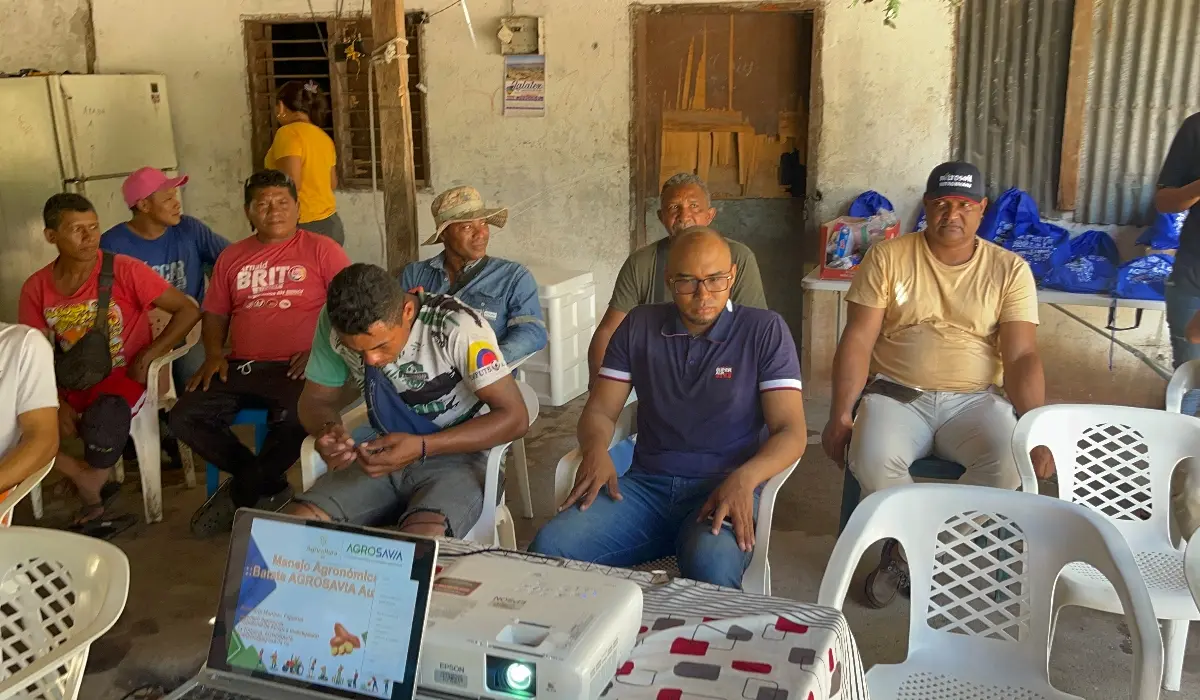
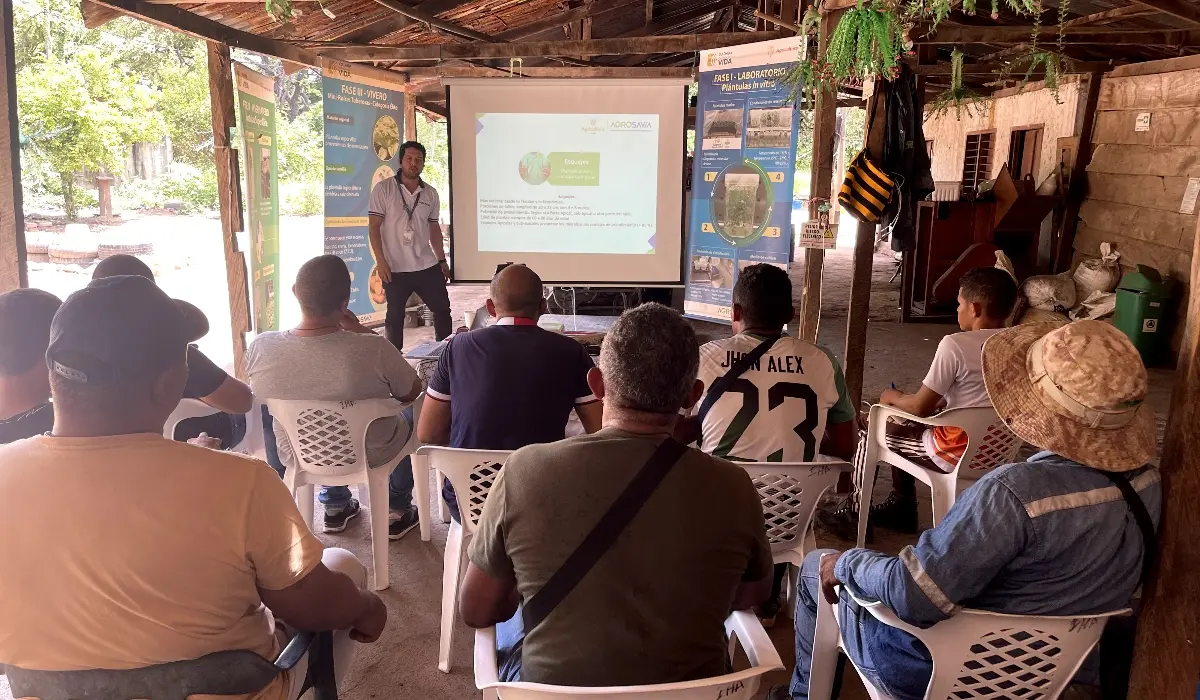
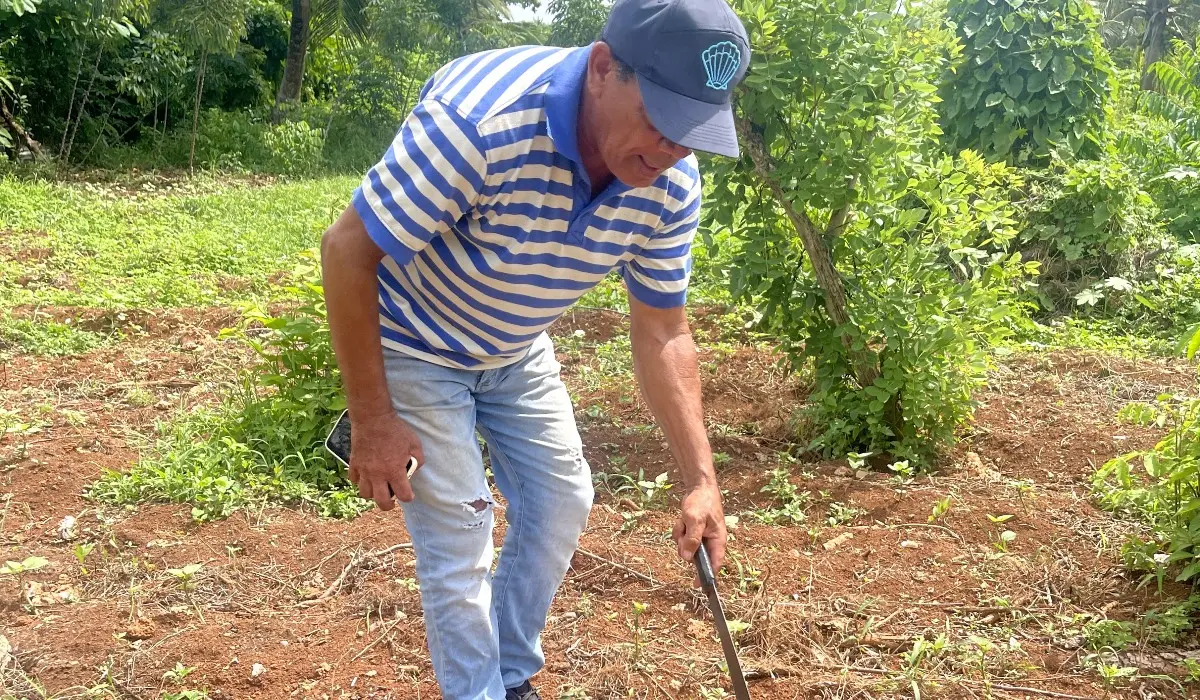
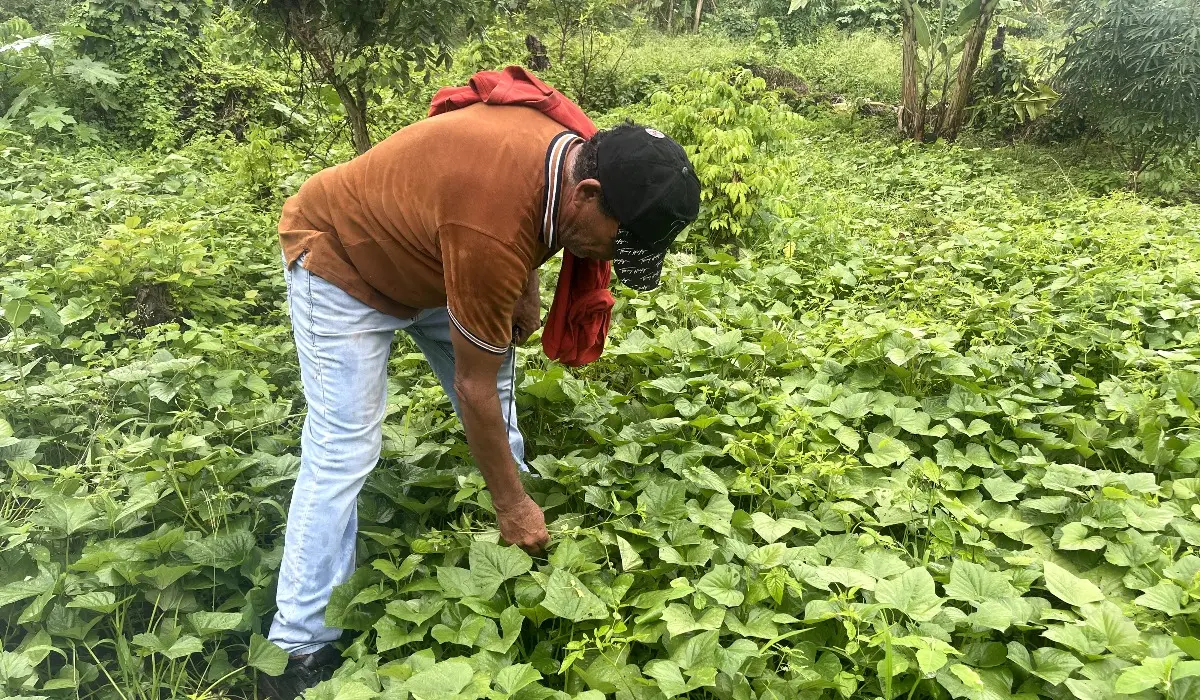
This PV enabled the adjustment and validation of existing technological offerings in three demonstration showcases to increase planting densities, crop productivity, and improve the percentage of first-grade roots at harvest, while maintaining the genetic, physical, sanitary, and physiological quality criteria. New technological offerings were validated, including planting material and seeds produced under high production standards through scaling from the laboratory, greenhouse, and nursery stages. These efforts allowed supplying more than 25,000 sweet potato cuttings and over 5,000 mini tuberous roots of AGROSAVIA Aurora sweet potato to establish seedbeds on producers’ farms.
Gámez Carrillo also noted that “in six departments, production hubs were established with high-quality AGROSAVIA Aurora sweet potato seed, using low-cost, reused, and durable beds for demonstration showcases with organizations of small producers, which will enable the establishment of future commercial plots.” Through these showcases, plant material and agricultural inputs, such as substrates, were supplied, and in some organizations, the bed structures were also donated, including coverage and temporary shading. From these showcases or seedbeds, approximately 5 hectares were established in the project areas; however, we highlight the insular area of San Andrés, where nearly 2 hectares of AGROSAVIA Aurora sweet potato were established, with strong projection and impact on the local market, considering the continuous production of this AGROSAVIA Aurora sweet potato established in 2025, once the local creole sweet potato produced on the island is depleted between the months of December and February.
Additionally, efficient fertilization strategies were evaluated to stimulate the differentiation and filling of sweet potato tuberous roots using bio-inputs generated by the corporation, defining a recommendation for the use of two potential bio-inputs: Triestimul and Fosfotal during these production phases. As an innovative result, a prototype sweet potato harvester was designed, assembled, and built to reduce labor costs in a highly labor-intensive crop. This Linkage Plan contributed to the Sweet Potato Production Model through a book chapter that details seed production schemes. Through this project, sustainable practices were also implemented in agreement with five communities of small producers, women, indigenous peoples, and Raizal communities, promoting differentiated production systems for each area, with promising species such as sweet potato. A total of 768 people were directly trained through the Sweet Potato Linkage Plan, in addition to the visitors received at the Turipaná Research Center.
All these methodologies align with the Corporation’s overarching objective: to achieve greater positioning of the AGROSAVIA Aurora sweet potato variety among producers in the Caribbean region, thereby increasing the planted areas in the Caribbean region.
- More information here:
- Liseth Cárdenas
- Communications, Identity and Corporate Relations Professional
- Center for Research and Technology Transfer Turipaná
- Communications, Identity and Corporate Relations Advisory Office
- ljcardenas@agrosavia.co
- AGROSAVIA