


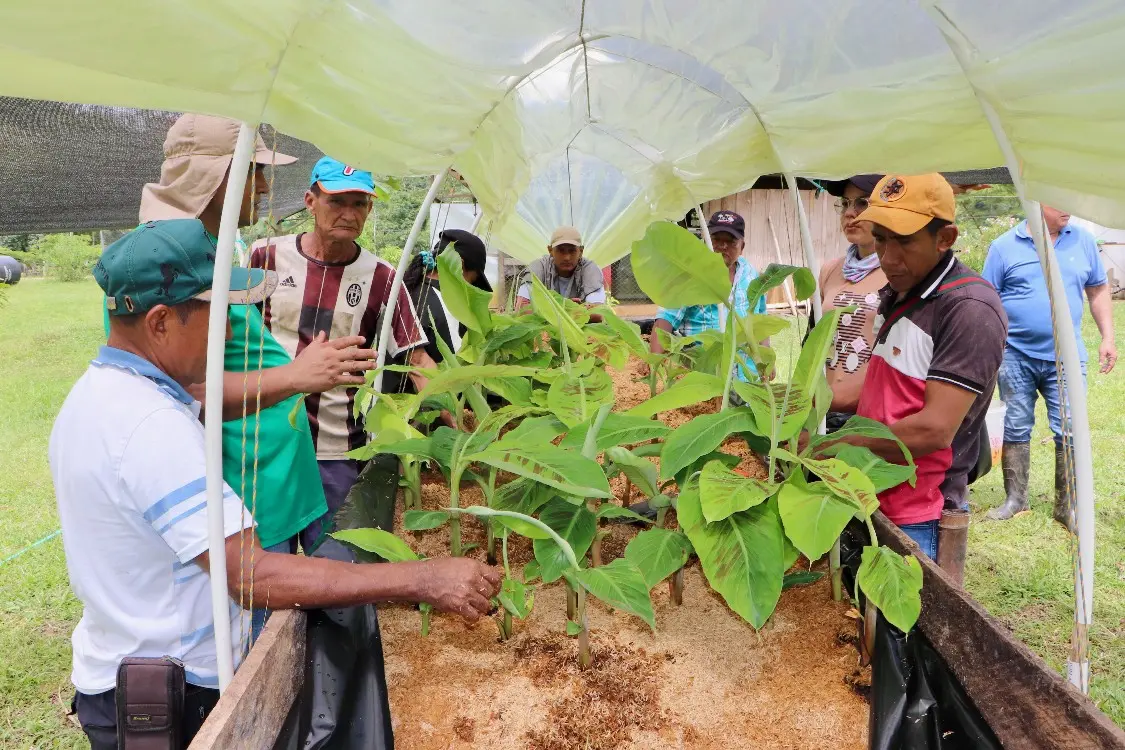
- The project seeks to strengthen organizations in the Coffee-Growing Region and the departments of Córdoba, Meta, Caquetá, and Valle del Cauca by enhancing their capacities for the production and management of plantain seed with high standards of genetic, physical, physiological, and sanitary quality.
- And to consolidate high-quality plantain seed production hubs in the Coffee-Growing Region, Córdoba, Meta, Caquetá, and Valle del Cauca through the strengthening of local technical capacities.
Florencia, Caquetá. December 24, 2025. In the deep watersheds of Caquetá and Putumayo, where the Amazon rainforest opens clearings to make way for crops, plantain continues to be the food that sustains economies, tables, and traditions. In this area, among mountains that breathe humidity and generous soils, this crop rises as a symbol of resilience; a crop that flourishes thanks to the silent effort of peasant families.
Plantain management remains rooted in ancestral practices that include manual weeding, timely sucker removal, and visual selection of the strongest plants. However, other fundamental tasks, such as proper fertilization, phytosanitary management, and the use of reliable planting material, are still carried out irregularly, leaving in the shadows a productive potential that could transform territories.
It was in this landscape of contrasts that a hope was born: the National Seed Plan. Promoted by Corporación colombiana de investigación agropecuaria – AGROSAVIA, and the Ministry of Agriculture and Rural Development, this project is not merely a program; it is a promise of rebirth. Its mission is to weave a network of life, strengthening communities so they become guardians, custodians, and multipliers of quality seed. A seed that does not only germinate plants; it germinates autonomy and peasant productivity. It is aimed at those who work the land with their own hands—growers of avocado, maize, potato, and many others—offering them not just an input, but a legacy.
This time, in the heights of the Eastern Cordillera, in the picturesque rural village of San Luis, in Belén de los Andaquíes, plantain cultivation is undergoing a transformation with the plantain growers’ association PROPLAB. The driving force of this change is the Technological Offer “Production of plantain planting material through the seed multiplication tunnel method” in the hands of producers. These agroecological structures are the epicenter of a precise methodology. The process begins with the meticulous selection and planting of corms weighing 700–1000 g. The crucial stage follows: the controlled breaking of apical dominance, inhibiting the growth of the mother plant to allow the synchronized emission of lateral shoots (suckers), optimizing mass propagation and ensuring a more abundant future for plantain in the region, offering quality seed for consumption and sale.
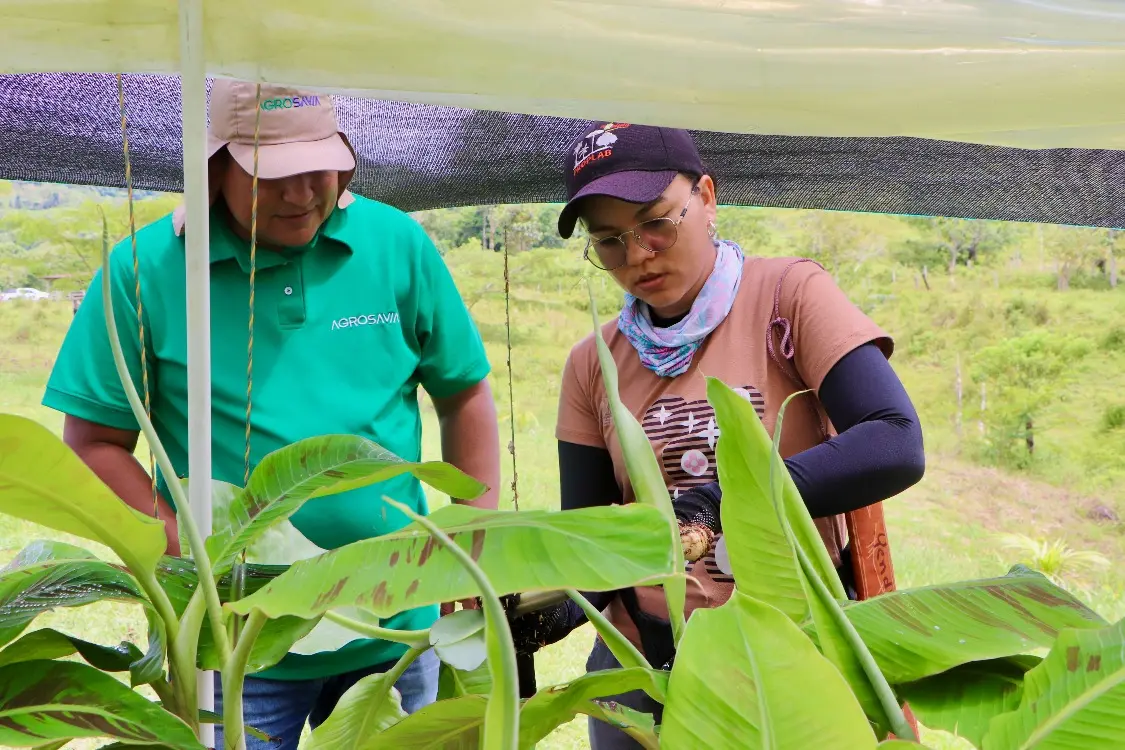
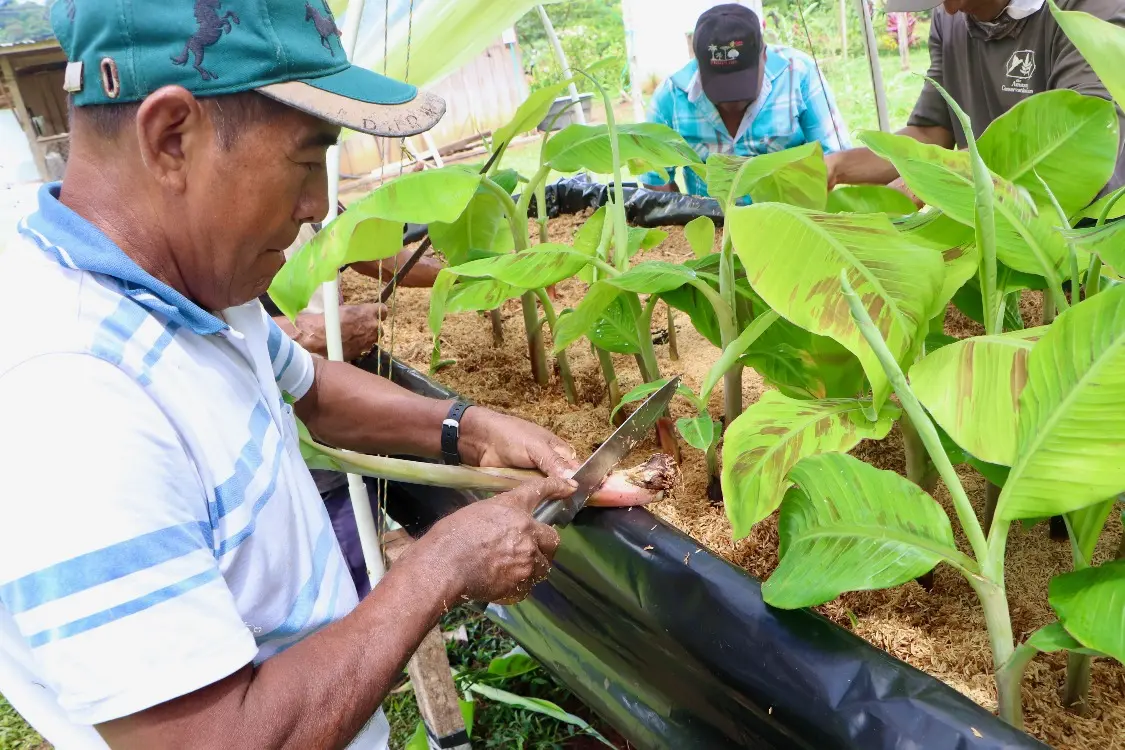
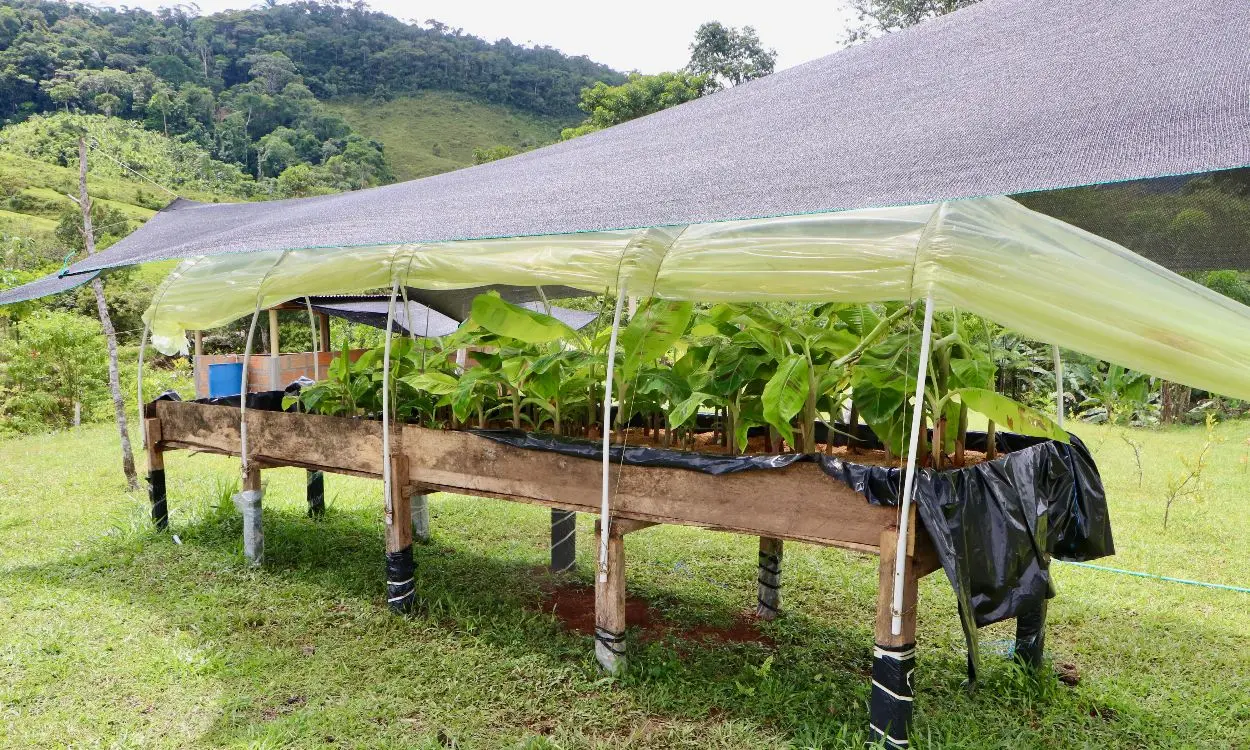
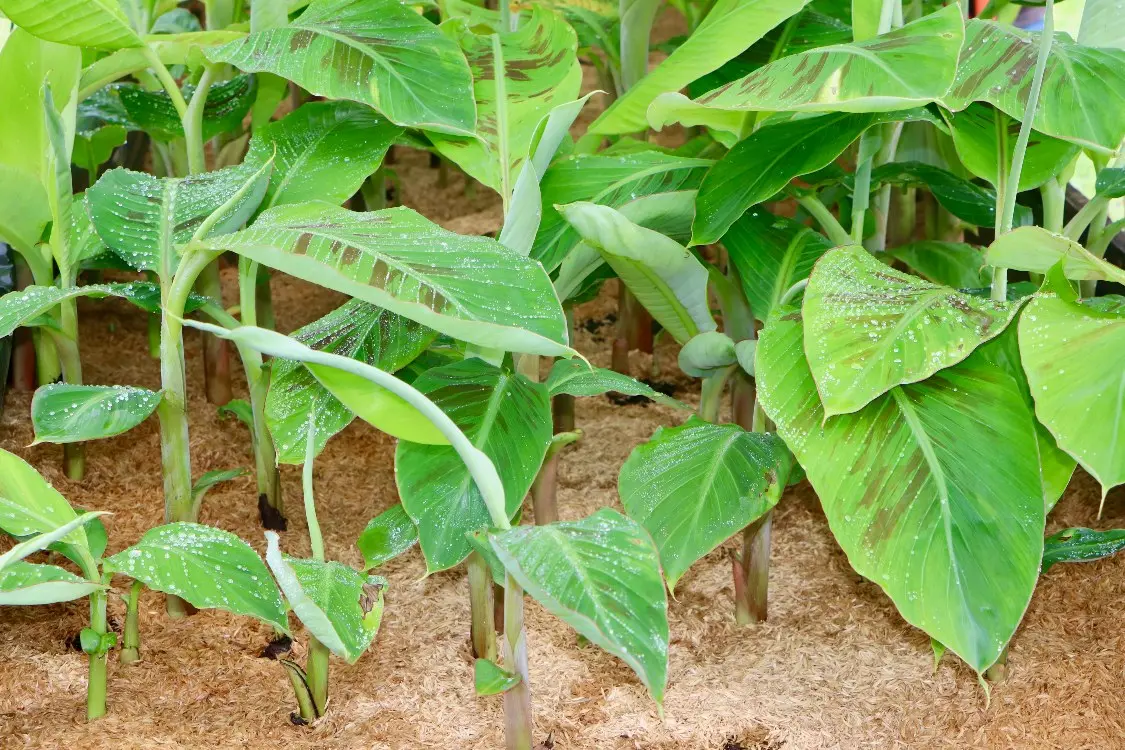
The vision is profound and transformative. It is about these organizations strengthening their capacities and rising as local hubs, cultivating quality planting material through the technical support of AGROSAVIA. This seed will then become the pillar of their autonomy, the foundation of their food security, or the seed of a new trade that fertilizes the development of their territory.
The National Seed Plan, in essence, is a pact with the land. It is a strategy that seeks to heal the very roots of the food system. Its pulse beats with three fundamental objectives: to recover the heartbeat of forgotten plant genetic resources, to improve field productivity, and, above all, to defend food sovereignty and security as an act of identity and resistance. It is a bridge between ancestral knowledge and science, an effort to safeguard not only native and creole seeds, but also the cultural memory they enclose, especially that which is sacred to ethnic communities.
To achieve this, the initiative is articulated as a living organism. It begins by strengthening the heart of producer organizations. It weaves agroecological and ethnic pathways, routes of collaboration that honor and preserve plant genetic materials as life insurance against loss. It extends its technical and scientific arm to support everything from industrial crops to local seed hubs. And, finally, it sows the seed of the future through research, cultivating varieties that adapt to the diverse geography and the soul of each Colombian crop.
For AGROSAVIA, this is not a simple agricultural project; it is the deliberate sowing of a more fertile, resilient, and sovereign country, beginning with its most essential and powerful unit: the seed.
- More information here:
- José Dario Ule Rodriguez
- Communications, Identity and Corporate Relations Professional
- Office Florencia
- Communications, Identity and Corporate Relations Advisory Office
- jule@agrosavia.co
- AGROSAVIA