


Roots and Tubers Innovation Network
Manager
Olga Yaneth Perez Cardona CRIS AGROSAVIA
Scope
Contribute to improving the sustainability of root and tuber production systems through R&D&I activities aimed at addressing territorial and national technological demands, while enhancing the quality of life of both producers and consumers.
Goals
-
🌱 Conserve, characterize, and enhance genetic resources, in order to develop new varieties with superior traits suited to the country’s ecosystems and resilient to climate change, contributing to food security and sovereignty and the full realization of the right to food.
-
🛠️ Develop technological products and validated sets of recommendations that align with the socioeconomic and agroecological conditions of the territories, combining scientific knowledge with traditional knowledge, contributing to the sustainability and competitiveness of agri-food systems.
-
🚜 Generate and adapt sustainable technologies for harvesting, post-harvesting, and processing, aimed at reducing production losses, meeting new market demands, and fostering the development of rural agro-industries within the framework of reindustrialization policies, territorial development, and the human right to food.
-
🔗 Contribute to the social appropriation of knowledge and to innovation in agri-food systems of roots and tubers, through technology transfer and engagement, including socioeconomic impact analysis and socio-business support for local producers and technicians.
Gallery
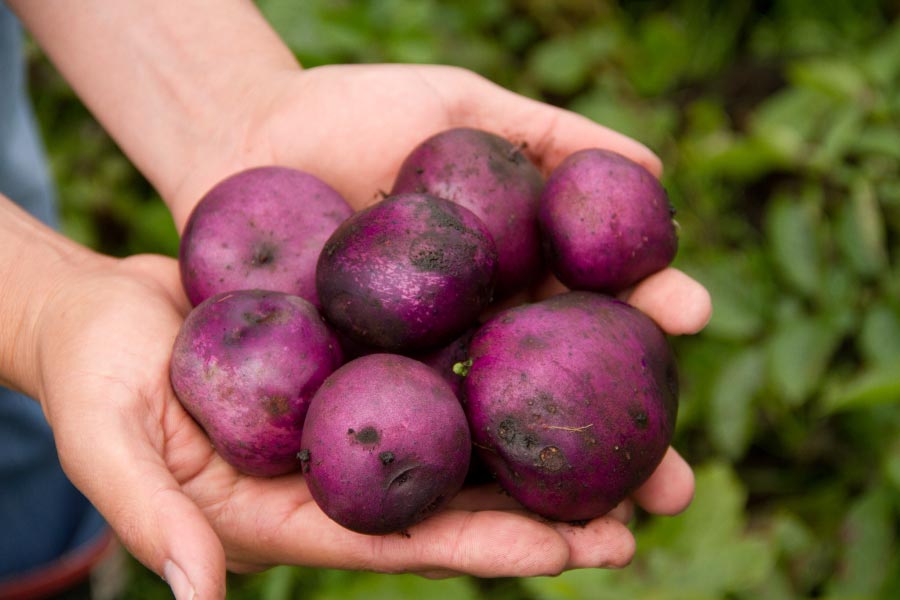
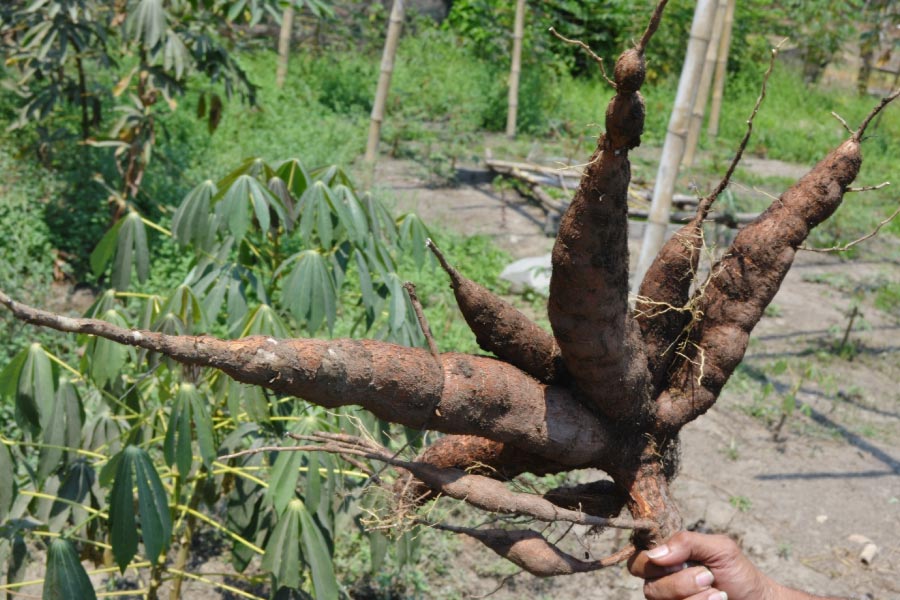
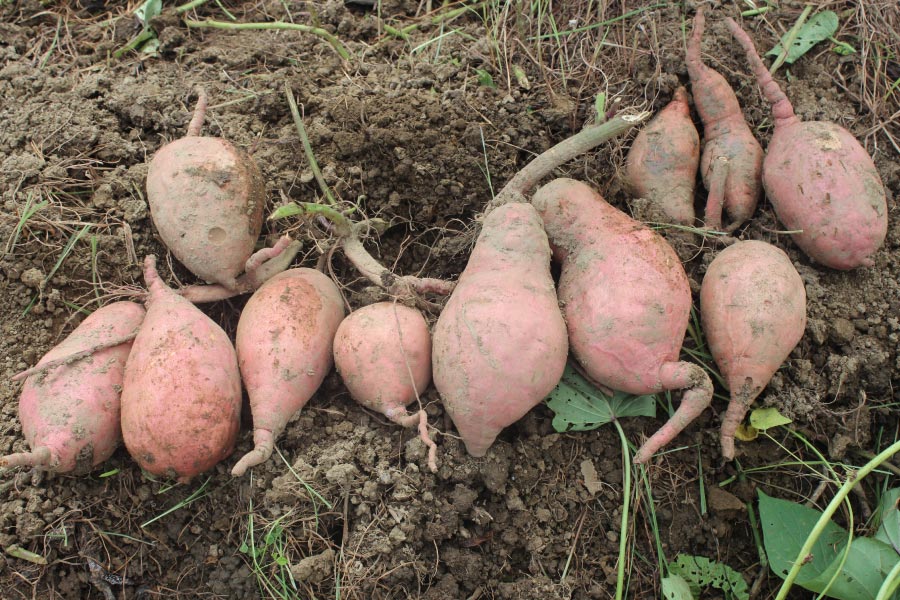
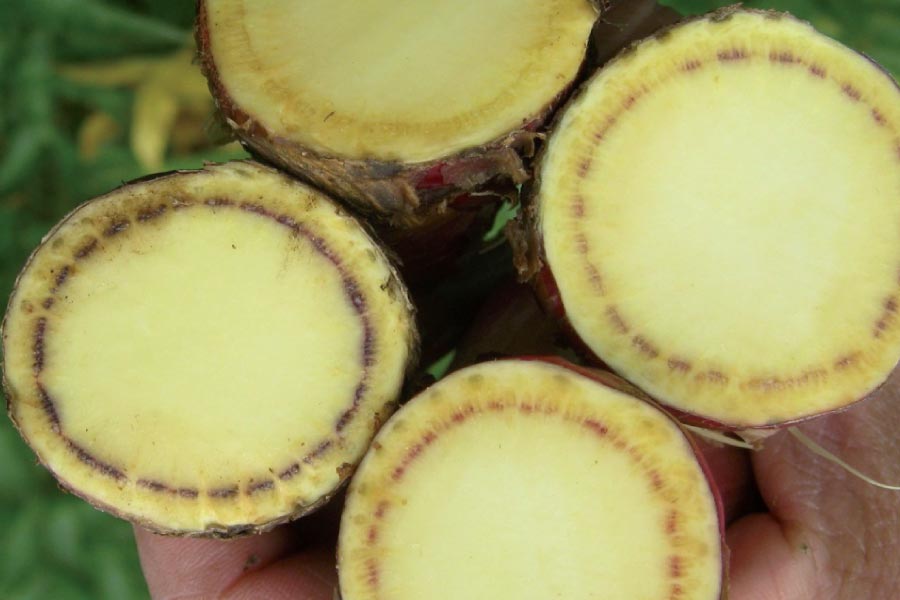
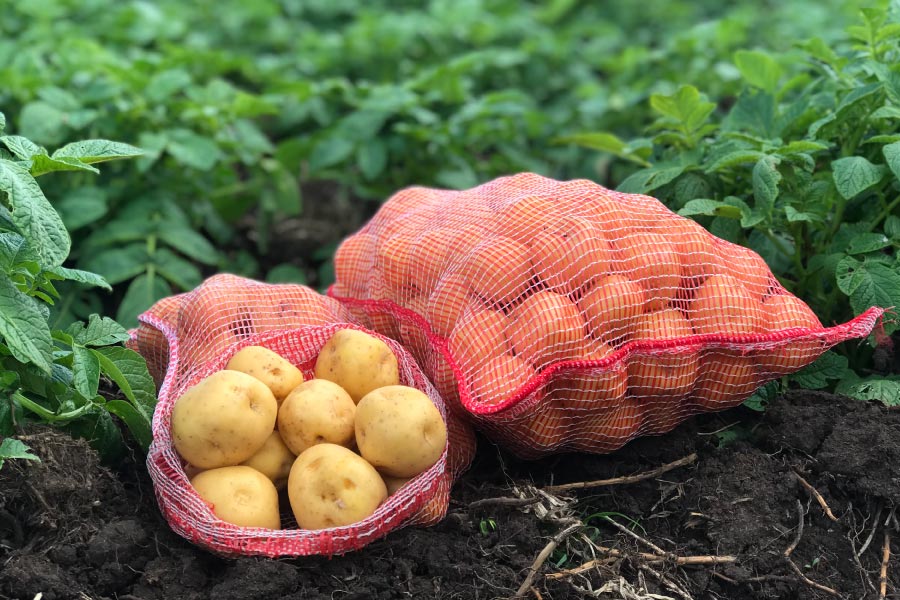
Knowledge that drives innovation
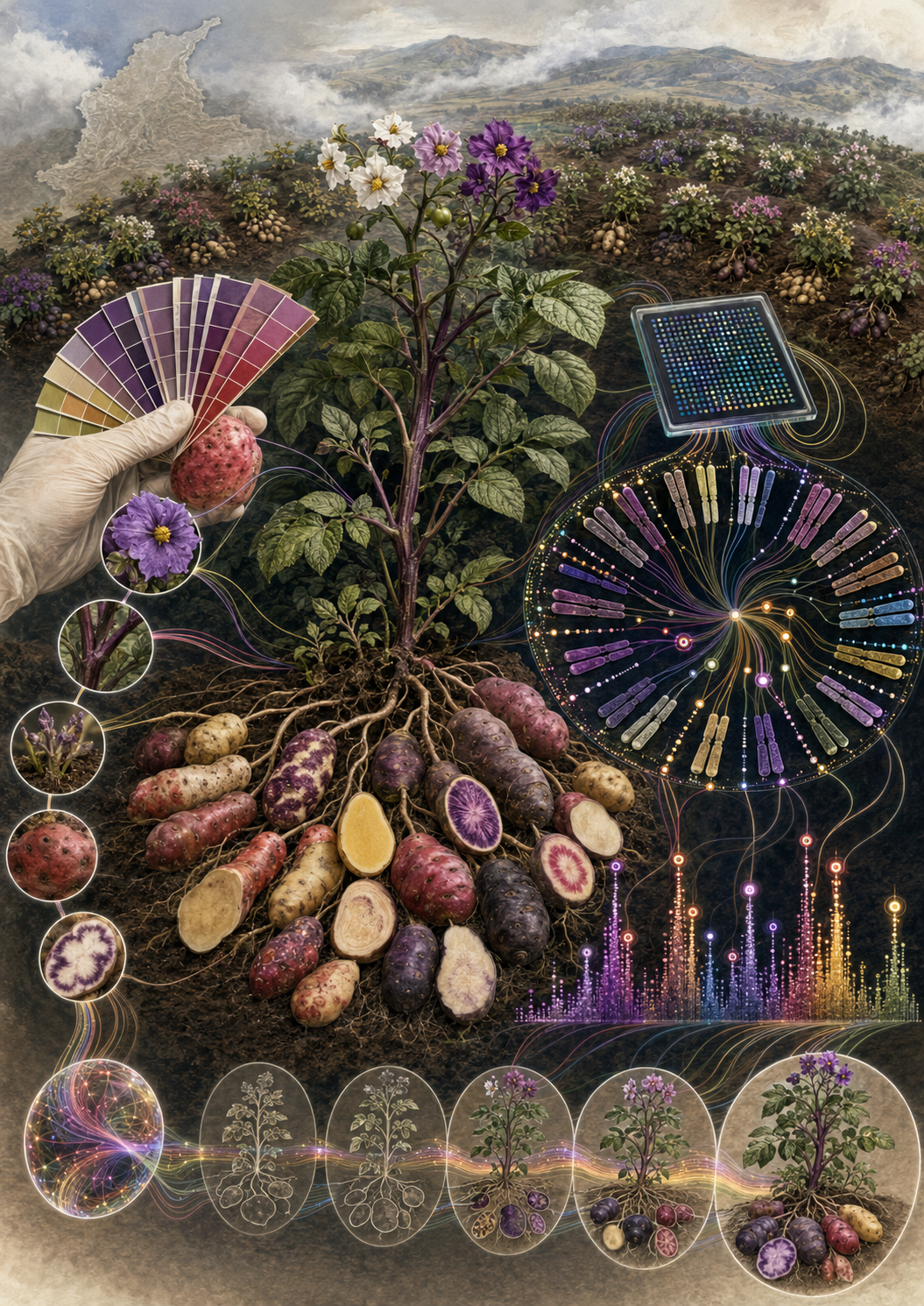
Harnessing the Genetic Diversity of the Colombian Central Collection of Potatoes to Dissect Pigmentation Genomics in Andigenum Landraces
What genetic secrets lie behind the colors of Colombia’s native potatoes? The research analyzed genetic diversity and color traits—including skin, flesh, flowers, and stems—in 599 accessions of Andigenum potatoes held in the Colombian Central Collection. Twenty-one genetic associations related to pigmentation were identified, nine of which had not been previously reported. Several of these traits were also predicted with good accuracy, providing information that could support the breeding of varieties with desirable nutritional and agronomic characteristics.