


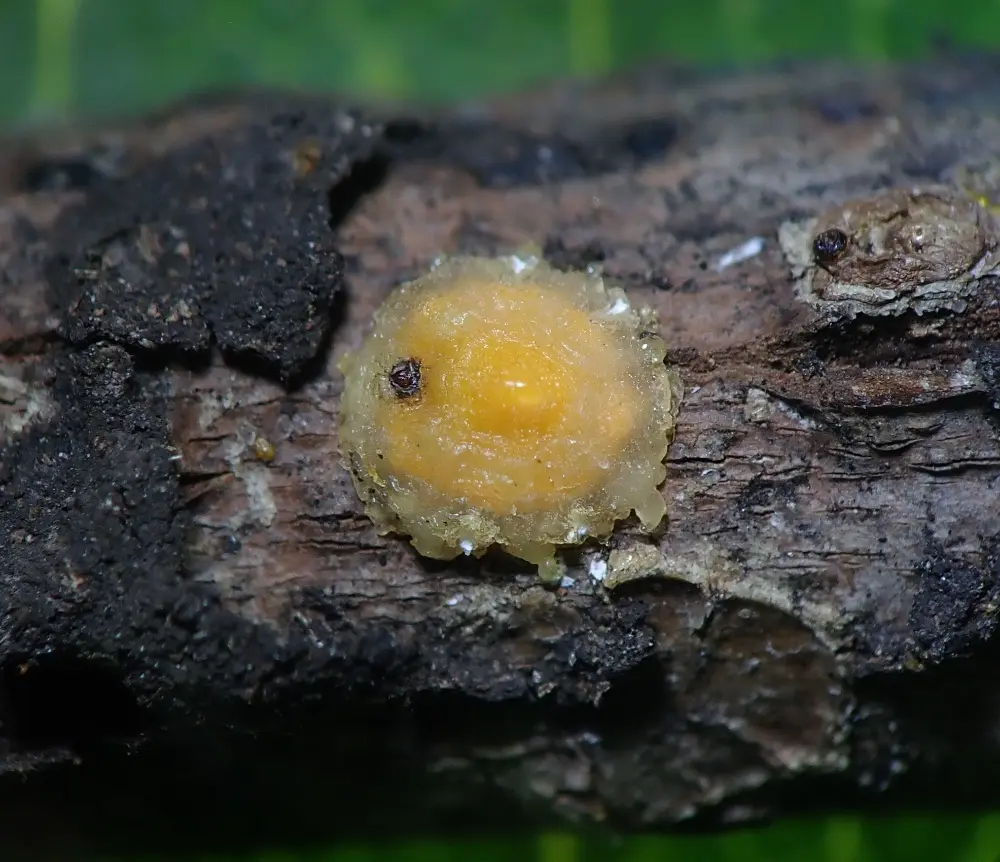
Palmira, Valle del Cauca. June 5, 2026. Corporación colombiana de investigación agropecuaria (AGROSAVIA) continues to contribute to understanding the nation’s biodiversity by discovering and describing a new insect species. The species Ceroplastes flavus is a scale insect found on experimental mango and soursop crops at the Palmira Research Center in the department of Valle del Cauca.
The discovery was made by AGROSAVIA Senior Research Scientist Demian Takumasa Kondo, Ph.D., in collaboration with Brazilian entomologist Ana Lucia Benfatti Gonzalez Peronti of São Paulo State University “Júlio de Mesquita Filho” (UNESP), a specialist in this group of insects. The study findings were recently published in a specialized scientific journal.
The new species was named Ceroplastes flavus in reference to the distinctive yellow coloration of the waxy covering that protects adult females.
A Discovery Hidden Within Ant Nests
One of the most remarkable aspects of this finding is that the specimens were discovered inside structures built by ants of the genus Azteca, commonly known as “ant carboards.” These associations between ants and scale insects have received limited scientific attention and represent complex ecological interactions that still raise numerous unanswered questions.
The researchers observed that “all individuals of the new species were sheltered within these nests, suggesting a close mutualistic relationship between the two organisms. This behavior may explain why the species had remained undetected until now.”
A Contribution to the Knowledge of Colombian Biodiversity
With the description of Ceroplastes flavus, the number of known Ceroplastes species recorded in Colombia rises to 14, reinforcing the country’s status as a region of high diversity for this group of insects. Globally, the new species increases the total number of described species within the genus to 146.
In addition to providing a detailed description of the new species, the researchers developed an updated taxonomic key for the identification of all Ceroplastes species recorded in Colombia. “This tool will be essential for future biodiversity studies, phytosanitary monitoring, and pest management,” said researcher Takumasa.
Relevance to Agriculture and Plant Health
Wax scale insects feed on plant sap, and some species can become pests of economic importance. Although the impact of Ceroplastes flavus on crops is currently unknown, its presence on two commercially valuable fruit species—mango (Mangifera indica) and soursop (Annona muricata)—highlights the need for further research on its biology, distribution, and potential effects on production systems.
The study also underscores the importance of conducting detailed surveys in understudied microhabitats, such as ant nests, where species still unknown to science may yet be discovered.
Science Generating Knowledge for the Country
This discovery reflects AGROSAVIA’s commitment to generating high-level scientific knowledge, strengthening national biological collections, and documenting Colombia’s biodiversity.
The type specimens of the new species were deposited in AGROSAVIA’s National Taxonomic Insect Collection (CTNI), ensuring their preservation and availability for future research.
The description of Ceroplastes flavus represents another contribution of Colombian science to the global understanding of insects and highlights the importance of taxonomic research as a foundation for biodiversity conservation and the sustainable development of agriculture.
- More information here:
- Claudia Narváez Marmolejo
- Communications, Identity and Corporate Relations Professional
- Center for Research and Technology Transfer Palmira - Popayán
- Communications, Identity and Corporate Relations Advisory Office
- cnarvaez@agrosavia.co
- AGROSAVIA