


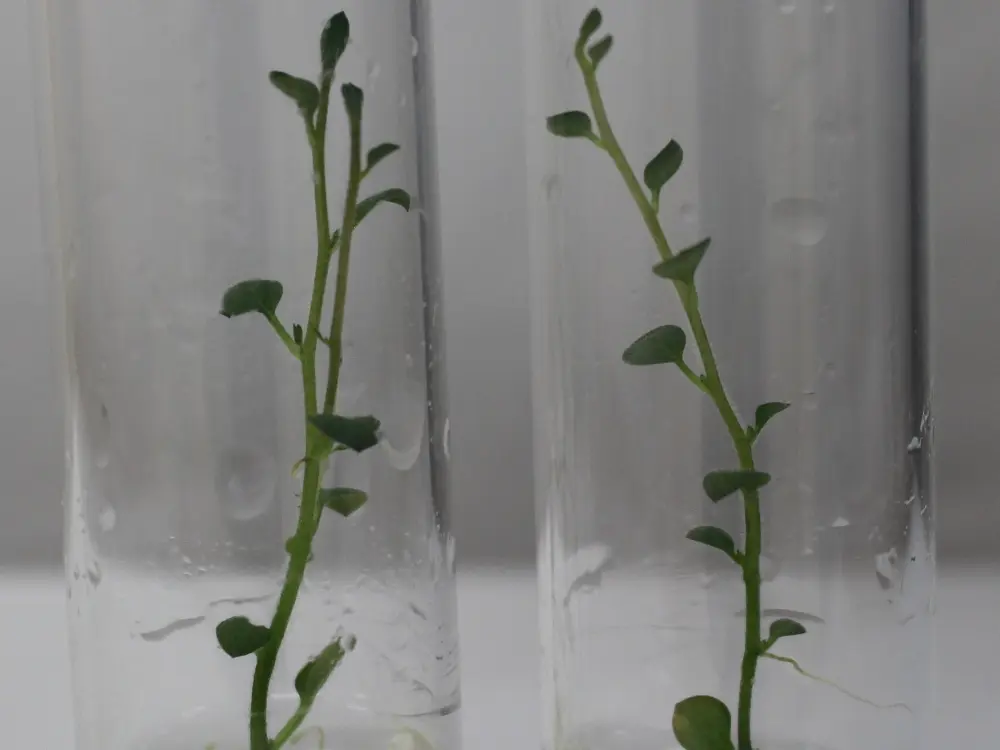
- Researchers at AGROSAVIA successfully regenerated potato plants from protoplasts and edited them using CRISPR technology in Colombia, producing the world's first report of gene editing in tetraploid varieties of the Andigenum Group. This breakthrough creates new opportunities to develop crops with improved quality, competitiveness, and value for agriculture across Latin America.
Mosquera, Cundinamarca. July 1, 2026. Corporación colombiana de investigación agropecuaria (AGROSAVIA) has reached a major milestone in agricultural science and innovation by producing Colombia's first potato plants regenerated from protoplasts and genetically edited using CRISPR technology. This achievement represents the world's first report of gene editing in a tetraploid variety of the Andigenum Group, a collection of potato varieties native to the Andean region that constitute the foundation of potato production and breeding programs across several Latin American countries.
This breakthrough was achieved within the framework of the project "Gene Editing for Genetic Breeding in Plant and Animal Species (ATN-RF 18757 RG)," regionally coordinated by Argentina's National Institute of Agricultural Technology (INTA) and funded by FONTAGRO, PROCISUR, and private contributors. In Colombia, the project was carried out by AGROSAVIA at the Tibaitatá Research Center. This accomplishment marks a significant step toward the adoption of gene-editing technologies to address some of agriculture's most pressing challenges, including increasing productivity, improving food quality, and strengthening the competitiveness of the region's agri-food sector.
A pioneering achievement for science and Andean agriculture
The research was conducted using the Diacol Capiro variety (Solanum tuberosum Group Andigenum), one of the potato cultivars most widely used by Colombia's potato processing industry.
Beyond its national significance, this achievement has international relevance. To the best of our knowledge, this is the first report describing both the regeneration of whole plants from protoplasts and successful gene editing in tetraploid germplasm belonging to the Andigenum Group. These highly diverse potato varieties have been adapted over centuries to the agroecological conditions of the Andean region and are essential to both food security and the agricultural economy throughout Latin America.
This milestone positions AGROSAVIA and Colombia among the pioneering institutions applying gene-editing technologies to strategic crop germplasm for regional agriculture while strengthening the country's scientific capacity to lead innovation in high-impact crops.
A precision tool to accelerate genetic breeding
CRISPR technology functions as a molecular "text editor" for DNA. It enables highly precise identification and modification of specific DNA sequences using only the plant's own genetic information, without introducing DNA from other species, unlike genetically modified organisms (GMOs).
This level of precision enables the generation of genetic changes equivalent to those that could occur naturally or through conventional breeding, but in a shorter time and with greater accuracy. Consequently, in Colombia and many other countries, gene-edited plants that do not contain foreign DNA are not regulated as genetically modified organisms.
A key aspect of this achievement was the use of protoplasts—plant cells lacking a cell wall—which facilitate the delivery of CRISPR/Cas gene-editing components into the cell. These edited cells can subsequently be regenerated into complete gene-edited plants.
Improved quality for industry and consumers
The research focused on editing the vacuolar invertase (InvVac) gene, which is responsible for the accumulation of reducing sugars in potato tubers during low-temperature storage.
The accumulation of these sugars negatively affects frying quality by causing excessive browning in processed potato products such as French fries and potato chips, while also promoting the formation of acrylamide during high-temperature cooking. Reducing the activity of this gene represents a promising strategy to improve the industrial quality of potatoes and deliver products with enhanced characteristics for both consumers and the processing industry.
Using High Resolution Fragment Analysis (HRFA), the researchers identified two edited lines showing evidence of mutations across all four alleles of the target gene, potentially resulting in complete loss of gene function. These materials are currently undergoing validation through DNA sequencing and will subsequently be evaluated to confirm their performance and their impact on the variety's industrial quality.
A step toward the agriculture of the future
Beyond its experimental significance, this achievement demonstrates that Colombia possesses the scientific capabilities to develop and implement cutting-edge technologies to address concrete challenges in the agricultural sector.
The collaboration between AGROSAVIA and INTA strengthens a regional research platform for gene editing and creates new opportunities to extend these technologies to this and other strategic crops. In doing so, Colombia reinforces its scientific and technological leadership while contributing to the development of a more innovative, competitive, and resilient agricultural sector capable of addressing food security and climate change challenges across Latin America.
For more information, please visit: https://editorial.agrosavia.co/index.php/publicaciones/catalog/book/442
- More information here:
- María Elena Londoño Rubio
- Communications, Identity and Corporate Relations Professional
- Center for Research and Technology Transfer Tibaitatá
- Communications, Identity and Corporate Relations Advisory Office
- melondono@agrosavia.co
- AGROSAVIA