


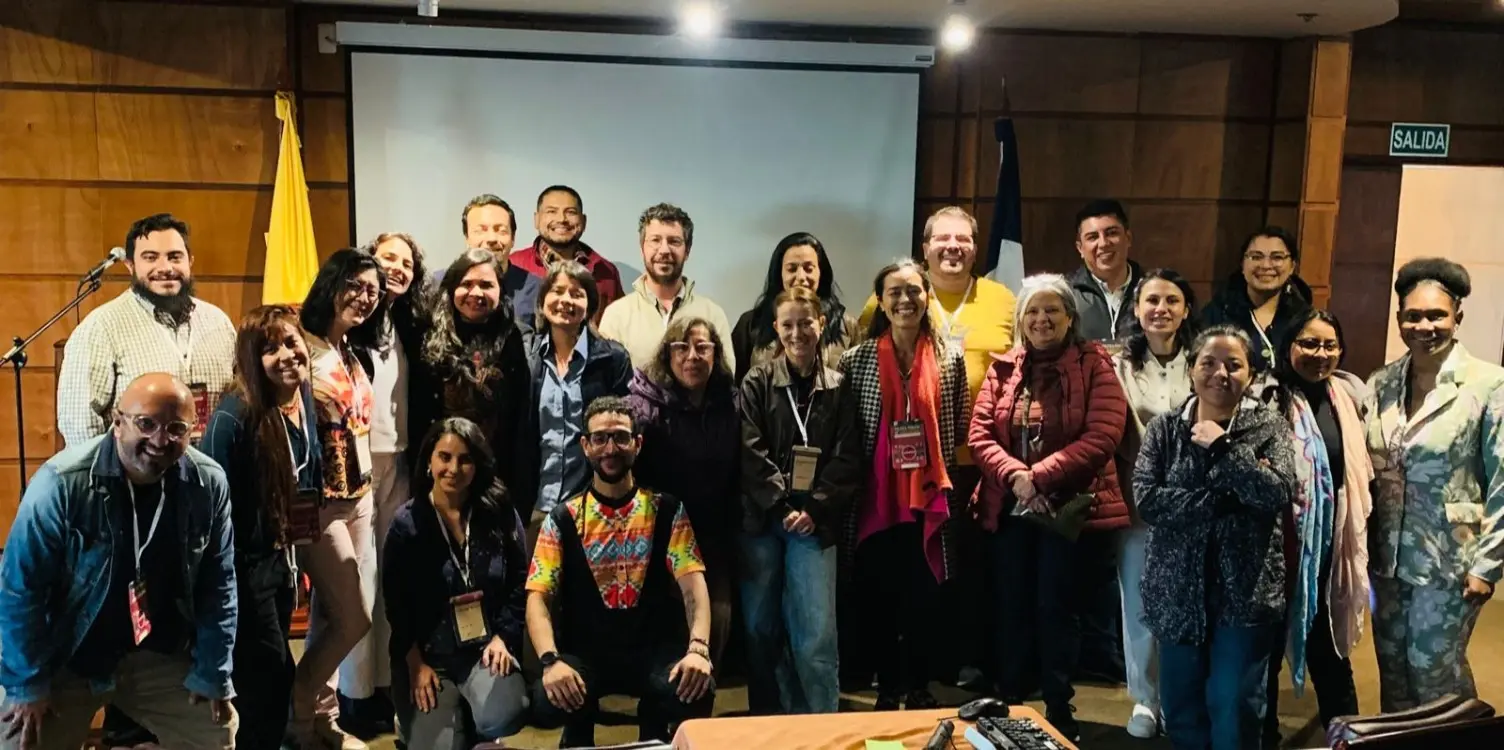
Bogotá D.C., May 29, 2026. Within the framework to implement the Public Policy on Agroecology, adopted through Resolution 331 of 2024, AGROSAVIA participated as a strategic stakeholder in the establishment of the National Agroecology Table and the Interinstitutional Technical Agroecology Table, forums led by the Ministry of Agriculture and Rural Development to strengthen the coordination and governance of this policy in the country.
According to Resolution 331 of 2024, the Interinstitutional Technical Agroecology Table aims to strengthen interinstitutional coordination to implement the policy by promoting cross-sectoral collaboration and establishing concrete commitments. In turn, the National Agroecology Table serves as a body for governance, coordination, and monitoring of the policy.
Interinstitutional Technical Agroecology Table
In April 2026, the Interinstitutional Technical Agroecology Table was formally established with participation from entities across the agricultural, environmental, health, education, culture, and trade sectors. Representing AGROSAVIA were Fabián Martínez Camelo, M.Sc. Researcher at the Tibaitatá Research Center, and Estefanía Bohórquez Andrade, Research Support Professional from the Department of Sustainable Intensive Production. During the session, AGROSAVIA presented its institutional capacities regarding the guidelines, principles, and approaches of the Public Policy on Agroecology, as well as the programs, projects, and initiatives currently being implemented by the Corporation that may contribute to its execution. Likewise, opportunities for interinstitutional coordination were identified, and the working table’s expectations and scope were discussed.
Among the main outcomes of this forum were the consolidation of a map of stakeholder and institutional capacities in agroecology, the definition of basic operating rules for the table, and the development of a preliminary work agenda for upcoming sessions.
National Agroecology Table – MNA (for its Spanish acronym)
In early May 2026, the National Agroecology Table was formally established as a body to ensure participation and sound governance in the process of implementing and monitoring the policy, while also facilitating coordination among stakeholders from the agricultural sector, social organizations, academic institutions, and government entities.
The MNA is composed of the Ministry of Agriculture and Rural Development, the Vice Ministries of Rural Development and Agricultural Affairs, the Directorate for Productive Capacities and Income Generation, the Directorate for Innovation and Technological Development, and the entities of the National Agricultural Innovation System (SNIA): ADR, AGROSAVIA, ICA, and AUNAP. In addition, delegates from the nine regional forums, national agroecology platforms, Indigenous peoples, NARP communities, rural women and youth, academia, and the Joint Commission for Peasant Affairs, also participate.
On behalf of AGROSAVIA, the Executive Directorate appointed Martha Marina Bolaños Benavides, Senior Ph.D. Researcher and head of the Department of Sustainable Intensive Production, to participate in the MNA.
During the establishment of the MNA, discussions addressed the conditions necessary to ensure effective and sustained participation within the table. In addition, needs for capacity strengthening and training processes were identified to enable informed participation in matters related to the Public Policy on Agroecology and its governance framework at the national, regional, departmental, and municipal levels.
As a result of the meeting, the official establishment record of the MNA and a proposal for operational regulations to guide the body’s functioning were consolidated. Additionally, during the month of May, AGROSAVIA participated in virtual sessions convened by the Technical Secretariat of the table to adjust and approve the Operational Regulations and monitoring commitments.
AGROSAVIA’s participation in these collective-building forums reaffirms its commitment to the coordinated implementation of the Public Policy on Agroecology. The Corporation works jointly with institutions, ACFEC organizations, academia, and the productive sector, contributing with scientific evidence for decision-making in favor of food security and sovereignty, the human right to food, climate resilience, and the well-being of rural communities.
Likewise, AGROSAVIA plays a fundamental role in implementing the Public Policy on Agroecology by generating territory-adapted solutions based on research, development, innovation, technology transfer, and knowledge exchange, thereby contributing to the sustainable transformation of the country’s agri-food systems.
- More information here:
- Ivan David Alba Hidalgo
- Communications, Identity and Corporate Relations Professional
- Headquarters
- Communications, Identity and Corporate Relations Advisory Office
- ialba@agrosavia.co
- AGROSAVIA