


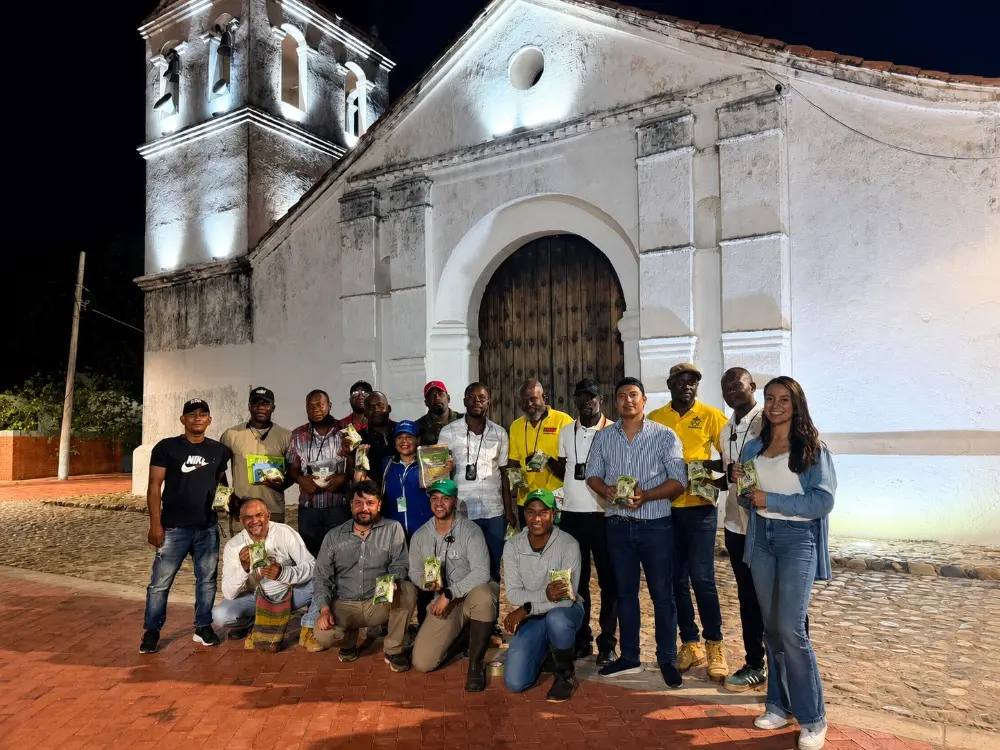
Agustín Codazzi, Cesar. July 29, 2026. A technical mission composed of representatives from Haiti's Ministry of Agriculture, the Presidential Agency for International Cooperation of Colombia (APC-Colombia), and Colombia's Ministry of Agriculture and Rural Development visited agricultural innovation initiatives developed by AGROSAVIA in the Department of Cesar alongside producers, local governments, producer associations, private-sector partners, and Indigenous communities. The mission recognized Colombia's Dry Caribbean as a strategic setting for international cooperation aimed at building more sustainable, resilient, and intercultural agricultural systems.
International cooperation becomes most valuable when it provides opportunities to learn from experiences developed within local territories and to understand how agricultural research responds to the needs of those who produce food. Guided by this principle, a technical delegation from Haiti's Ministry of Agriculture toured the Department of Cesar to learn about initiatives led by AGROSAVIA in partnership with public institutions, producer organizations, industry associations, and private companies. The visit was conducted as part of the second phase of the project "Strengthening Technical Capacities Through the Exchange of Sustainable Production Systems and Food Security Practices, with an Emphasis on Cocoa, Cereals, and Root Crops in the Caribbean: Haiti–Colombia," funded by APC-Colombia and Colombia's Ministry of Agriculture and Rural Development.
The tour demonstrated that agricultural innovation in Colombia's Dry Caribbean is not the result of isolated efforts, but rather of a collective process in which scientific research, technical assistance, community organization, institutional cooperation, and producers' accumulated knowledge converge. From southern Cesar to the Motilonia Research and Technology Transfer Center in Agustín Codazzi, the delegation observed an innovation system in which each territory contributes distinct yet complementary capacities to strengthen food security, enhance the sustainability of agricultural production systems, and promote rural development.
The first stop was the Municipality of Pailitas, where the mission encountered one of the key pillars of this process: the ability to bring institutions and communities together around a shared vision for agricultural development. The Municipal Government, the Municipal Agricultural Technical Assistance Unit (UMATA, for its Spanish acronym), AGROSAVIA, and producer organizations presented an experience demonstrating how joint planning has strengthened strategic agricultural value chains while enhancing local capacities to address challenges arising from climate variability and changing market conditions.
During the visit, cassava, cocoa, coffee, mango, and borojó producers shared with the delegation how integrating research, technical assistance, and community organization has promoted diversification of production systems and the gradual adoption of innovations adapted to the conditions of Colombia's Dry Caribbean. Beyond the achievements obtained for each crop, the exchange highlighted that the region's greatest strength lies in the trust-based relationships established among the various stakeholders involved in rural development.
Within this context, the Zapatosa Cassava and Starch Producers' Association (APROYUZAP) demonstrated how farmer organization has been instrumental in connecting primary production with agro-industrial processing, thereby creating new value-added opportunities for rural families. Its experience enabled the mission to understand that successful innovation adoption depends not only on the quality of available technologies but also on producer organizations' capacities to transform knowledge into development opportunities.
One of the topics that attracted the greatest interest was the bioeconomy strategy developed around the Almidona 28 cassava variety, the result of collaborative research conducted by AGROSAVIA and Universidad del Cauca with support from Colombia's Ministry of Science, Technology and Innovation. Producers presented the results obtained under commercial production conditions, highlighting the variety's performance for starch production and the opportunities it offers to strengthen the competitiveness of the regional agro-industry.
The experience developed in the Zapatosa Wetland region confirmed that innovation acquires its greatest value when it strengthens the capacities of rural organizations and creates opportunities for people to remain and prosper within their territories. Building on this perspective, the mission continued to the Corregimiento of Badillo, in Valledupar, where it encountered another key component of Colombia's Dry Caribbean innovation system: the capacity of producer associations to facilitate the adoption and scaling of technologies aimed at improving both productivity and the sustainability of agricultural systems.
In this setting, the National Rice Growers Federation (FEDEARROZ, for its Spanish acronym) presented the strategies it has implemented to support producers in adopting agronomic management tools, precision agriculture technologies, and efficient water-use practices. Beyond the technological advances themselves, the experience demonstrated the vital role that producer associations play in bridging research, technical assistance, and commercial production. According to Carlos Monroy, Regional Manager, the AMTEC strategy empowers producers to make informed decisions that optimize field management. As part of the visit, Orlando Villalobo, owner of the farm Los Venadillos, shared his experience cultivating the Fedearroz 2020 rice variety, which was approaching harvest.
During the visit, participants also discussed the common challenges faced by Colombia and Haiti in producing food under increasingly variable climatic conditions. Efficient water management, improved planning of agricultural operations, and access to technical information for decision-making were recognized as strategic elements to strengthen the resilience of agricultural production systems.
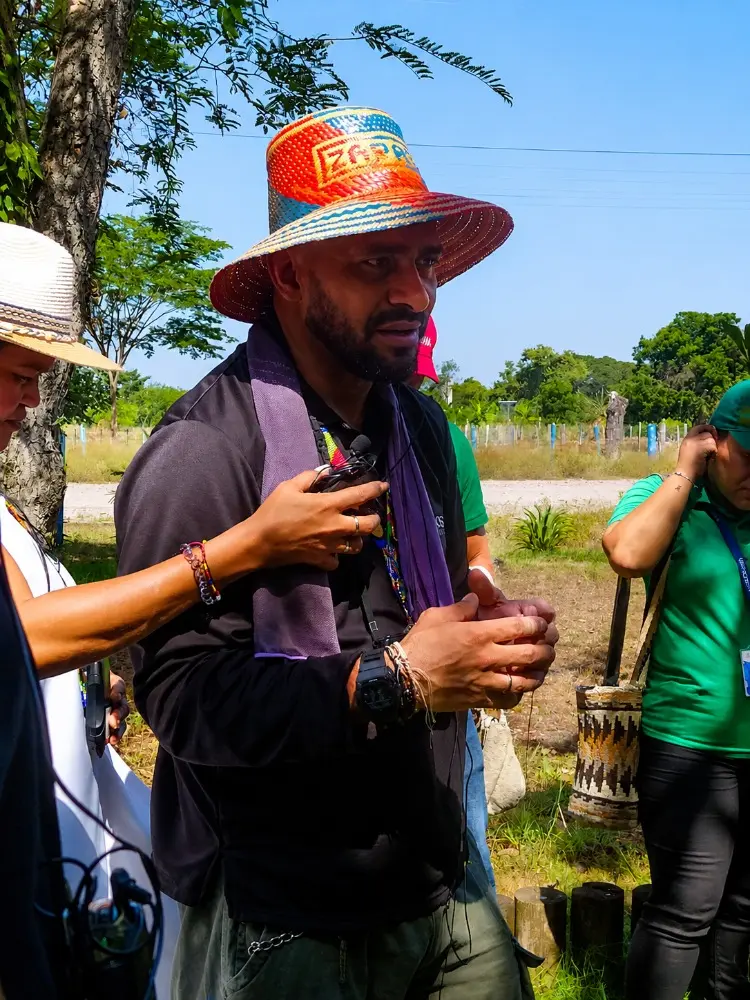
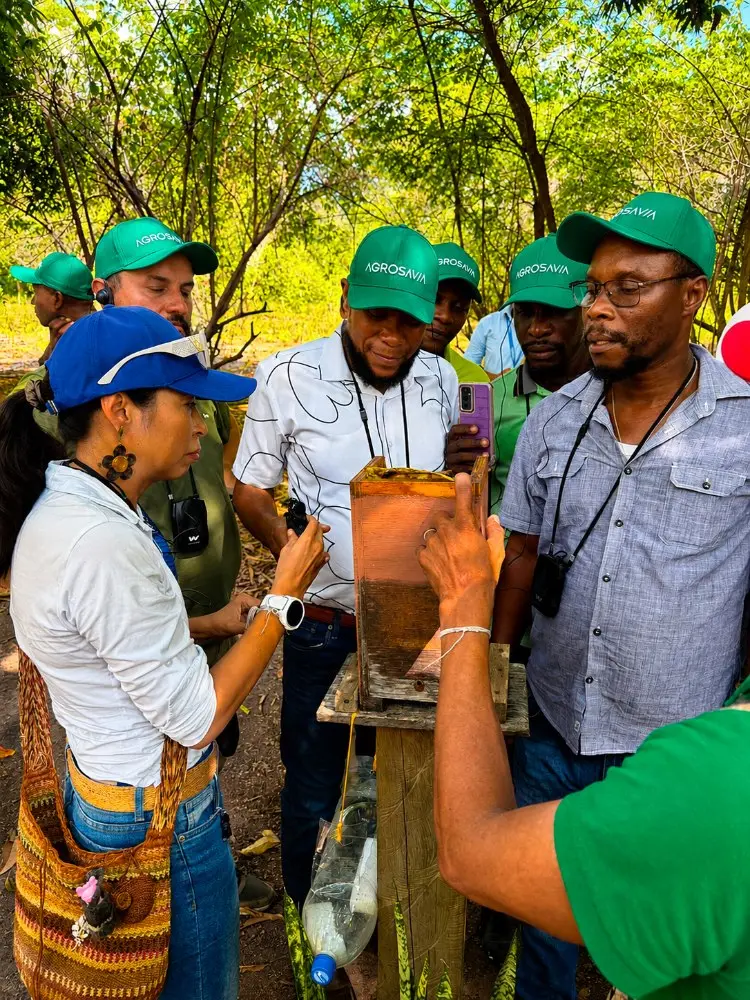
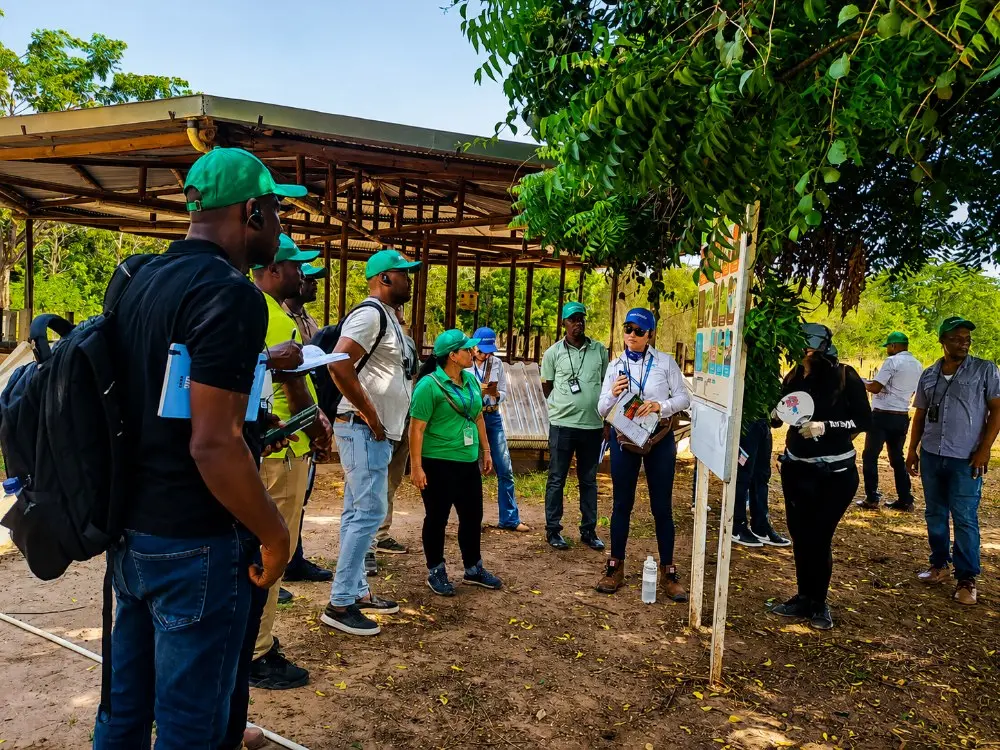
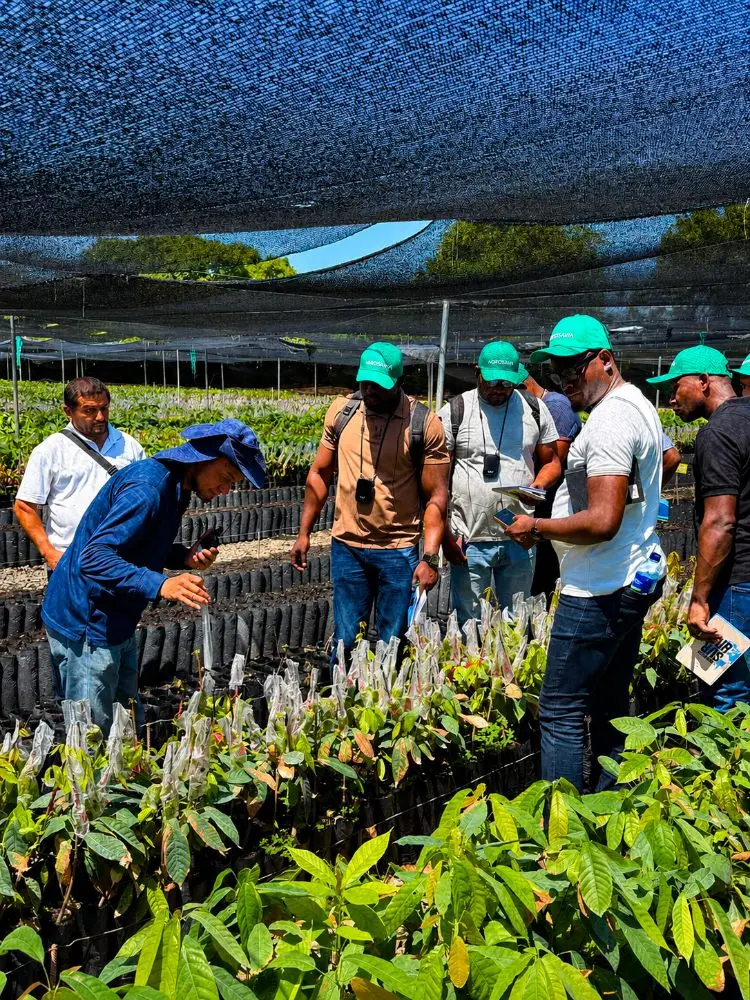
With this perspective, the mission continued to the Motilonia Research and Technology Transfer Center in Agustín Codazzi, where the scientific, technological, environmental, and intercultural capacities that underpin AGROSAVIA's agricultural innovation system in Colombia's Dry Caribbean converge. There, the delegation saw that the technologies presented throughout the tour form part of a broader vision in which research is developed alongside local communities and strengthened through long-term partnerships built on trust, knowledge exchange, and collaboration among multiple stakeholders.
One of the sites visited was the nursery jointly established by AGROSAVIA and Compañía Nacional de Chocolates. This alliance demonstrates how public research institutions and the private sector can combine their strengths to increase the availability of high-quality planting material and promote agroforestry systems based on native tree species and traditional fruit crops, such as cashew, adapted to the environmental conditions of Colombia's Dry Caribbean. In addition to supporting the development of the regional cocoa sector, this initiative demonstrates that long-term partnerships expand the impact of research and facilitate innovation transfer to producers.
The mission also learned about the progress of AGROSAVIA's bioeconomy strategy, in which cassava serves as the foundation for developing solutions that extend beyond agricultural production. The comprehensive utilization of the crop—including the production of cassava leaf flour, the use of starch by-products to manufacture multi-nutritional feed blocks for cattle and sheep, rapid multiplication technologies for planting material, and the incorporation of circular economy principles—demonstrates how research can create new economic opportunities through the more efficient use of available resources.
One of the components that generated particular interest among the Haitian representatives was the common bean breeding program developed with the support of the Korea-Latin America Food & Agriculture Cooperation Initiative (KOLFACI). The initiative addresses one of the most significant challenges facing tropical agriculture: the development of varieties capable of maintaining productivity under high-temperature conditions and increasing climate variability.
During the visit, researchers presented progress in developing new common bean breeding lines adapted to the conditions of Colombia's Dry Caribbean. These materials are the result of a research process integrating agronomic evaluation, climate adaptation, and producer participation. Currently undergoing registration with the Colombian Agricultural Institute (ICA, for its Spanish acronym), these breeding lines represent an alternative for diversifying farming systems, strengthening food security among family farmers, and expanding crop rotation options alongside cassava, while simultaneously contributing to soil fertility conservation and enhancing the resilience of agricultural production systems.
- More information here:
- Griselda Gómez Gámez
- Communications, Identity and Corporate Relations Professional
- Center for Research and Technology Transfer Motilonia
- Communications, Identity and Corporate Relations Advisory Office
- gmgomez@agrosavia.co
- AGROSAVIA