


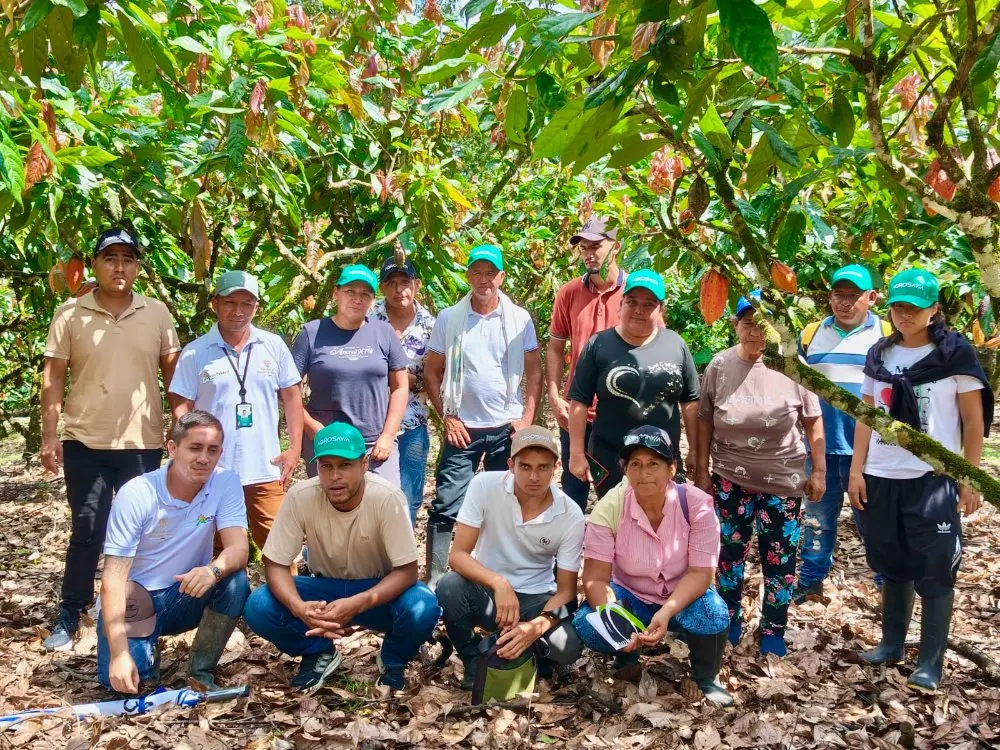
- This is not a project—it is a harvest: a process through which the Corporation and the communities of Putumayo demonstrate that true innovation is learned by walking through the fields together.
Florencia, Caquetá. June 9, 2026. Beneath the whisper of trees and along the ancestral paths of Putumayo, specifically in the municipality of Puerto Guzmán, located in the northeastern part of the department on the banks of the Caquetá River, within El Descanso Indigenous Reservation of the Nasa people, producers and extension agents from the Musu Pakariii Agricultural Association, members of the El Muelle Plantain Growers Association (ASOPLAMPG), students from the reservation’s school, and guardians of Nasa cultural memory came together. In this space, capacity-building activities flourished under the Farmer Field School (FFS) methodology, in partnership with FEDECACAO’s Territorial Technical Unit and the Colombian Agricultural Institute (ICA). These activities took place within the framework of the project “Territorial Innovation Systems (TIS) at the Regional Level in Peasant Territorialities and in Support of the Strategic Vision of the National Agrarian Reform System (SINRA)”, led by Corporación colombiana de investigación agropecuaria (AGROSAVIA) and funded by the Ministry of Agriculture and Rural Development.
The gathering became an exchange of knowledge focused on cocoa production under agroforestry systems, certification in Good Agricultural Practices (GAP), the rehabilitation of unproductive plantations through Malaysian grafting techniques, and phytosanitary management pathways for cacao and plantain, designed in accordance with the territory’s agroecological dynamics.
This initiative seeks to build a long-term vision to consolidate Territorial Innovation Systems in prioritized territories through co-innovation processes with communities that weave together local knowledge and technical expertise, fostering technology adoption and strengthening governance for rural development that is, above all, sustainable.
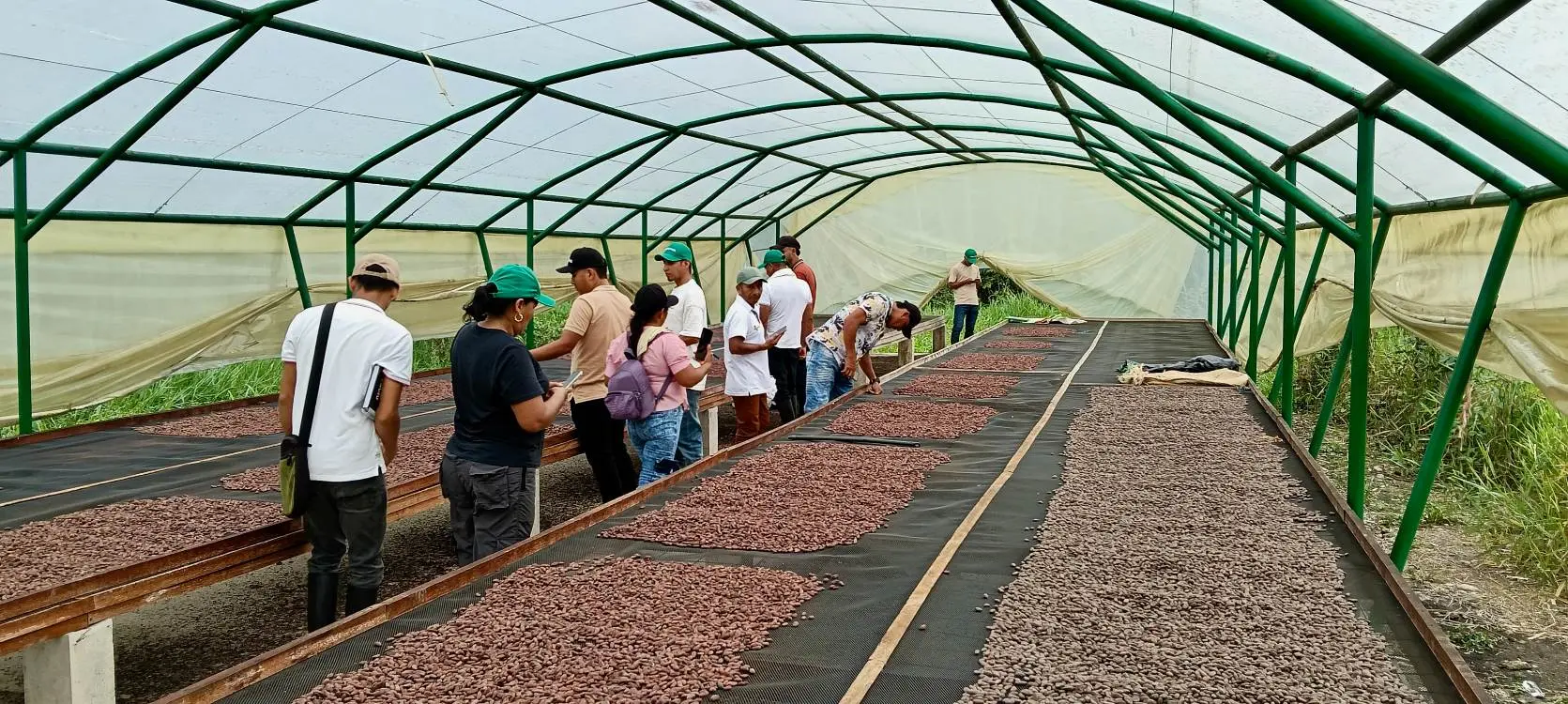
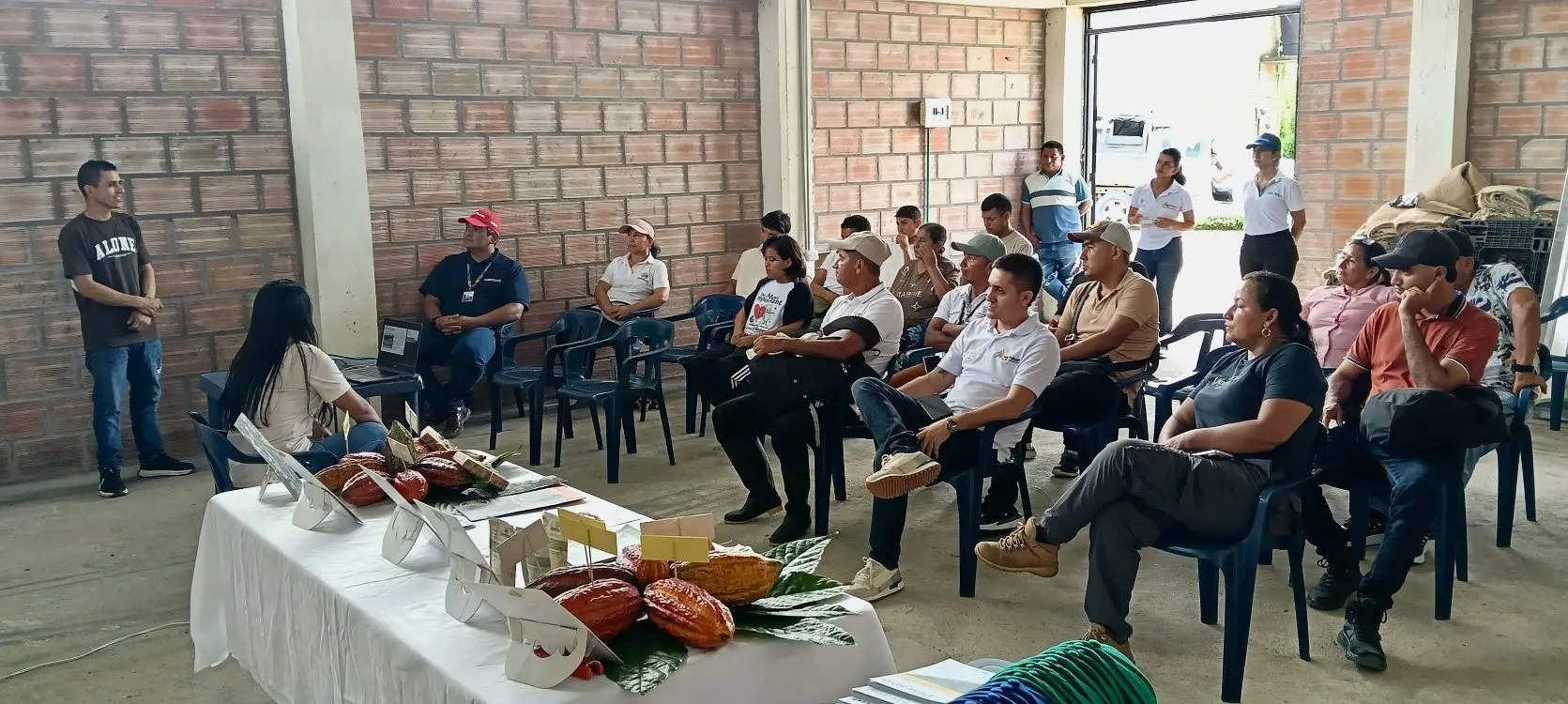
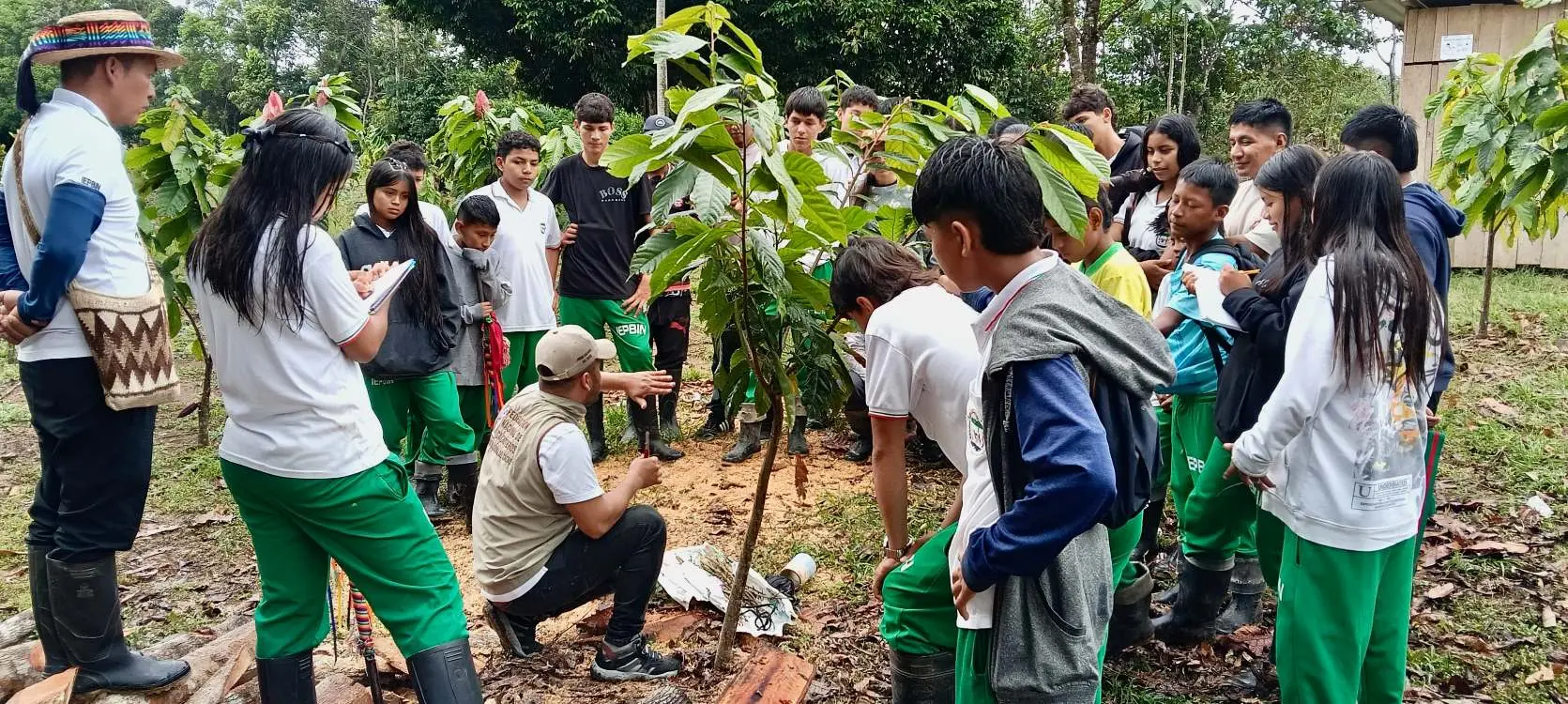
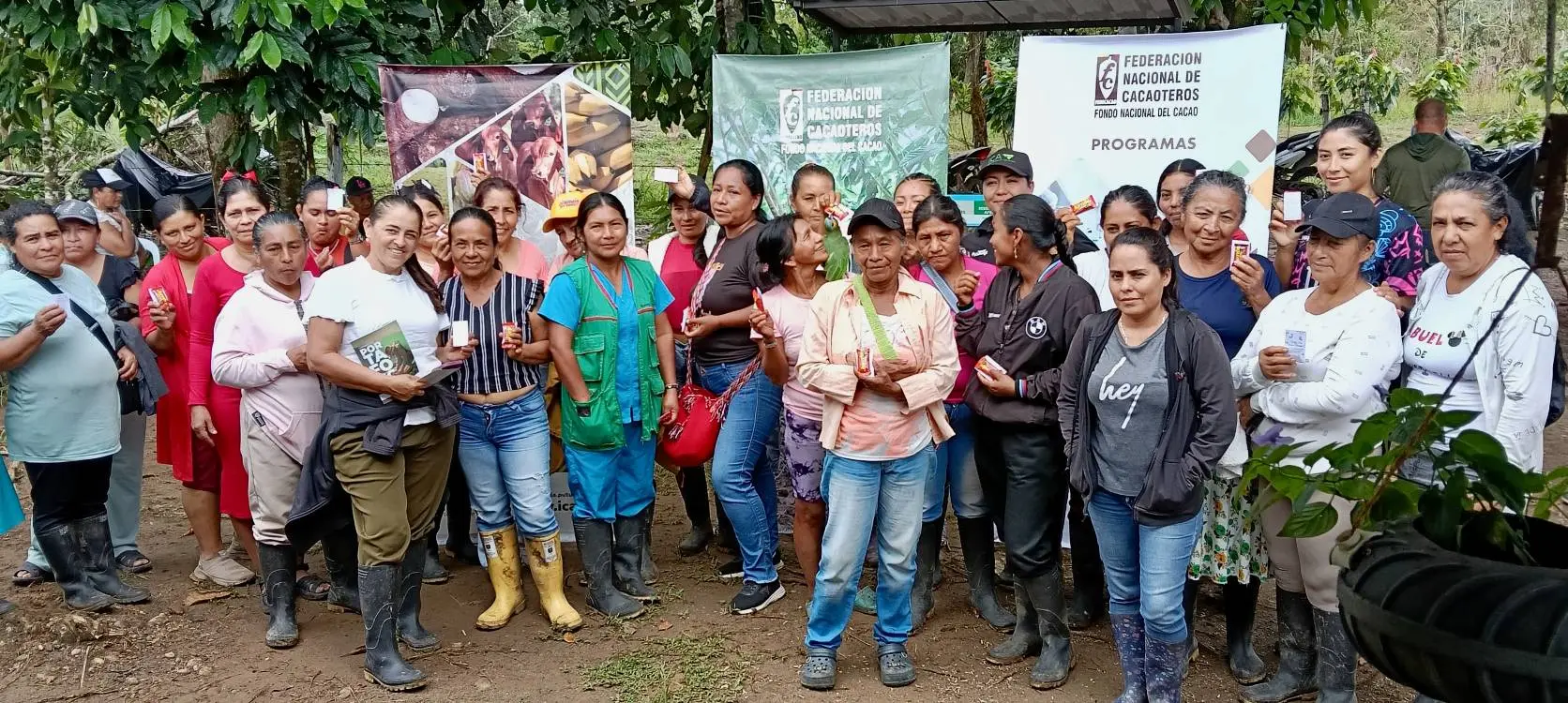
The strategy emerged from the needs identified by local organizations and is guided by the principle that technology should not be imposed, but rather offered in a way that communities can embrace with relevance and ownership, in harmony with their cultural values, productive traditions, and organizational rhythms. For this reason, the methodology was built around the Farmer Field School (FFS) approach, combining theoretical and practical learning-by-doing sessions, method demonstrations, field days, workshops, virtual meetings, and territorial exchange visits designed to identify and replicate successful experiences throughout the region.
As a natural continuation of this process, a technical exchange visit was organized to the municipality of Valle del Guamuez (La Hormiga), carried out jointly with the technical team of the Integrated Cocoa Project of Putumayo, a key strategic partner. Participants included producers from the Cocoa Producers Association of La Florida Village (ASOPROCAF) and AGRAMEM, the Agricultural, Environmental, and Business Association of Cauquita Village in Puerto Caicedo. During this journey, ASOPROCAF served as a living showcase of territorial innovation: its demonstration plots, nurseries, the nutritious honey produced through meliponiculture, and the carefully managed processes of organic cocoa fermentation and transformation. The entire visit was guided by ASOPROCAF’s own rural promoters and extension agents, who transformed dialogue, knowledge exchange, and farmer-to-farmer learning into the driving force behind this new capacity-strengthening phase. This effort now joins—as an expanding fabric of collaboration—the actions already planted during the previous expedition.
Thus, among cacao roots, the flight of stingless bees, and the hands that inherit and care for the land, this Territorial Innovation Systems initiative continues to sow a promising future for the peasant and Indigenous communities of Putumayo. Behind this network of encounters, exchange visits, and Farmer Field Schools, the steady pulse of AGROSAVIA and its Florencia–Costayaco Research Center beats. Through its leadership in the Amazonian agricultural sector, AGROSAVIA not only generates technical knowledge but also enables meaningful dialogue between science and the fertile memory of local territories. Its role is not that of a voice that imposes, but rather that of a hand that accompanies, connects, and strengthens local capacities, firmly convinced that genuine innovation flourishes when scientific knowledge and ancestral wisdom walk the same path together. Through this process of co-innovation—where extension agents learn from producers and producers embrace new technologies—AGROSAVIA stands as both a bridge and a beacon, demonstrating that sustainable rural development in the Amazon is not a distant aspiration but a harvest already emerging.
- More information here:
- José Dario Ule Rodriguez
- Communications, Identity and Corporate Relations Professional
- Office Florencia
- Communications, Identity and Corporate Relations Advisory Office
- jule@agrosavia.co
- AGROSAVIA