


Pasto, Nariño. April 27, 2026. The renowned agroecologist Stephen Gliessman has stated that “the foundation of any agroecological system is a healthy and biologically active soil, capable of recycling nutrients and sustaining biodiversity.” This principle of agroecology highlights the need to understand and enhance soil interactions as a fundamental axis for maintaining the natural fertility of production systems, reducing dependence on external inputs, and strengthening agriculture’s resilience to current environmental challenges.
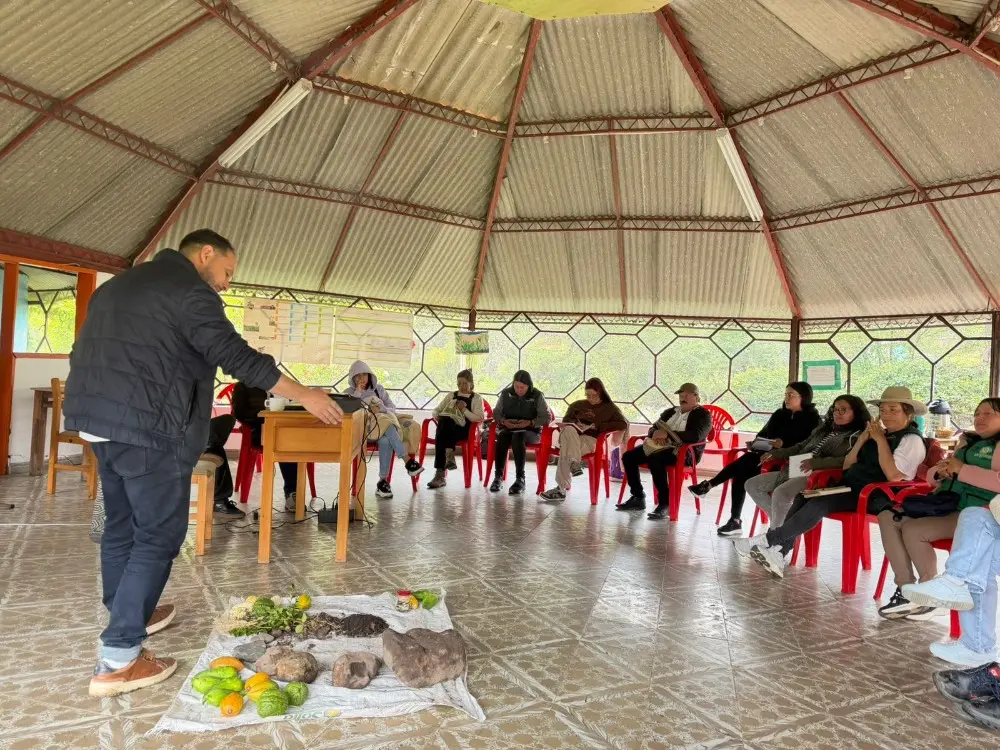
In this context, and within the framework of the Colombian-German Agroecological Project (Proyecto Agroecológico Colombo-Alemán, PACA), a cooperation initiative between the Federal Ministry of Food and Agriculture of Germany and the Ministry of Agriculture and Rural Development of Colombia, implemented in the field by AGROSAVIA and GOPA AFC, a knowledge- and practice-sharing workshop on soil health, held from April 15 to 18 at Fundación San Isidro de Duitama. This event was led by Researcher David Vázquez Cardona, Ph.D. in Agroecology, who facilitated the workshop focused on the evaluation and agroecological management of soils.
During the first session, a participatory space was created to analyze the results previously obtained from the physical, chemical, and biological characterization of soils from producers in the region. This exercise enabled participants to collectively interpret soil conditions and identify constraints and potentialities. Based on this diagnosis, work advanced on the preparation of biopreparations using mountain microorganisms, covering the entire process from their collection, isolation, and multiplication to their application in the field. This strategy represents a key alternative for strengthening productive autonomy by reducing the use of external inputs and promoting the regeneration of soil microbial life.
On April 17 and 18, farmers and researchers implemented the soil chromatography methodology, a technique that provides a comprehensive visualization of soil health. Through chromatic patterns, this tool facilitates the interpretation of interactions among minerals, organic matter, and biological activity, contributing to a systemic understanding of soil functioning in agroecosystems. The aim is to provide farmers with tools to assess soil vitality and agroecological transition processes.
This exchange process, grounded in a sustainable approach and recognition of local knowledge, enabled the integration of scientific and farmers’ knowledge around a common goal: the development of sustainable production systems capable of ensuring healthy food production, conserving natural resources, and ensuring sustainability for future generations. For participants, the event raised awareness of the impacts of agrochemicals on soil and the importance of agroecology.
In this way, the PACA project, currently implemented in five regions of Colombia, continues to consolidate as a strategic platform for promoting agroecology, strengthening local capacities, and advancing the transition to more resilient, inclusive, and environmentally responsible production models.
- More information here:
- Mónica Milena Burbano
- Communications, Identity and Corporate Relations Professional
- Center for Research and Technology Transfer Obonuco - El Mira
- Communications, Identity and Corporate Relations Advisory Office
- mmburbano@agrosavia.co
- AGROSAVIA