


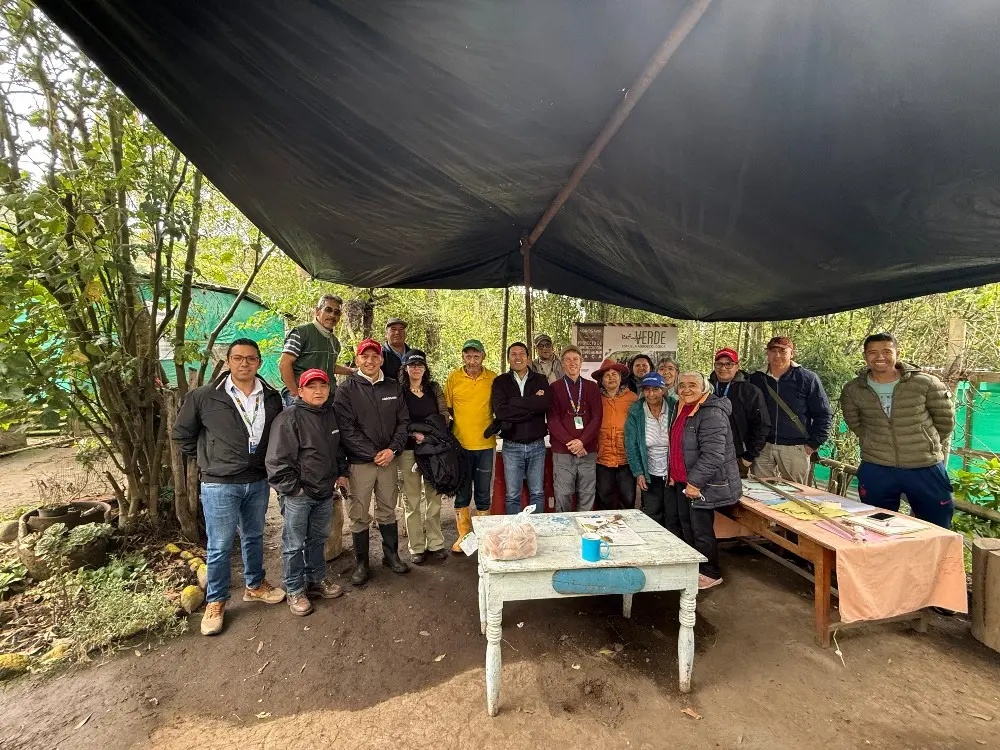
Pasto, Nariño. April 22, 2026. The species Cavia porcellus L. (guinea pig) is a cornerstone of smallholder family farming in the southwest of the country. Across the Andean countries, the guinea pig population is estimated at around 36 million animals, of which Colombia accounts for approximately 2.7 million, with 91.4% concentrated in the department of Nariño, according to the most recent National Agricultural Census. In this region, guinea pig production is deeply embedded in rural livelihoods, generating supplementary income and making a significant contribution to food security and sovereignty, with rural women playing a leading role in their management.
Despite its importance, production systems face constraints, particularly in forage availability to meet the species’ nutritional requirements. Dependence on commercial concentrates and conventional forages increases production costs, reduces profitability, and makes systems more vulnerable to market and climate fluctuations.
In response to this context, the ethnobotanical characterization of non-conventional forages emerges as a sustainable and economically viable alternative. The integration of ancestral knowledge with scientific research enables the use of local agrobiodiversity, optimization of animal feeding, cost reduction, and strengthening of production system resilience. In this process, rural women are consolidated as a fundamental pillar in the management of this production system and in ensuring household food security. However, systematized information developed under participatory approaches remains limited and, in some cases, is at risk due to low generational renewal.
Within this framework, and as part of the Colombian–German Agroecological Project (PACA, for its Spanish acronym)—a cooperation initiative between the German Federal Ministry of Food and Agriculture and the Colombian Ministry of Agriculture and Rural Development, implemented by AGROSAVIA and GOPA—research is being conducted in the department of Nariño aimed at the taxonomic and nutritional characterization of non-conventional forage species with potential for guinea pig feeding. This process is carried out under a participatory approach that promotes knowledge dialogue and the exchange of experiences.
Preliminary results include the identification of non-conventional herbaceous and shrub species with use potential in this production system. These findings highlight the richness of regional agrobiodiversity and underscore the importance of producers’ ancestral knowledge in the use of underutilized forage resources.
In addition, a pilot agroecological system was implemented in the village of Playa Alta, in the district of Obonuco. This model integrates a silvopastoral system with the native species Colla negra (Smallanthus pyramidalis), Kikuyu grass (Cenchrus clandestinus), a guinea pig housing unit designed for limited spaces, and a residual biomass management system through vermicomposting and composting. The latter is aimed at producing organic fertilizers, thereby reducing fertilization costs and strengthening the home garden component, where aromatic plants, vegetables, and tubers are cultivated.
The results of this research aim to generate key information for the sustainable management of production systems under agroecological approaches, to revalue ancestral knowledge, and to strengthen the role of rural women and rural communities. It also seeks to provide relevant technological recommendations for producers in the region.
From the communities, Silvia Jojoa, a member of the Quillacinga Indigenous people from the Obonuco district, highlights: “I am very pleased with this project because we are integrating what our ancestors taught us with AGROSAVIA’s research experience. I was not aware of the high nutritional potential that altamisa has for my animals.” Likewise, producer Fernando Ocobo states: “Thanks to AGROSAVIA and the engineers who have visited us, I have found in guinea pigs a new way to generate income without leaving my small farm.”
Finally, Pedro Pablo Bacca, M.Sc. Researcher at the Obonuco Research Center notes that this initiative “brings together an interdisciplinary team of professionals from agronomic, agroecological, social, and livestock fields, concerned with serving the community. This process constitutes a starting point for recognizing regional biodiversity, strengthening ancestral knowledge, and building agroecological production models adapted to local conditions.”
- More information here:
- Mónica Milena Burbano
- Communications, Identity and Corporate Relations Professional
- Center for Research and Technology Transfer Obonuco - El Mira
- Communications, Identity and Corporate Relations Advisory Office
- mmburbano@agrosavia.co
- AGROSAVIA