


- With support from Germany through the Development Bank (KfW), AGROSAVIA, Colombia’s National Natural Parks, and Patrimonio Natural are building sustainable livestock farming practices that will protect the Orito Ingi-Ande Medicinal Plants Sanctuary for generations to come.
- Today, 60 livestock-farming families safeguard this territory with the conviction that protecting the forest means protecting their own livelihoods. Because at the Orito Ingi-Ande Medicinal Plants Sanctuary, the well-being of livestock, water, and people are all part of the same story.
Florencia, Caquetá. August 6, 2026. There, where the murmur of water becomes a sacred language, and the mist kisses the canopies of centuries-old trees, a territory emerges that does not appear on ordinary maps, but rather lives in the breath of the peoples who inhabit it. The Orito Ingi-Ande Flora and Medicinal Plants Sanctuary, a territory whose name in the Kofán language means “our territory,” is much more than a protected area: it is the soul of five Indigenous peoples who, since 2008, have safeguarded a heritage in which yagé and yoco are symbols of life and wisdom. However, this sanctuary does not stand alone; surrounding it, livestock-farming families have found in AGROSAVIA an ally to write a new story, one in which producing meat and milk is not at odds with protecting the forest, water, and soil.
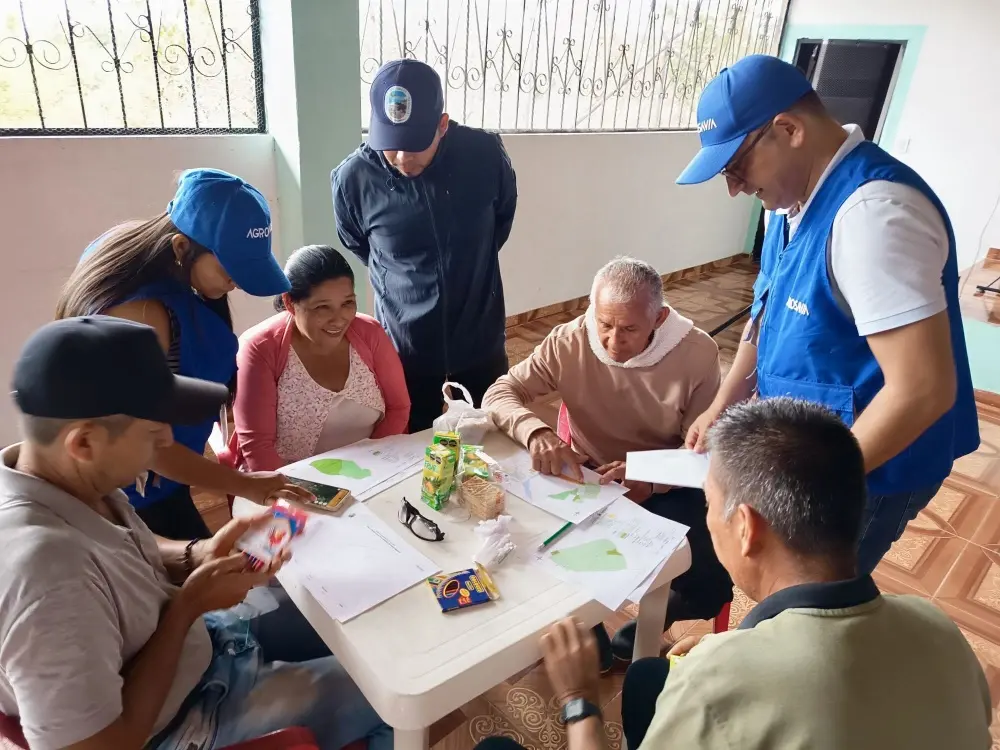
Sixty livestock producers arrived in this remote corner of Putumayo, brought together by the Andean-Amazonian Sustainable Livestock Farming Engagement Plan, which is part of Agreement 011-2025, led by Corporación colombiana de investigación agropecuaria – AGROSAVIA, with the support of the German Government (BMZ) and the Development Bank (KfW), in partnership with Colombia’s National Natural Parks and Patrimonio Natural. Under the leadership of the research team from the Florencia–Costayaco Regional Office, a participatory farm-planning process was carried out that not only teaches techniques, but also fosters ecological awareness. Over the course of three sessions, livestock farmers walked their farms with maps and pencils, not to measure production, but to envision a model in which conservation and productivity go hand in hand.
The result was an exercise in shared environmental responsibility: the producers demarcated strict protection areas alongside those where they will implement Sustainable Systems for Conservation (SSC). The agreed actions are a manifesto for life: establishing silvopastoral systems that restore trees to grazing areas, renovating degraded pastures so that the soil can recover its fertility, dividing grazing areas efficiently using solar energy, and respectfully isolating the areas bordering the Sanctuary, ensuring that the water originating in these mountains continues to flow clean and that wildlife has corridors through which to move freely.
More than a training session, this gathering was a pact with the territory. Every fence laid out, every tree planted, and every grazing area managed according to ecological principles represents a step toward a livestock farming model that regenerates rather than depletes. Today, 60 livestock-farming families are active guardians of this sanctuary because they have understood that their well-being depends on the health of the ecosystem that surrounds them. Thanks to AGROSAVIA and its partners, Orito Ingi-Ande is no longer solely an Indigenous heritage: it is a living example of how sustainable livestock farming can become nature’s strongest ally.
It is precisely at this threshold between the mountains and the green plains of Putumayo that AGROSAVIA is advancing its boldest commitment: transforming livestock farming into a practice that does not strip the land, but rather works in harmony with it. There, grazing is understood as a dialogue with the forest, living fences become corridors for wildlife, and every native animal becomes a link in the chain of life.
It is not about producing more, but about producing better, in harmony with the territory that the elders still proudly call “our home,” so that the future does not arrive as an onslaught, but rather as a slow planting that honors the past and secures tomorrow for those who have chosen to remain and care for what has always been theirs.
- More information here:
- José Dario Ule Rodriguez
- Communications, Identity and Corporate Relations Professional
- Office Florencia
- Communications, Identity and Corporate Relations Advisory Office
- jule@agrosavia.co
- AGROSAVIA