


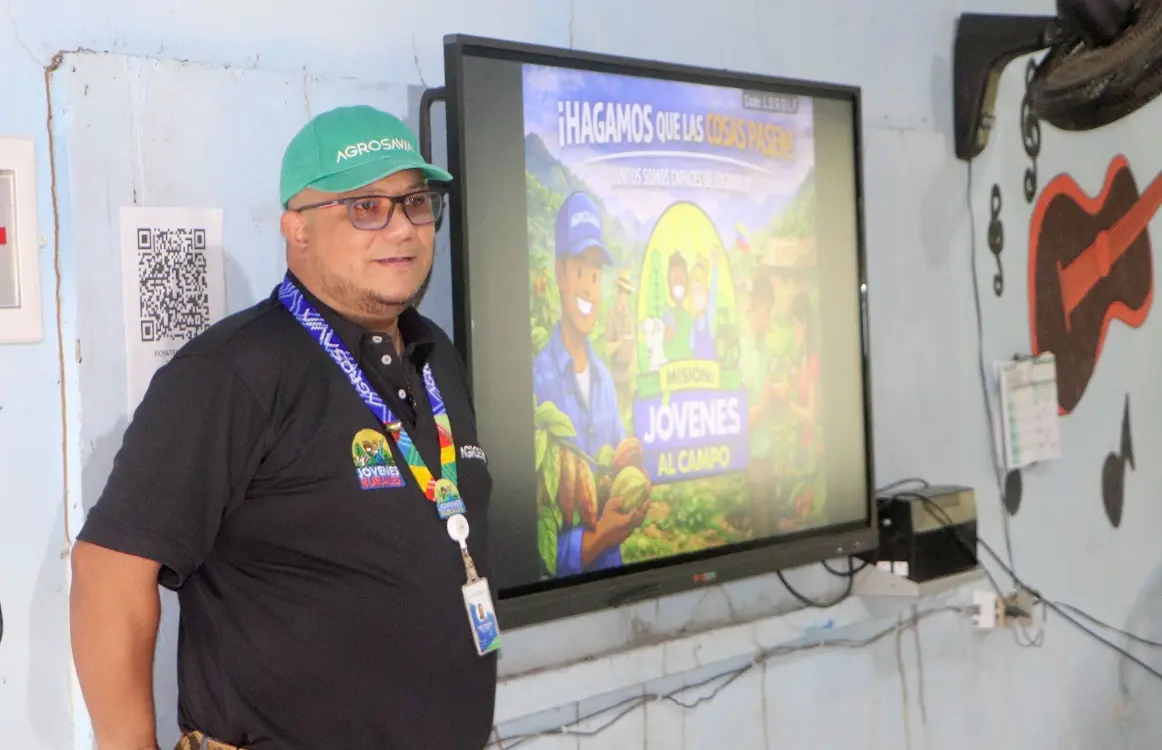
- The initiative proposes the co-creation of agroecological models at the territorial level, promoting an intercultural dialogue of knowledge in which the expertise of local communities, the productive sector, and institutions converge.
- The project emerges as a support and accompaniment process for those who carry the scars of the past in their history and on their territory, with a special focus on the new generations.
Florencia, Caquetá. April 30, 2026. In southern Colombia, where hope began to seep through difficult memories, lies Belén de los Andaquíes, Caquetá. There, amid the mist of remembrance, the wounds are still present. The rural communities of La Mono and Puerto Torres witnessed inhumane times: the absence of those who are no longer here, the pain of those who were forced to leave, and the deep mark all of this left on their communities, which is beginning to fade little by little. Because no wound can extinguish the determination to return, to rebuild, and to continue moving forward. In every seed and every return, like nature sprouting once again, these territories were reborn. Not to remain trapped in the past, but to cultivate a future upon the foundations of what was once pain. Today, with their hands in the soil and the memory as their guide, communities are transforming spaces once marked by fear into landscapes of unity and work. Because the land, when reclaimed and cultivated collectively, ceases to be a territory defined by distrust and becomes once again a home for those who struggle day after day, and among them, rural youth stand as the true protagonists.
In this territory renewed by the promise of a brighter dawn, like a ray of light piercing through darkness, Corporación colombiana de investigación agropecuaria – AGROSAVIA arrived, in partnership with the Ministry of Agriculture and Rural Development, and through its strategy "Mission: Youth to the Countryside," which has found in rural schools the seedbed of change. More than 130 productive pedagogical projects (PPP) have already been reactivated in 87 Rural Educational Institutions (REI) across 27 departments. Within these spaces, where peasant and Indigenous communities contribute to the National Agricultural Innovation System, another promise is also taking root: that technology will not distance young people from the land, but rather strengthen their bond with it through tools that drive transformation.
This time, at the Rural Educational Institution Portal La Mono, in the municipality of Belén de los Andaquíes, a quiet yet profound transformation took place. There, the adaptation of learning spaces focused on agroecology and productive innovation has become a tangible tool for repairing the social fabric, strengthening young people's connection to their land, and transforming the countryside into a place of peace, dignity, and opportunity. However, the most valuable aspect has been the way the path forward was defined: collectively. Students, teachers, parents, and representatives from the region's productive sector worked together to shape the focus of the Mission "Youth to the Countryside Program" in this school. In this way, the decision did not come from outside, but instead emerged from the very heart of the territory itself.
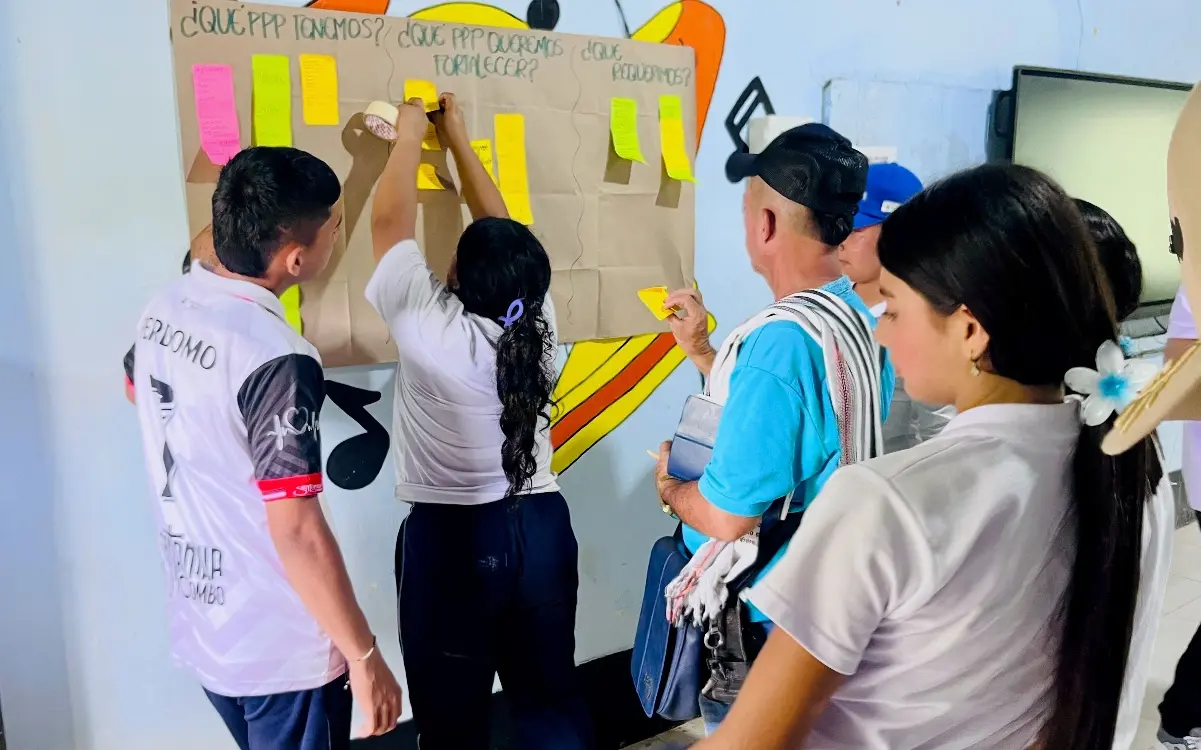
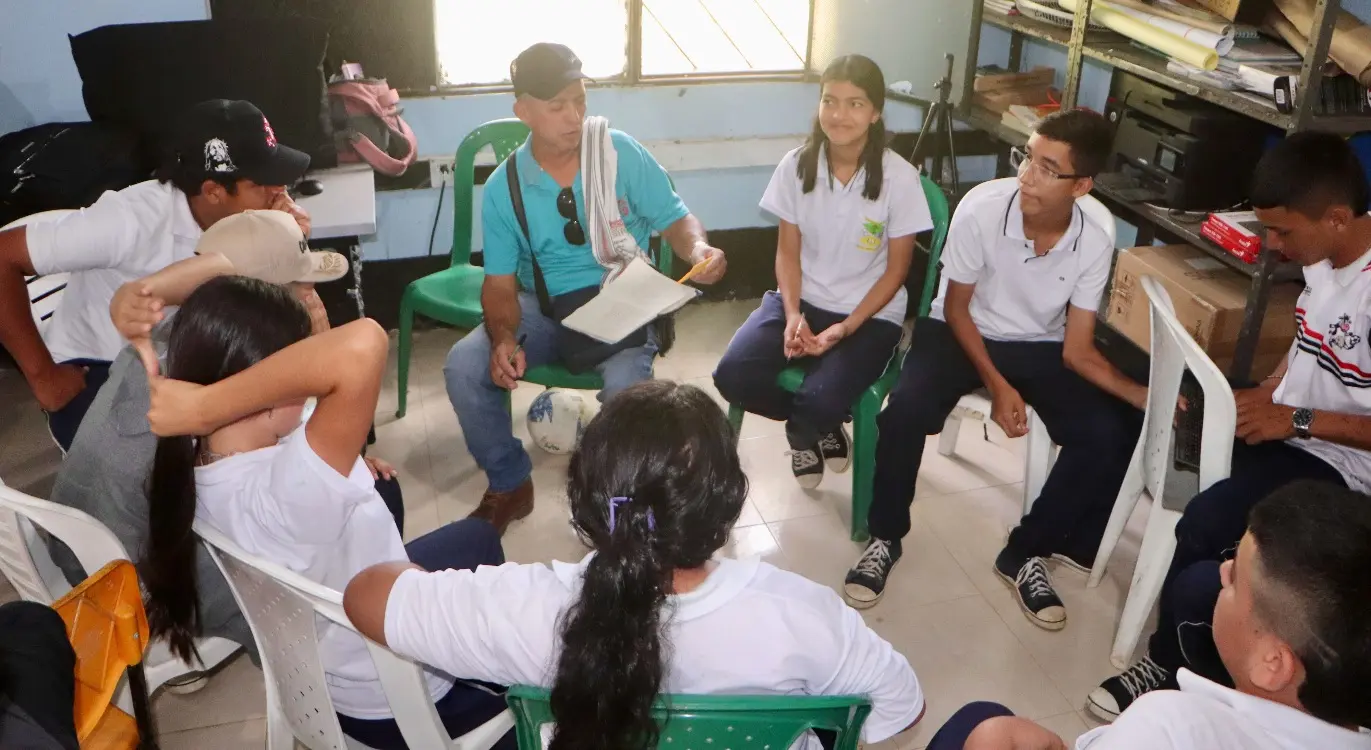
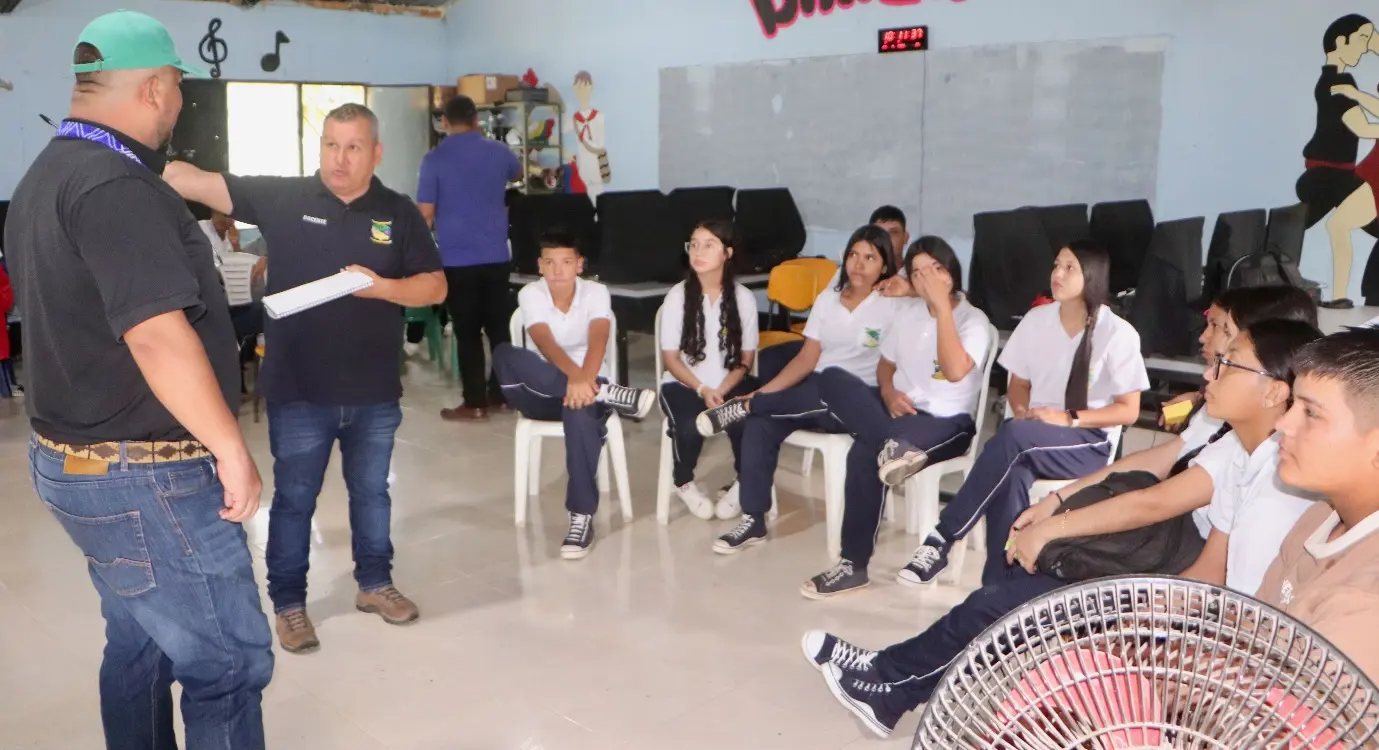
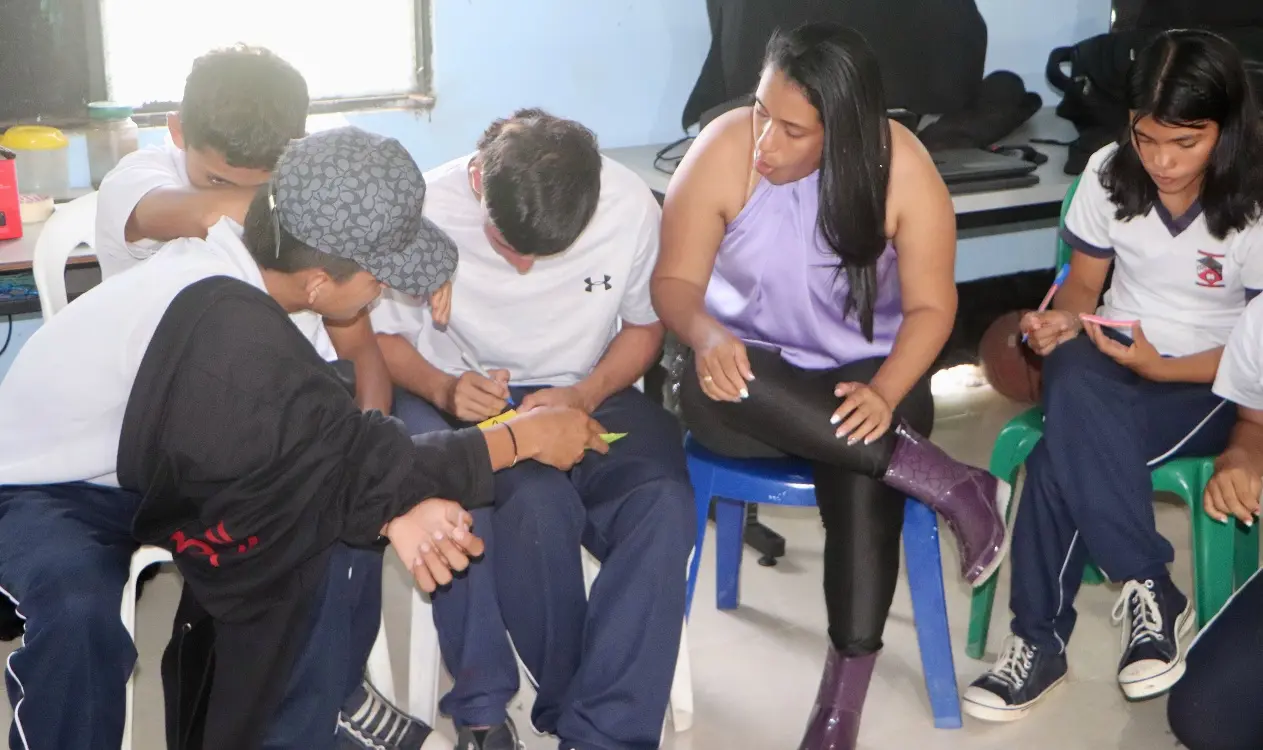
The community welcomed the proposal as one welcomes a seed into fertile soil: with the instinctive certainty that something good is about to grow. Researchers from the Florencia–Costayaco Regional Office, through a continuous and participatory dialogue, identified the productive systems to be promoted: broiler chickens, laying hens, pigs, and fish farming. All of them supported by local and sustainable inputs from the region, thereby strengthening both educational spaces and the territory's food security and sovereignty. This is not about replicating external formulas, but about building locally rooted agro-business models adapted to the land, its rhythms, and its people; models born from the exchange of knowledge and capable of being replicated in other rural communities because this is, above all, science shaped by hard work, and technology guided by human warmth.
The program has learned to move through complex territories: mountainous, dispersed, and socially diverse regions. It is present in the Comprehensive Rural Reform Hubs, in APPAS areas, in PDET municipalities, between the Pacific and the Andes. Its reach continues to expand like a river seeking every school, every young person, and every opportunity to remain rooted in the countryside.
The intervention model being consolidated through the Mission "Youth to the Countryside" is decentralized and territorial in nature. It does not impose directives from above; it grows from within. It is oriented toward a participatory agroecological pedagogical model with a territorial focus and an experiential learning approach. Young people no longer see the countryside as a place they must escape from, but rather as a living laboratory where science needs them and the land awaits them.
AGROSAVIA, in its role as a territorial catalyst, implements the actions of the Ministry of Agriculture and Rural Development aimed at fulfilling the Comprehensive Rural Reform, while also coordinating efforts with the Ministry of National Education, the Ministry of Science, Technology and Innovation, and other members of the National Agricultural Innovation System (SNIA, for its Spanish acronym).
Today, this program seeks to consolidate a decentralized agroecological training model deeply rooted in the territory. It does not impose—it proposes; it does not erase memory—it integrates it. In this way, rural youth cease to be fleeting promises and become architects of resilient, sustainable territories with identity and soul. Science and technology, when properly cultivated, do not uproot communities: they help their roots multiply.
- More information here:
- José Dario Ule Rodriguez
- Communications, Identity and Corporate Relations Professional
- Office Florencia
- Communications, Identity and Corporate Relations Advisory Office
- jule@agrosavia.co
- AGROSAVIA