


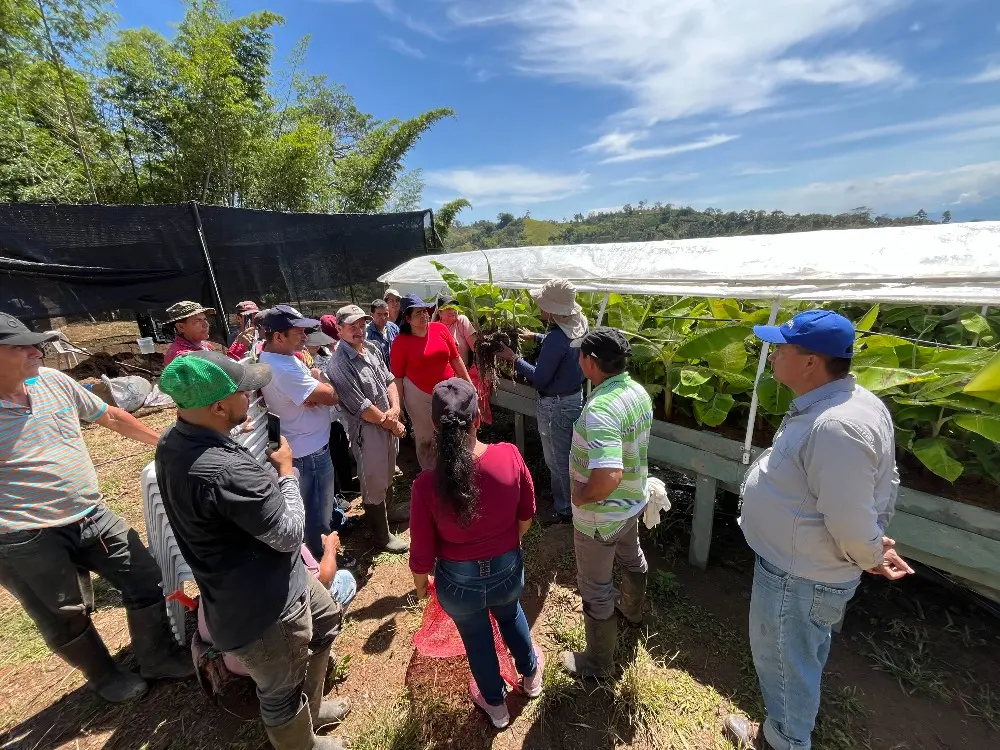
- Through this model, the project implements a method for producing high-quality planting material that not only increases productivity but also promotes new value-added opportunities and helps ensure every family in rural and urban areas has safe food on the table.
Palocabildo, Tolima, October 14, 2026. Nestled in the foothills of the Central Andes, in northern Tolima, Palocabildo beats to the rhythm of rural life. A municipality with a strong agricultural vocation, a rich farming tradition, and a hardworking population, its economy revolves around agriculture, particularly coffee, cassava, plantain, maize, avocado, and beans. Among these crops, the Hartón plantain stands out as the most representative production line. However, for years, planting material was produced using traditional methods, without a program to guarantee plant material free from phytosanitary problems and genetic quality.
To address this challenge, Corporación colombiana de investigación agropecuaria – AGROSAVIA, through its research and technology transfer team at the Nataima Research Center, and the Ministry of Agriculture, with financial support from the Government of Tolima, launched the project "Strengthening the Production System for the Hartón and Dominico Hartón Plantain Clones in the Department of Tolima." This initiative goes beyond traditional technical assistance: its purpose is to bring knowledge directly to rural communities, translate science into practical solutions for small-scale farmers, and make innovation a tool for improving the well-being of rural communities.
This purpose becomes tangible through the voices of those who experience it firsthand. "This is a very innovative project, developed in close collaboration with AGROSAVIA and its engineers. We have learned how to multiply corms, a technology we were previously unfamiliar with, as we were accustomed to traditional methods. Thanks to this, we have expanded our knowledge. Furthermore, this work has helped bring together the families of Palocabildo and our region socially," says Nancy Linares, President of the Los Nogales Producers Association (Asociación de Productores de los Nogales – ASOPRONOGALES). Her testimony captures the essence of the project: it is not merely about transferring technology, but about building shared knowledge through a genuine dialogue between different knowledge systems, where farmers' experience and scientific expertise come together and reinforce one another.
This collaboration translates into concrete action. The project will benefit more than 300 rural women in the municipalities of Líbano, Fresno, Herveo, Palocabildo, Casabianca, Villahermosa, and Santa Isabel. Together with these women, the project will validate a high-quality planting material production model to improve productivity, generate added value, and contribute to food security across the department.
The Journey of the Planting Material: A Journey Through the Life Cycle of the Plantain
The strategy is structured around an integrated, interconnected system for producing high-quality planting material, designed to ensure knowledge flows through every stage and is translated into practical results.
It all begins in the Mother Garden, a carefully managed space where the clone's genetic identity is meticulously preserved. There, among broad leaves and deep roots, lies the essence of everything that follows: the genetic and phytosanitary quality that will underpin the entire process. It is the source of the planting material, the starting point of a journey that has only just begun.
Next, propagation takes place in the Intensive Multiplication Garden. This plot is where the plant forgoes fruit production and devotes itself entirely to producing planting material. Here, the crop is not grown for the market but for the future: each corm that sprouts again represents the promise of abundance, an effort that increases yield per square meter and supplies the multiplication tunnels. The entire plant becomes the architect of its own next generation.
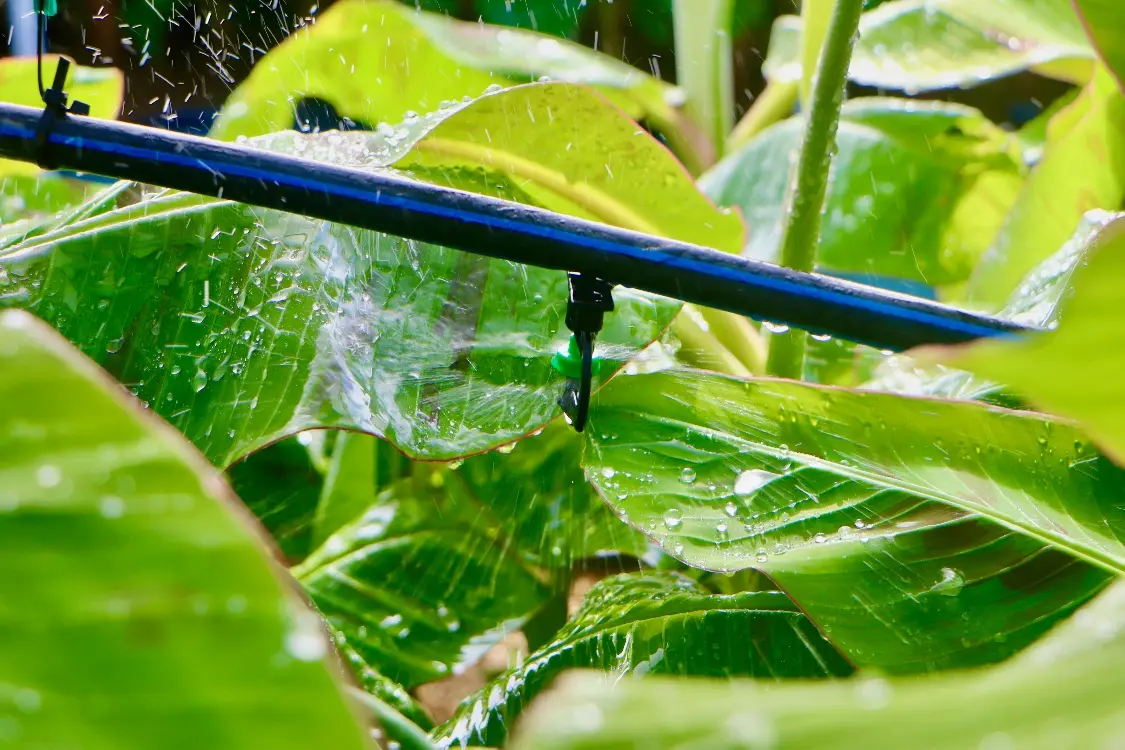
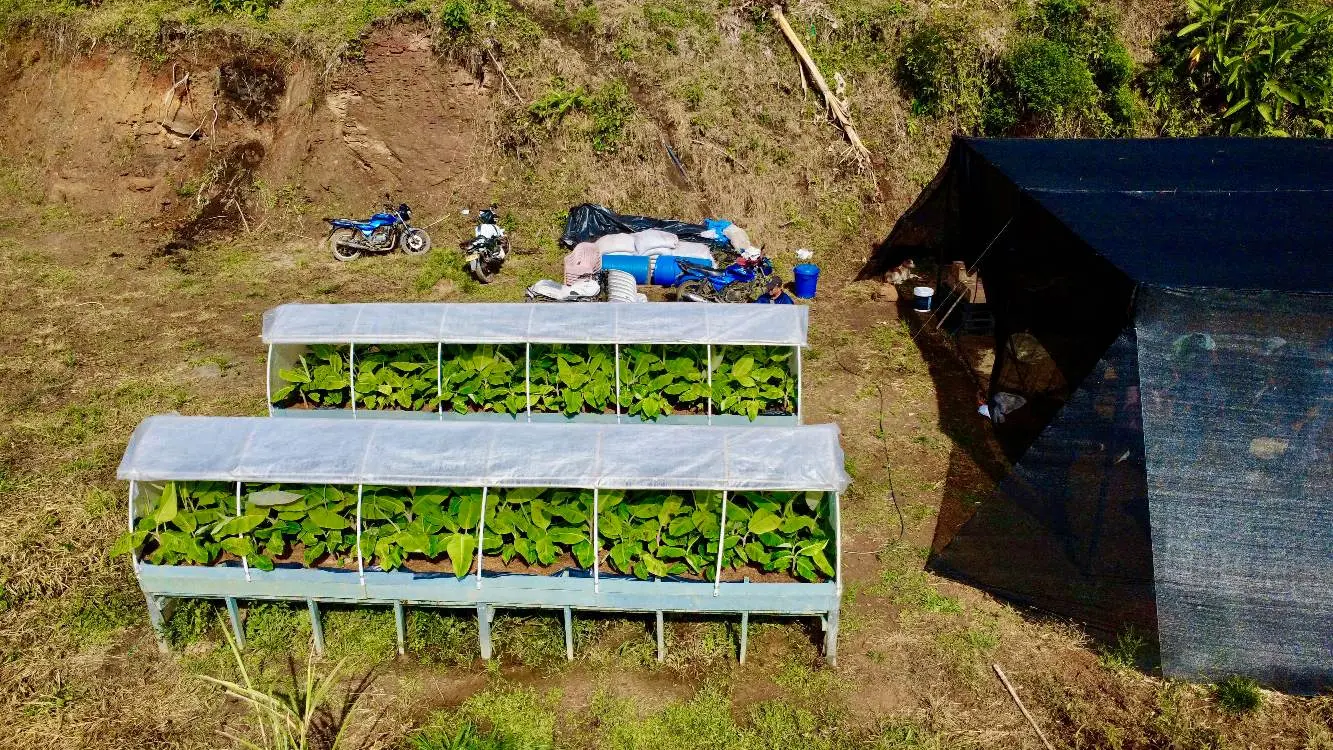
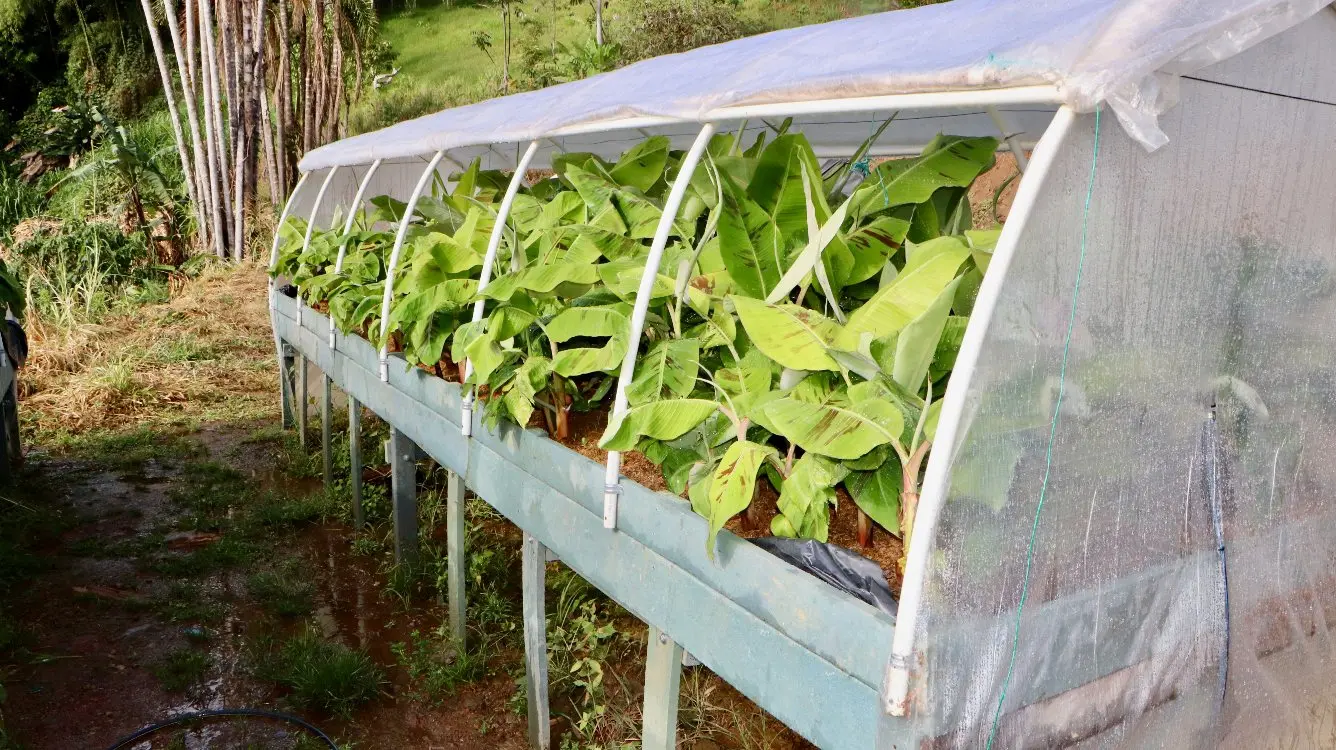
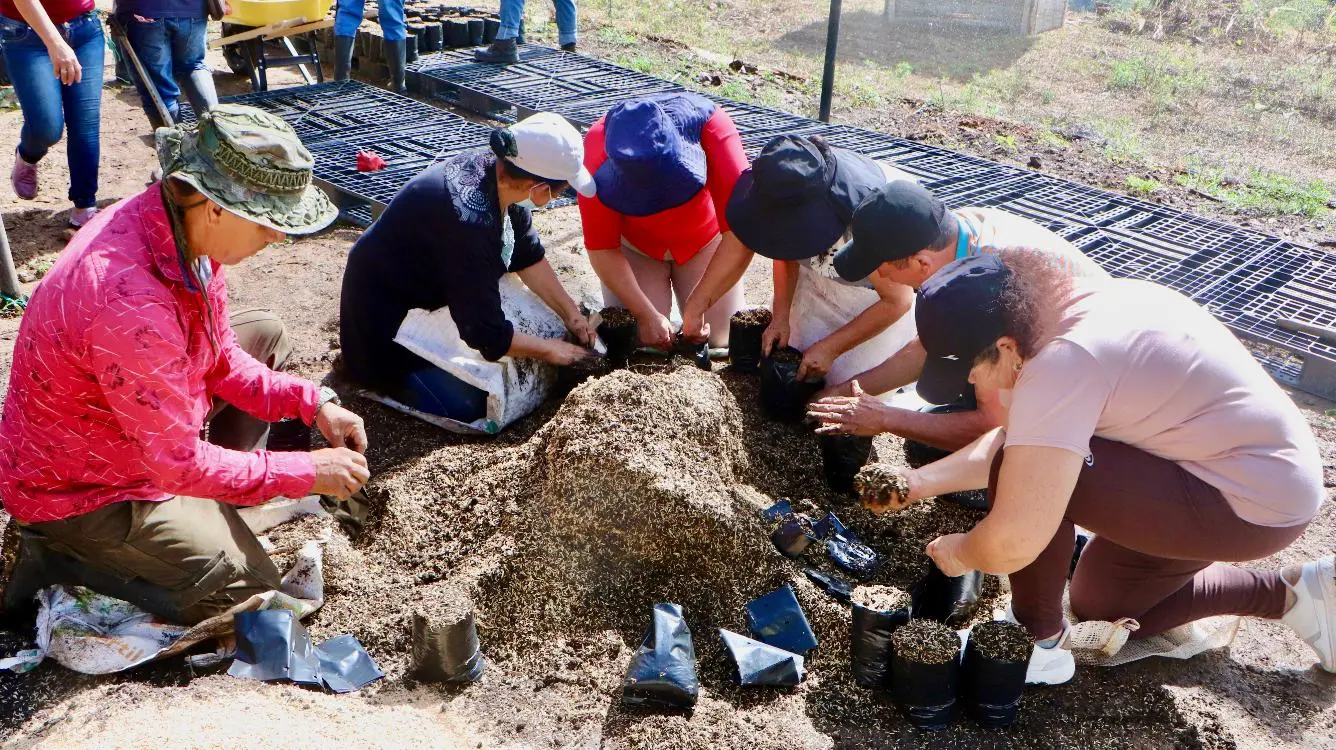
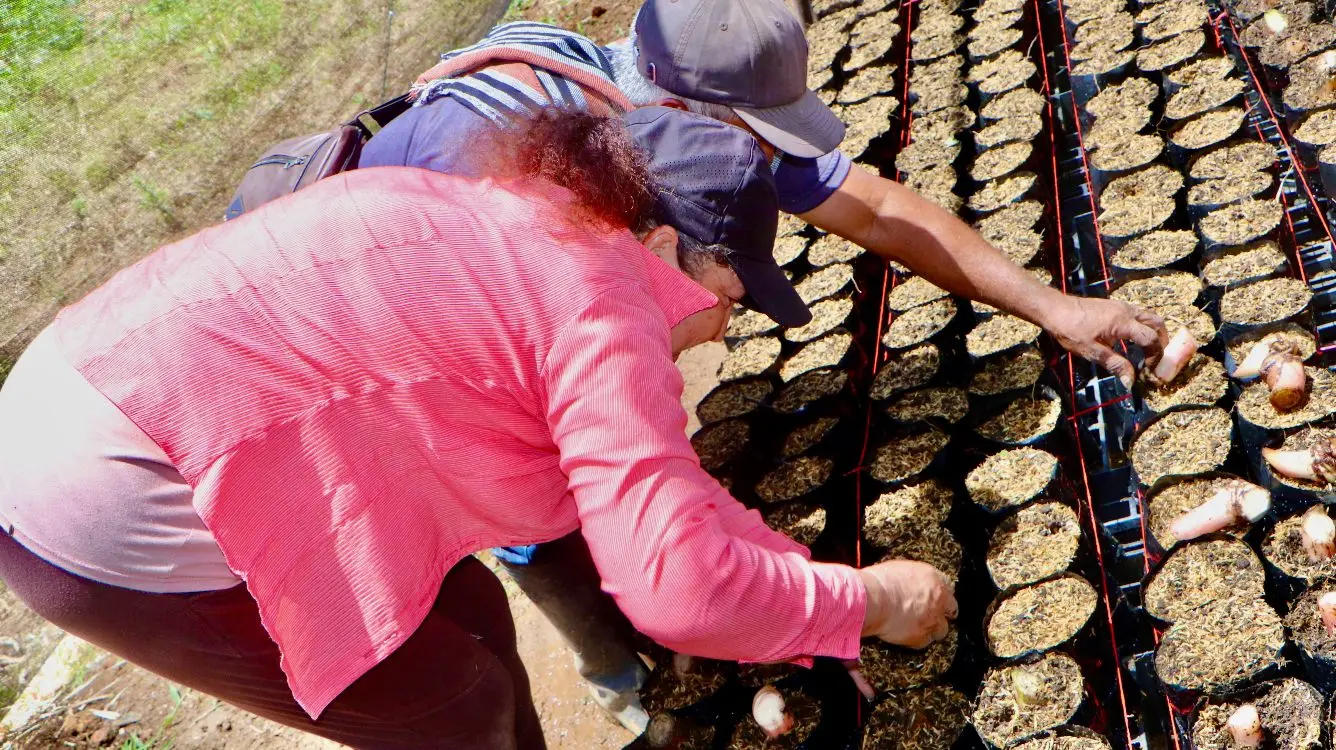
The process continues in the tunnels, controlled structures where the planting material is strengthened. Acting as a rigorous screening system, these structures make it possible to identify and discard diseased material, ensuring that only the best, strongest, and healthiest plants continue through the process. This is where selection becomes an act of care, almost an act of devotion.
Finally, the nursery: the last stage before the field. Here, the plantlets are conditioned and carefully nurtured, allowing them to develop optimally before being transplanted to the field. It is the threshold between a protected environment and the open field, between human care and the fertile soil awaiting them.
Thus, link by link, knowledge becomes planting material, and planting material becomes life. This process not only ensures quality and phytosanitary health but also helps shape the future of plantain production in Tolima, with science as its compass and the countryside as its destination.
The project's impact extends beyond producing planting material. It also includes establishing protocols for large-scale production of high-quality planting material, developing agro-industrial processing alternatives for food and non-food applications based on circular economy principles, and creating spaces for stakeholder engagement and technology transfer to strengthen plantain production systems throughout the department.
Through this initiative, AGROSAVIA reaffirms its commitment to the region's small-scale farmers: to make knowledge a fundamental foundation for increasing agricultural production, to bring them innovative technologies that improve production systems, and to help rural communities in Tolima build a more prosperous and sustainable future with better living conditions.
Because when science engages in dialogue with farmers' knowledge, when innovation reaches rural women through AGROSAVIA, and when technology is placed at the service of the land, plantain production in Tolima does more than just grow: it flourishes as a symbol of a fairer, more productive countryside, full of promise for the future.
- More information here:
- José Dario Ule Rodriguez
- Communications, Identity and Corporate Relations Professional
- Office Florencia
- Communications, Identity and Corporate Relations Advisory Office
- jule@agrosavia.co
- AGROSAVIA