


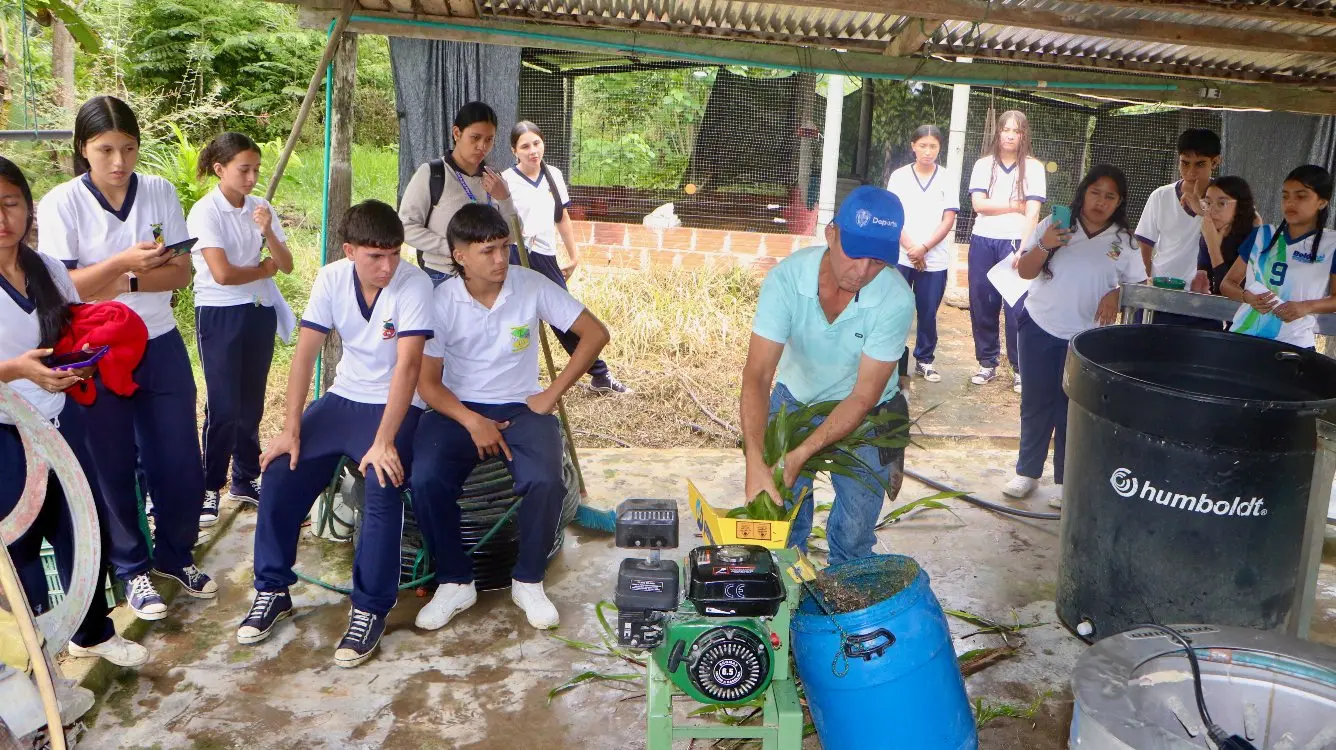
- A local experience that shows students alternative ways to reduce production costs in swine feeding systems by making use of resources available on the farm itself.
- Those young people, still carrying soil on their boots, learned that minimizing expenses does not mean taking the soul out of farming; rather, it means strengthening rural autonomy and self-reliance.
Florencia, Caquetá. June 10, 2026. In the land of the last Andaquí, where the Pescado River springs from the heart of the majestic surrounding mountains, rural knowledge continues to flourish. There, in the community of Agua Dulce, within the district of El Portal La Mono, in Belén de los Andaquíes, Caquetá, life unfolds to the sound of the forest and the memory of a lineage that still maintains a close relationship with the land.
In this vast-horizon territory, 10th- and 11th-grade students from El Portal La Mono Rural Educational Institution embarked on a journey measured not in kilometers, but in roots. As part of the project “Mission: Youth to the Countryside,” led by Corporación colombiana de investigación agropecuaria (AGROSAVIA) and the Ministry of Agriculture and Rural Development, these students set both their feet and their attention on the farm Linda Sofia, a place where Olimpo Cárdenas—a swine producer, marketer, and association leader—has patiently built a production model that never loses sight of the origins of things.
Feeding pigs through non-conventional methods is, at its core, an accumulation of knowledge, a way of nurturing a craft (livelihood), and a means of recognizing the value of local resources to reduce dependence on external inputs. This is how agroecological practices are applied daily on the farm, even if Mr Olimpo himself does not formally define them as such. Over recent decades, swine production has become heavily dependent on industrial feed concentrates—costly formulations that, once animals are sold in regional or national markets, often leave only minimal profit margins. At the Linda Sofia Farm, resources produced on-site have been optimized: grains harvested from the farm, forage crops grown among plantains and sugarcane, and products that originate where people live and work. This is the lesson Mr Olimpo shares. It is not merely a production technique; it is an act of rootedness and territorial identity.
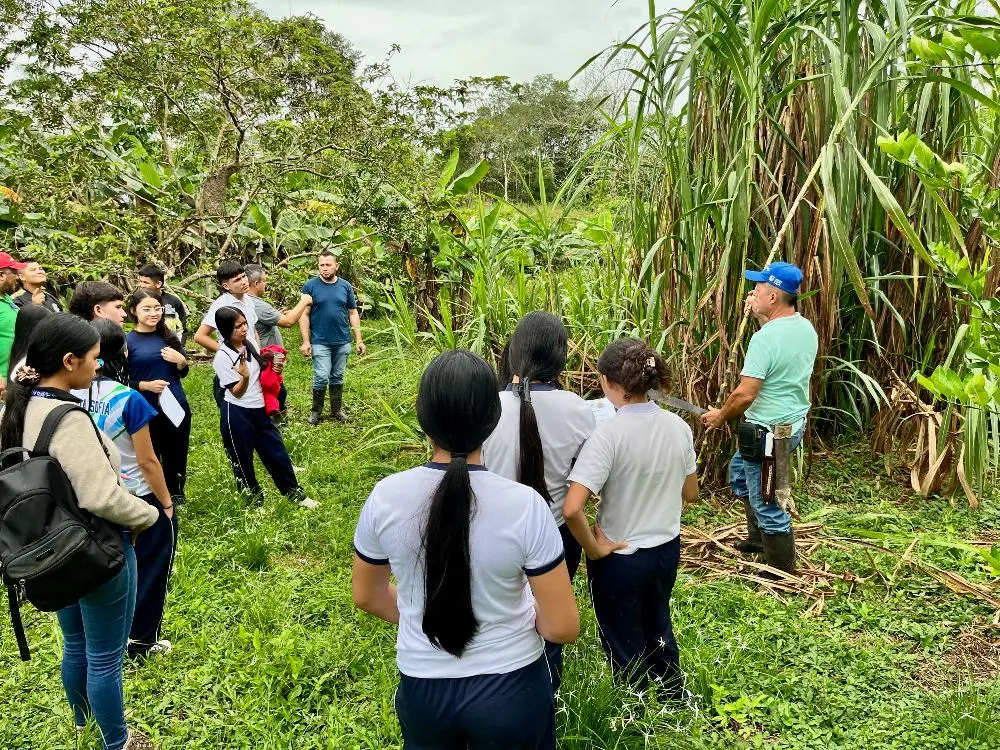
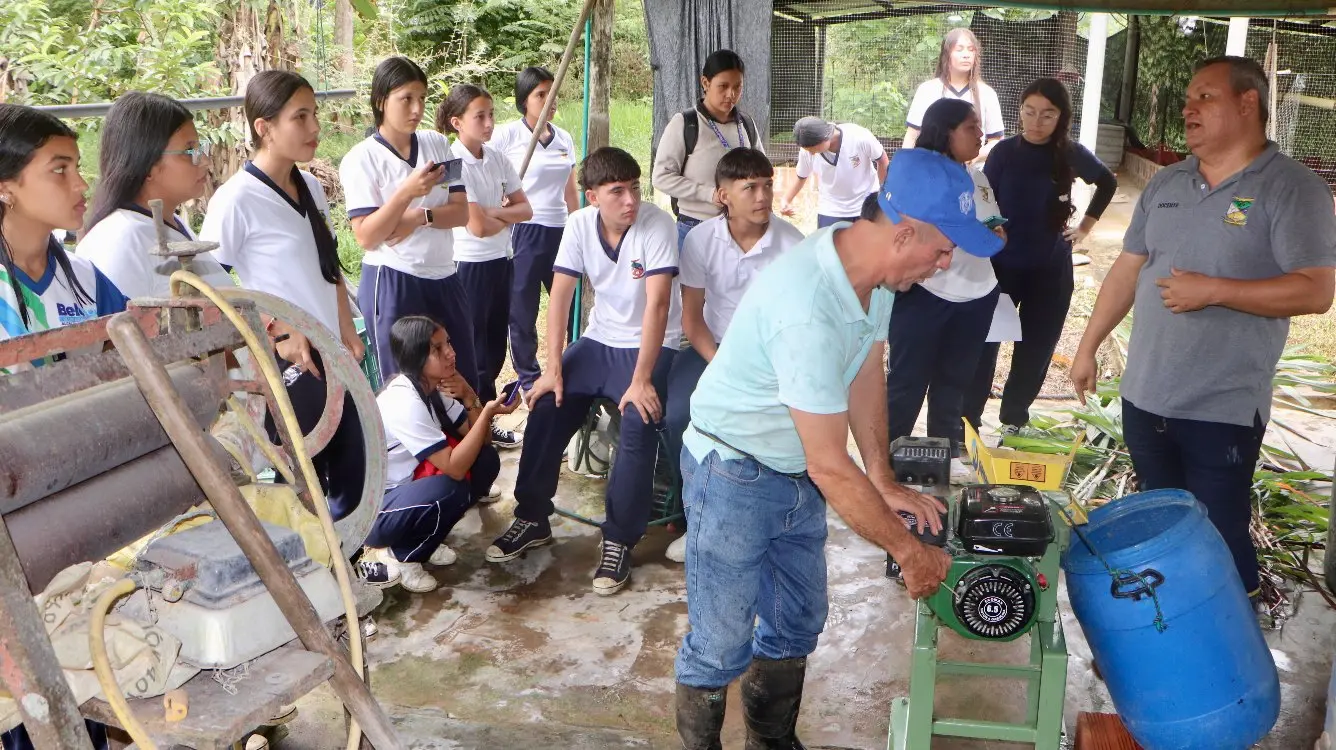
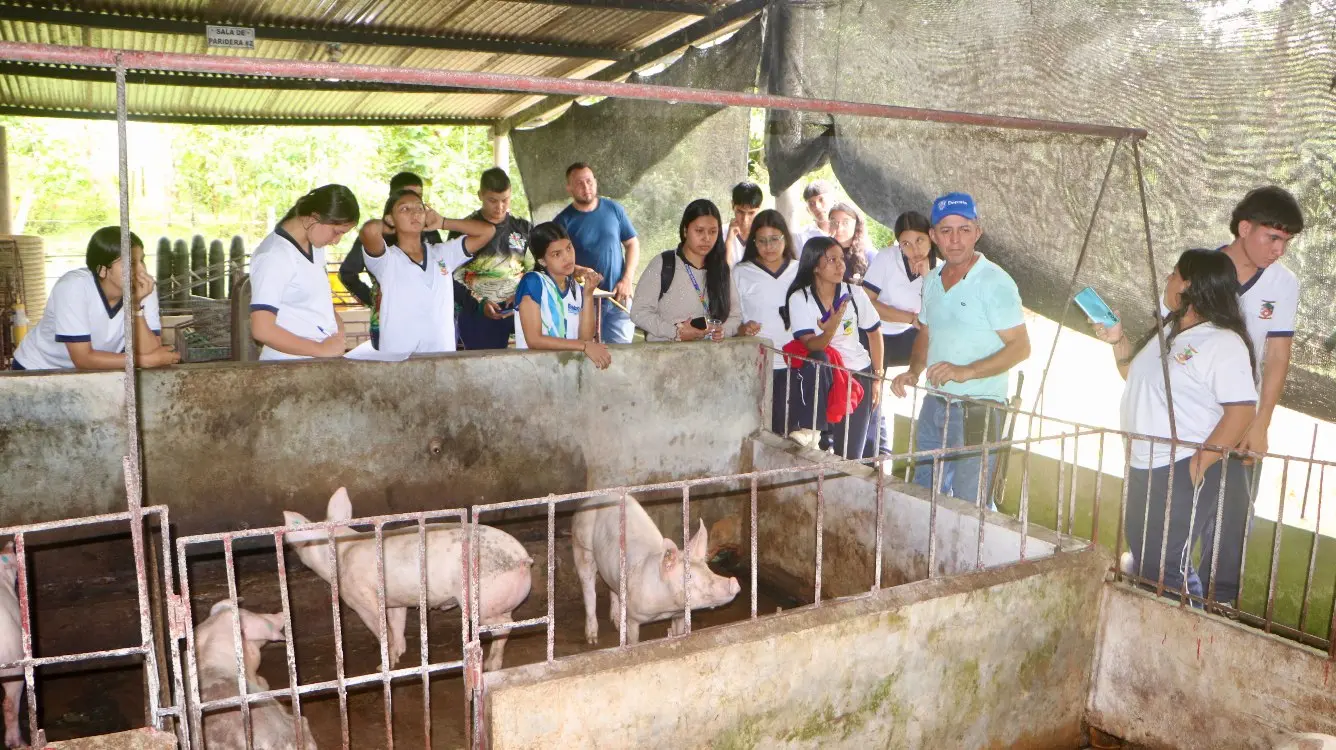
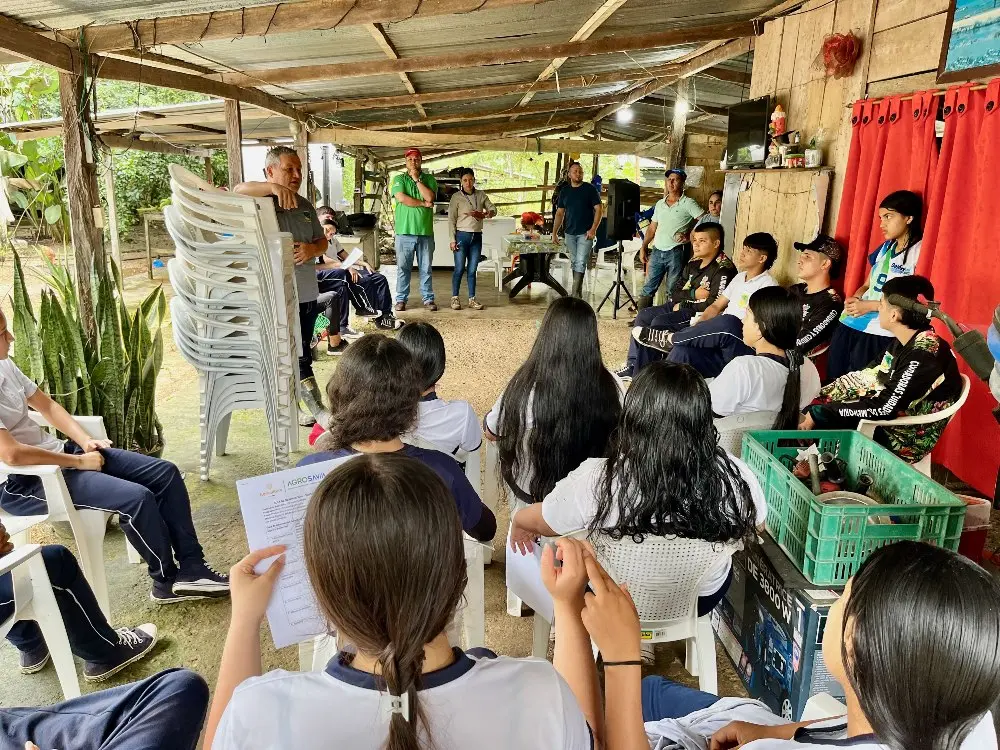
“Today, students were introduced to an alternative production and feeding approach. In this context, swine production is not based solely on commercial concentrates or industrial feeds, but also on products and crops available on the farm, such as cut-and-carry grasses, bore (Xanthosoma spp.), plantain pseudostems, sugarcane, and other resources found on the property. This allows reducing production costs, since relying exclusively on commercial feed essentially benefits the feed industry. Therefore, it is important to adopt this approach in pig production: lowering expenses through alternative feeding strategies and feed supplementation. That is precisely the role of our swine production unit,” said Olimpo Cárdenas, farm owner and swine producer.
In this way, these young people—sons and daughters of the same territory and students of El Portal La Mono Rural Educational Institution—discovered that agroecology is not merely about reducing production costs; it is also about strengthening the autonomy of rural families, regenerating ecosystems, and building more sustainable food systems. They understood that using local resources, producing their own feed for livestock, preserving soil fertility, and reducing dependence on external inputs does not diminish the dignity of rural work; on the contrary, it enhances it and makes it more resilient. When food is produced from the very land people inhabit and is cultivated in harmony with nature, the countryside ceases to be merely a place where people pass through and becomes a territory of life, identity, and hope. There, agroecological production not only feeds animals and families, but also sows the seeds of food sovereignty and opportunities for new generations to find in rural life a meaningful and sustainable life project.
- More information here:
- José Dario Ule Rodriguez
- Communications, Identity and Corporate Relations Professional
- Office Florencia
- Communications, Identity and Corporate Relations Advisory Office
- jule@agrosavia.co
- AGROSAVIA