


Ibagué, Tolima. July 3, 2026. The conservation of Colombian Creole pig breeds continues to gain momentum as a strategic approach to promoting rural development, food security, and agricultural innovation. To this end, AGROSAVIA is making progress in evaluating production models based on Creole pigs in rural communities of the municipality of Ibagué and within SENA training environments, including the La Granja Agricultural Training Center. This initiative seeks to demonstrate that conserving genetic heritage can also become a productive and sustainable alternative for rural farming families.
The strategy is led by researchers from AGROSAVIA’s Nataima Research Center, the Ministry of Agriculture and Rural Development, and AGROSAVIA’s Porcine Germplasm Bank, in collaboration with the Mayor’s Office of Ibagué and with the participation of researchers from the La Libertad, La Suiza, El Nus, Tibaitatá, and Motilonia Research Centers. The initiative involves the Casco de Mula, San Pedreño, and Congo Santandereano Creole pig breeds, with the latter being incorporated for the first time into evaluation processes for its implementation in production systems in the department of Tolima.
The production models currently under evaluation aim to integrate pig production with crops native to the region, promoting sustainable silvopastoral systems that capitalize on more than 500 years of adaptation, hardiness, and productive efficiency of Creole pigs. In this way, the initiative seeks to strengthen food security, diversify farmers’ sources of income, and conserve a strategic genetic resource for the country.
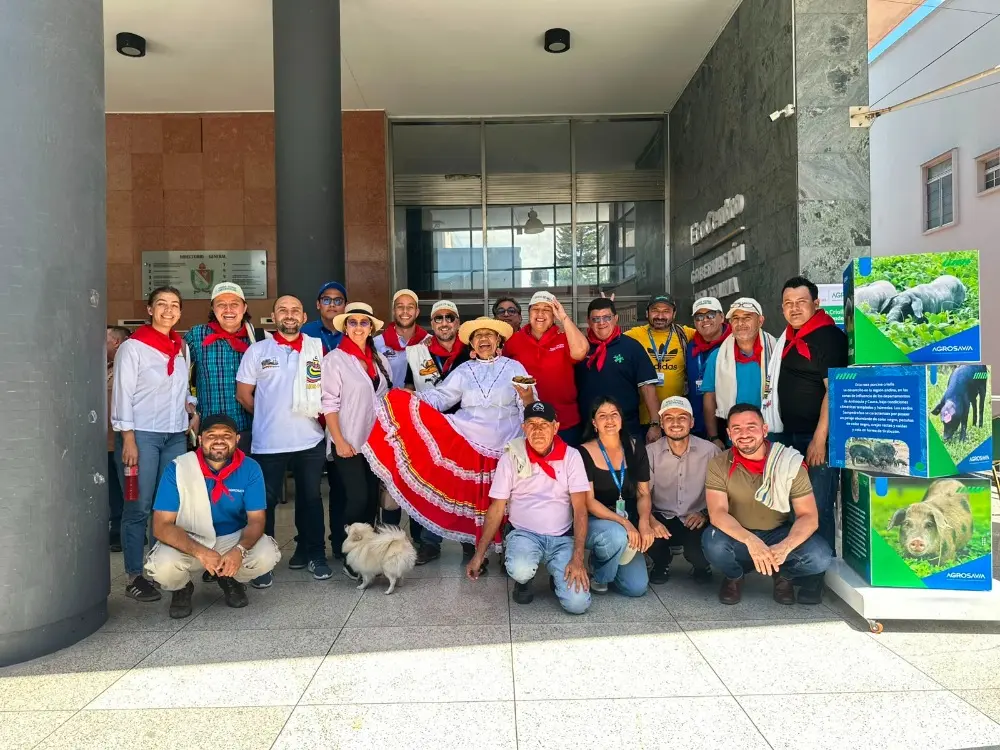
As part of this process, the Nataima Research Center hosted the “Knowledge and Flavors of the Colombian Creole Pig” event [Saberes y Sabores del Cerdo Criollo Colombiano], a knowledge-sharing forum that brought together producers, researchers, representatives of public institutions, academia, and strategic partners to discuss progress in the conservation, genetic breeding, and sustainable use of Colombian Creole pig breeds.
During the event, researchers presented findings on porcine genetic heritage, AGROSAVIA’s technological innovations, successful conservation experiences, alternatives for industrial processing, and opportunities to incorporate these breeds into production models that address the needs of rural territories.
The initiative also strengthened collaborative actions with the National Learning Service (SENA), aimed at enhancing the capacities of rural communities in processing products derived from Creole pigs, promoting value addition, entrepreneurship, and the preservation of traditional knowledge associated with their production.
According to Martha Yaned Gutiérrez Ibáñez, Head of AGROSAVIA’s Porcine Germplasm Bank, this work represents a key step toward enabling Colombian Creole pig breeds to move beyond conservation efforts and become a viable development alternative for rural producers by leveraging their adaptive traits and their potential within sustainable production systems.
Lucero Rodríguez, Innovation Coordinator at the Ministry of Agriculture and Rural Development, highlighted the importance of collaboration among research institutions, government agencies, and local communities to bring innovation to rural areas, strengthen the rural economy, and promote the sustainable use of the country’s livestock biodiversity while preserving the ancestral knowledge of regional producers.
One of the most memorable moments of the event was the celebration of the “Lechona Day,” during which attendees enjoyed traditional dishes prepared with meat from the three Creole pig breeds conserved by AGROSAVIA: Casco de Mula, San Pedreño, and Congo Santandereano. The activity demonstrated that scientific research can also strengthen gastronomy, preserve rural cultural heritage, and create new opportunities for tourism and regional economic development.
The event was attended by representatives of the Ministry of Agriculture and Rural Development, the Government of Tolima, the Mayor’s Office of Ibagué, the National Learning Service (SENA), Universidad del Tolima, Universidad Cooperativa de Colombia, as well as producers, researchers, and representatives of various institutions committed to the conservation and sustainable use of animal genetic resources.
Through this initiative, AGROSAVIA reaffirms its commitment to transforming research into practical solutions for Colombia's agricultural sector, demonstrating that conserving Colombian Creole pig breeds not only safeguards biodiversity and the nation’s genetic heritage but also creates new opportunities to strengthen agricultural productivity, food security, and the well-being of rural communities.
- More information here:
- Darlin Conrado Mosquera
- Communications, Identity and Corporate Relations Professional
- Center for Research and Technology Transfer La Libertad
- Communications, Identity and Corporate Relations Advisory Office
- dconrado@agrosavia.co
- AGROSAVIA